Modular non-fusion knee arthrodesis, a specialized limb-salvage surgical procedure frequently deployed when previous total knee arthroplasty reconstructions have completely broken down, is associated with only moderate implant survival alongside markedly compromised functional recovery and severely depressed health-related quality of life. In an observational multicenter cohort analysis tracking eighty-five adult patients across two high-volume surgical departments between 2003 and 2024, researchers observed that just sixty individuals, representing 70.6 percent of the treated population, succeeded in retaining their modular arthrodesis constructs through the latest follow-up evaluation. Over a median observation duration of 35.0 months, with an interquartile range of 46.0 months and a mean follow-up period reaching 52.0 months, more than one-third of the enrolled cohort ultimately required additional major revision interventions or underwent conversion to above-the-knee transfemoral amputation. Rather than serving as a definitive, enduring solution for catastrophic joint failures, the modular non-fusion design yielded substantial mechanical and clinical vulnerabilities across extended clinical follow-up.
Total knee arthroplasty serves as an exceptionally widespread and clinically successful intervention for end-stage joint disorders, yet catastrophic failures continue to pose immense clinical challenges, predominantly driven by intractable periprosthetic joint infection or progressive aseptic mechanical loosening. Primary knee replacements carry an established baseline infection incidence between 1 and 3 percent, an adverse frequency that escalates dramatically among vulnerable, medically complex individuals. Even two-stage revision arthroplasty, widely regarded as the gold standard for managing chronic joint sepsis, exhibits reinfection rates reaching 25 percent, frequently initiating a destructive cascade characterized by profound femoral and tibial bone loss alongside terminal disruption of the quadriceps extensor mechanism. When consecutive reconstructive attempts become technically unfeasible, orthopedic teams face a critical choice between above-the-knee amputation and knee arthrodesis. Modular non-fusion knee arthrodesis has increasingly emerged as an alternative to traditional fusion modalities, stabilizing the limb via bridged intramedullary components without mandating biological bony bridging across adjacent cortical surfaces.
The investigated multicenter cohort comprised eighty-five adult patients meeting strict criteria, specifically requiring age exceeding eighteen years at the time of index arthrodesis surgery, confirmed modular non-fusion hardware implantation following failed knee arthroplasty, and at least twelve months of clinical tracking for cases that remained free from catastrophic failure. The underlying clinical indications that prompted arthrodesis were categorized into fifty-nine septic procedures resulting from uncontrollable periprosthetic joint infections defined in accordance with European Bone and Joint Infection Society criteria, alongside twenty-six aseptic salvage procedures initiated for conditions such as irreparable extensor mechanism ruptures with or without concurrent aseptic component loosening. Two specialized centers contributed clinical data: Center A, an academic university hospital department concentrating on complex revision hip and knee reconstructions, provided forty-three patient records, while Center B, a dedicated institution specialized in trauma care, posttraumatic joint conditions, and specialized septic orthopedic surgery, contributed forty-two clinical cases.
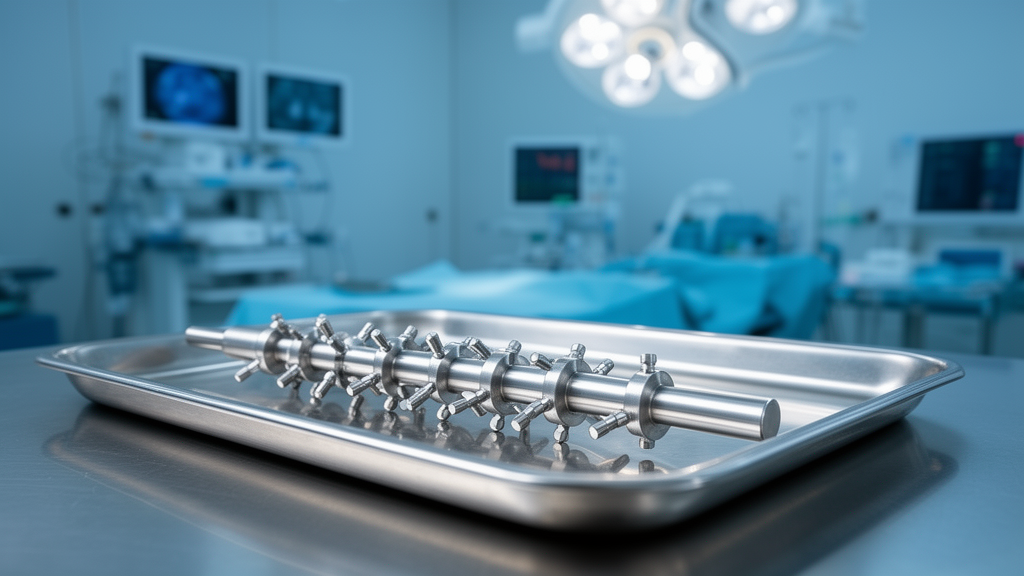
Surgical reconstruction protocols across the participating cohorts utilized four distinct commercial modular arthrodesis designs, specifically the KAM-arthrodesis manufactured by Peter Brehm, the Endo-Model Knee Fusion Nail SK produced by Waldemar Link, the REVISIO RTM-System from AQ Implants, and the MUTARS RS arthrodesis engineered by Implantcast. Fixation mechanics varied across implant philosophies, with the Endo-Model and Mutars RS systems relying upon polymethylmethacrylate cemented intramedullary stem anchoring, whereas the KAM and Revisio RTM assemblies utilized cementless stem engagement within the femoral and tibial canals. None of these four specialized designs required biological osseous fusion across the femorotibial interface, deriving their structural stability entirely from the rigid mechanical connection module bridging the intramedullary stems. Postoperative mobilization protocols mandated six weeks of protected partial weight bearing for cementless implants, whereas patients receiving cemented intramedullary stems were permitted to transition immediately into full postoperative weight-bearing rehabilitation.
Evaluation of the primary study endpoint, defined rigorously as overall implant survival free from partial or total component revision and free from above-the-knee amputation, revealed cumulative Kaplan-Meier survival estimates of 81.9 percent at two years, supported by a 95 percent confidence interval spanning 73.7 to 90.1 percent with sixty-five patients at risk, dropping to 67.0 percent at five years, with a 95 percent confidence interval of 55.2 to 78.8 percent with twenty-seven patients at risk. Twenty-five individual patients experienced primary mechanical or structural treatment failures over the observation timeframe, consisting of seventeen partial or total modular hardware replacements and eight definitive above-the-knee amputations. Documented etiologies precipitating hardware failure encompassed recurring periprosthetic joint infections in eight cases, representing 32.0 percent of failures, aseptic component loosening in ten cases, accounting for 40.0 percent, unmanageable persistent joint pain in three cases, representing 12.0 percent, catastrophic structural implant breakage in three cases, constituting 12.0 percent, and periprosthetic bone fracture in one patient, representing 4.0 percent.
Secondary surgical outcomes demonstrated an overall crude revision-free survival proportion of 63.5 percent across the eighty-five patients, reflecting fifty-four individuals who avoided any subsequent operative re-exploration of the affected joint. Beyond the seventeen full or partial hardware revisions and eight transfemoral amputations, surgeons performed two osteosyntheses to stabilize periprosthetic skeletal fractures, representing 6.5 percent of secondary interventions, and carried out four separate debridement, antibiotics, and implant retention procedures, accounting for 12.9 percent, to combat emergent recurring infections. Among the fifty-nine patients initially treated for periprosthetic joint infection, forty-seven achieved infection-free survival according to the 2013 Delphi-based International Multidisciplinary Consensus criteria, resulting in a crude infection eradication proportion of 79.6 percent at latest follow-up, while one individual within the twenty-six initially aseptic cases subsequently developed a periprosthetic infection requiring surgical revision, establishing a 3.8 percent secondary infection rate.
Analysis of surgical revision strategies revealed profound differences in overall implant survival depending upon whether single-stage, two-stage, or multi-stage operative sequences were executed. Two-stage surgical pathways delivered the highest crude implant retention rate at 90.9 percent across twenty-two patients, significantly exceeding the 67.6 percent survival recorded among thirty-seven patients managed through multi-stage protocols and the 57.7 percent observed among twenty-six patients treated with single-stage revisions. Kaplan-Meier comparisons confirmed that two-stage interventions yielded superior implant survival relative to single-stage procedures, with a hazard ratio of 0.2, a 95 percent confidence interval from 0.05 to 0.98, and a significant p-value of 0.048, while showing no statistically significant difference compared to multi-stage approaches, which had a hazard ratio of 3.6, a confidence interval of 0.8 to 15.9, and a p-value of 0.097. While single-stage revision was selected in 65.4 percent of aseptic presentations and multi-stage protocols were favored in 57.6 percent of septic scenarios, the authors emphasized that retrospective design constraints and unmeasured clinical selection biases prevent drawing definitive causal conclusions regarding staging superiority.
A critical and unexpected finding emerged from the comparative analysis of above-the-knee amputation rates, which demonstrated a statistically elevated amputation incidence among patients undergoing modular arthrodesis for initially aseptic indications compared to those treated for deep sepsis. Among fifty-nine individuals managed for chronic periprosthetic joint infection, only three patients, or 5.1 percent, subsequently underwent transfemoral amputation, with all three amputations necessitated by intractable, uncontrollable recurrent infection. Conversely, among twenty-six individuals undergoing salvage arthrodesis for aseptic indications, five patients, representing 19.2 percent, ultimately underwent above-the-knee amputation, a difference yielding statistical significance with a p-value of 0.042. Within these five aseptic failure amputations, one occurred due to secondary periprosthetic infection, one was caused by a catastrophic non-reconstructable periprosthetic fracture, and three resulted entirely from relentless, intractable pain in limbs devoid of any identifiable mechanical loosening or structural failure, underscoring that painful knee arthroplasties represent an exceptionally challenging clinical subgroup prone to poor surgical salvage outcomes.
The extent of prior surgical interventions proved to be one of the most powerful prognostic indicators of modular arthrodesis longevity, with an exploratory threshold analysis using Youden’s index identifying five previous operative procedures as a decisive inflection point. Patients presenting with five or more prior knee surgeries suffered substantially elevated failure rates, demonstrating a tripled hazard ratio compared to individuals with less extensive surgical backgrounds. Furthermore, although Center A demonstrated a numerically superior crude implant survival rate of 81.4 percent compared to the 59.5 percent documented at Center B, this discrepancy disappeared entirely once multivariable Cox regression modeling adjusted for surgical staging, initial septic versus aseptic indications, and the cumulative burden of previous surgical operations. The elimination of the center-level difference confirmed that institutional performance variations were confounded by case-mix complexity, driven by higher concentrations of septic cases and multi-stage revision protocols managed at Center B rather than intrinsic center-specific disparities in surgical execution.
Patient-reported functional status and health-related quality of life outcomes among individuals maintaining intact hardware remained profoundly impaired across all clinical subcategories. Functional evaluations utilizing the Lower Extremity Function Score, where scores range from zero to eighty with eighty representing optimal function, produced a mean score of only 21.6 out of 80, corresponding to an average functional performance capacity of just 27.0 percent. Quality-of-life assessments using the EQ-5D-3L index yielded a mean score of 0.612, alongside a mean EuroQol visual analogue scale general health rating of 51.0 out of 100, with several patients explicitly citing severe compensatory back pain from leg length discrepancies as a major daily impairment. Notably, functional and quality-of-life metrics did not differ significantly between septic and aseptic cohorts, nor did age, body mass index, or surgical staging exert measurable influence, indicating that the mechanical stiffness of modular arthrodesis itself imposes a pervasive ceiling on physical recovery.
Subject of Research: Clinical outcomes, implant durability, and quality of life following modular non-fusion knee arthrodesis after failed total knee arthroplasty
Article Title: High failure rates and poor quality of life after modular non-fusion knee arthrodesis following failed total knee arthroplasty: a multicenter retrospective study of 85 patients
Article References: Schlossmacher, B., Tietje, C., Lallinger, V., von Eisenhart-Rothe, R., Lazic, I., Pohlig, F., Hungerer, S., & Langer, S. (2026). High failure rates and poor quality of life after modular non-fusion knee arthrodesis following failed total knee arthroplasty: a multicenter retrospective study of 85 patients. Arthroplasty, 8(1), Article 52. https://doi.org/10.1186/s42836-026-00415-5
Image Credits: AI Generated
DOI: 10.1186/s42836-026-00415-5
Keywords: modular knee arthrodesis, total knee arthroplasty, periprosthetic joint infection, orthopedic surgery, above-the-knee amputation, implant survival, patient-reported outcomes, revision arthroplasty, High, failure, rates, poor
News Source: Ophelia Keating. (November 12, 2026). Modular Knee Arthrodesis After Failed Joint Replacement Shows High Failure Rates. Scienmag.