A systematic review and network meta-analysis evaluating fourteen randomized controlled trials found that modified techniques of endoscopic submucosal dissection for colorectal lesions do not significantly improve en bloc resection, complete R0 resection, or adverse event rates compared with conventional endoscopic submucosal dissection. Although several technical modifications demonstrated faster dissection speeds or shorter overall procedure times, none showed superior therapeutic efficacy or clinical safety over the established standard method. Consequently, researchers concluded that no modified approach can currently be recommended over conventional dissection based on efficacy or safety grounds.
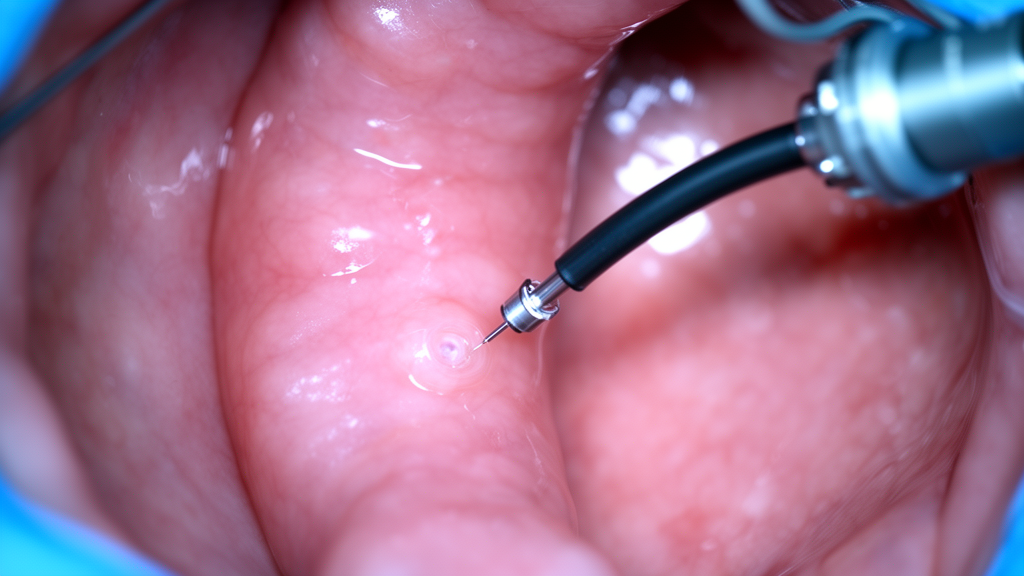
Endoscopic submucosal dissection is widely recognized as the standard minimally invasive intervention for removing superficial colorectal neoplasms. To address technical challenges associated with the procedure, clinicians have developed various modified dissection methods, including traction assistance, pocket creation, underwater submersion, and hybrid strategies. However, the comparative effectiveness and safety profiles across these emerging variations have remained uncertain. To evaluate these competing approaches systematically, investigators conducted a network meta-analysis to compare procedural efficacy and safety across randomized controlled trials.
The researchers searched PubMed, Embase, Web of Science, and the Cochrane Library from database inception through 1 May 2026, registering the study protocol in PROSPERO under registration CRD420261404995. The analysis ultimately pooled data from 1,351 patients across fourteen randomized controlled trials that compared different colorectal dissection methods. The primary outcomes assessed across the network included en bloc resection, R0 resection, total procedure time, dissection speed, and adverse events. The analytical team fitted a frequentist random-effects network meta-analysis, estimating between-study variance using restricted maximum likelihood and expressing effect estimates as risk ratios or mean differences with corresponding 95 percent confidence intervals.
The structural geometry of the evidence network was heavily centred on conventional endoscopic submucosal dissection. Aside from a single direct comparison between the pocket-creation method and pocket-traction-assisted dissection, every comparison between two modified techniques passed directly through conventional dissection. Because the evidence network contained no closed loops, statistical inconsistency between direct and indirect evidence could not be formally tested. This structural limitation highlights that current randomized evidence on modified techniques remains primarily anchored to comparisons against standard practice rather than direct head-to-head trials between modified alternatives.
Regarding oncologic and safety outcomes, none of the modified dissection techniques differed significantly from conventional dissection in achieving en bloc resection, complete R0 resection, or avoiding adverse events. Every estimated 95 percent confidence interval for these endpoints included the null value, indicating no demonstrable statistical difference. Furthermore, two of the comparative estimates in the network relied on data from only one trial each. Surface under the cumulative ranking curve values ranged widely from 0.081 to 0.890 and shifted directions across different evaluated outcomes, rendering these rankings strictly descriptive rather than definitive evidence of clinical hierarchy.
Procedural efficiency outcomes revealed modest advantages for certain modified techniques. Traction-assisted endoscopic submucosal dissection significantly shortened overall procedure time compared with conventional dissection, showing a mean difference of negative 16.63 minutes with a 95 percent confidence interval from negative 24.32 to negative 8.94 minutes. This observed time reduction persisted after investigators performed a sensitivity analysis excluding two trials that violated procedural transitivity, yielding a mean difference of negative 21.11 minutes with a 95 percent confidence interval from negative 30.91 to negative 11.32 minutes.
Faster tissue dissection speeds were also recorded for several modified interventions. Dissection speed was significantly higher with hybrid dissection, showing a mean difference of 6.90 units over conventional dissection with a 95 percent confidence interval of 2.95 to 10.86, underwater dissection with a mean difference of 3.42 and confidence interval of 0.41 to 6.44, and saline-pocket dissection with a mean difference of 4.40 and confidence interval of 1.57 to 7.23. However, these specific speed estimates rested on evidence from two trials or fewer.
The authors emphasized substantial limitations when translating these procedural time differences into clinical guidance. Whether saving approximately 17 minutes of procedural duration provides a meaningful clinical benefit remains an open question, particularly because none of the included randomized controlled trials was statistically powered to detect differences in rare but serious clinical complications such as procedural perforation or delayed bleeding.
Subject of Research: Comparative efficacy and safety of colorectal endoscopic submucosal dissection techniques
Article Title: Comparison of different techniques of endoscopic submucosal dissection for colorectal lesions: a systematic review and network meta-analysis of randomized controlled trials
Article References: Yang, Y., Kou, J., Wang, K., Zhang, D., & Xiong, Y. (2026). Comparison of different techniques of endoscopic submucosal dissection for colorectal lesions: a systematic review and network meta-analysis of randomized controlled trials. BMC Gastroenterology. https://doi.org/10.1186/s12876-026-05601-y
Image Credits: AI Generated
DOI: 10.1186/s12876-026-05601-y
Keywords: endoscopic submucosal dissection, colorectal lesions, conventional ESD, traction-assisted ESD, hybrid ESD, underwater ESD, saline-pocket ESD, pocket-creation method, pocket-traction-assisted ESD, network meta-analysis, randomized controlled trials, en bloc resection, R0 resection, procedure time, dissection speed, adverse events, superficial colorectal neoplasms, transitivity
News Source: Ophelia Keating. (November 23, 2026). Modified Colorectal Endoscopic Dissection Techniques Match Standard Resection and Safety Outcomes. Scienmag.