• HOME
  • NEWS
  • EXPLORE
    • CAREER
      • Companies
      • Jobs
    • EVENTS
    • iGEM
      • News
      • Team
    • PHOTOS
    • VIDEO
    • WIKI
  • BLOG
  • COMMUNITY
    • FACEBOOK
    • INSTAGRAM
    • TWITTER
Thursday, November 12, 2026
BIOENGINEER.ORG
No Result
View All Result
  • Login
  • HOME
  • NEWS
  • EXPLORE
    • CAREER
      • Companies
      • Jobs
        • Lecturer
        • PhD Studentship
        • Postdoc
        • Research Assistant
    • EVENTS
    • iGEM
      • News
      • Team
    • PHOTOS
    • VIDEO
    • WIKI
  • BLOG
  • COMMUNITY
    • FACEBOOK
    • INSTAGRAM
    • TWITTER
No Result
View All Result
Bioengineer.org
No Result
View All Result
Home NEWS Science News Biology

Modeled Saudi Sheep Meat E. Coli Risk Rounds to Zero

by
November 12, 2026
in Biology
Reading Time: 2 mins read
0
Modeled Saudi Sheep Meat E. Coli Risk Rounds to Zero

Modeled Saudi Sheep Meat E. Coli Risk Rounds to Zero

Share on FacebookShare on TwitterShare on LinkedinShare on RedditShare on Telegram

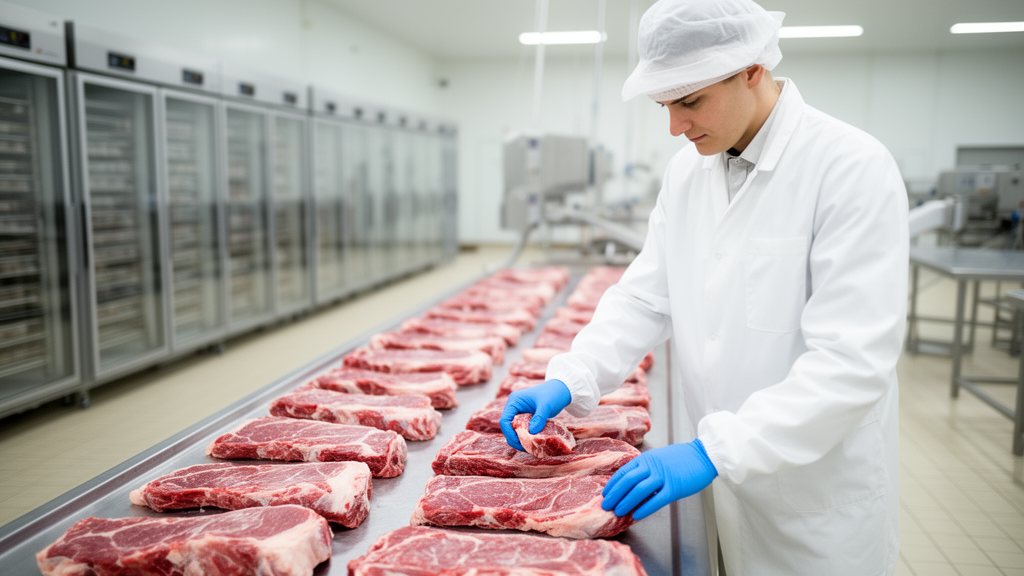
A probabilistic quantitative microbial risk assessment of sheep meat in Saudi Arabia has estimated that the median annual incidence of illness from Escherichia coli O157:H7 is zero cases per 100,000 people under both recommended and plausible storage conditions when rounded to the nearest whole case. Conducted by researchers affiliated with the Saudi Food and Drug Authority, the simulation evaluated consumer exposure and health outcomes within the specific context of the domestic food supply and dietary consumption patterns.

Escherichia coli O157:H7 is recognized as an important foodborne bacterial pathogen capable of causing severe clinical outcomes in humans. Although the pathogen has previously been detected in sheep and sheep meat in Saudi Arabia, quantitative estimates evaluating exposure levels and associated illness risks within the national food chain had remained limited.

To evaluate these dynamics, the investigators constructed a probabilistic quantitative microbial risk assessment model tailored to sheep meat. The model evaluated seven fixed initial contamination levels spanning six orders of magnitude, ranging from −3 to 3 log10 CFU/g, while maintaining Saudi consumption and supply patterns across all evaluated configurations.

Each of the seven contamination levels was simulated under two operational storage scenarios. The first scenario represented strict adherence to recommended refrigeration temperatures between 1°C and 5°C, while the second incorporated a plausible storage temperature distribution reflecting realistic conditions across the supply chain.

Across the seven initial contamination levels, both the probability of illness and the modeled annual incidence increased alongside initial bacterial concentrations. At the highest evaluated level of 3 log10 CFU/g, the median probability of illness was estimated at 1.50 × 10⁻⁹ under recommended refrigeration and 3.40 × 10⁻⁹ under the plausible temperature distribution.

A factor-fixing sensitivity analysis identified the probability of illness from a single organism as the most influential parameter in the model, followed by the internal cooking temperature of the meat. The researchers concluded that population-level risk is primarily associated with a subset of high-exposure scenarios observed in the simulation, with overall risk distributions driven by variations in storage and cooking conditions.

Subject of Research: Quantitative microbial risk assessment of Escherichia coli O157:H7 in Saudi Arabian sheep meat

Article Title: A quantitative microbial risk assessment of Escherichia coli O157:H7 in sheep meat in Saudi Arabia

Article References: Almasaud, L., Alfaifi, S., Almadani, O., & Alhumaidan, O. (2026). A quantitative microbial risk assessment of Escherichia coli O157:H7 in sheep meat in Saudi Arabia. Frontiers in Microbiology, 17, Article 1972708. https://doi.org/10.3389/fmicb.2026.1972708

Image Credits: AI Generated

DOI: 10.3389/fmicb.2026.1972708

Keywords: Escherichia coli O157:H7, sheep meat, quantitative microbial risk assessment, Saudi Arabia, food safety, foodborne pathogens, probabilistic modeling, refrigeration temperature, cooking temperature, internal temperature, microbial contamination, annual incidence, sensitivity analysis, Saudi Food and Drug Authority, meat storage, exposure assessment, CFU per gram

News Source: Drew Townsend. (November 12, 2026). Modeled Saudi Sheep Meat E. Coli Risk Rounds to Zero. Scienmag.

Tags: annual incidenceCFU per gramcooking temperatureEscherichia coli O157:H7exposure assessmentfood safetyfoodborne pathogensinternal temperaturemeat storagemicrobial contaminationprobabilistic modelingquantitative microbial risk assessmentrefrigeration temperatureSaudi ArabiaSaudi Food and Drug AuthoritySensitivity analysissheep meat
Share12Tweet7Share2ShareShareShare1

Related Posts

Emerging Fusarium Species Cause Pomegranate Canker Under Controlled Conditions in Iran

Emerging Fusarium Species Cause Pomegranate Canker Under Controlled Conditions in Iran

November 12, 2026
Melatonin-Loaded Nanoparticles Enhance Rosmarinic Acid Biosynthesis in Cultured Basil Leaves

Melatonin-Loaded Nanoparticles Enhance Rosmarinic Acid Biosynthesis in Cultured Basil Leaves

November 12, 2026

Review Highlights Lysosomes as Dynamic Hubs Controlling Adult Stem Cell Quiescence

November 12, 2026

Zanzibar Marine Study Finds High Coliform Antibiotic Resistance

November 12, 2026

POPULAR NEWS

  • Exercise Training Regulates Mitochondrial Dynamic Proteins in Visceral Fat of Diabetic Rats

    Exercise Training Regulates Mitochondrial Dynamic Proteins in Visceral Fat of Diabetic Rats

    29 shares
    Share 12 Tweet 7
  • Bacterial Consortium Enhances Antioxidant Levels and Crop Yield in Black Rice

    29 shares
    Share 12 Tweet 7
  • Urinary Multi-Omics Panel Enables Non-Invasive Detection of Clear Cell Kidney Cancer

    29 shares
    Share 12 Tweet 7
  • Integrated Local Oscillator and Active Phase Stabilization Improve Heterodyne CARS Imaging Contrast

    29 shares
    Share 12 Tweet 7

About

We bring you the latest biotechnology news from best research centers and universities around the world. Check our website.

Follow us

Recent News

Emerging Fusarium Species Cause Pomegranate Canker Under Controlled Conditions in Iran

Reasoning Modes Boost Language Model Accuracy in Chinese Clinical Text Extraction

Ethiopian Hospital Study Evaluates In-Hospital Mortality Risk in Diabetic COVID-19 Patients

Subscribe to Blog via Email

Enter your email address to subscribe to this blog and receive notifications of new posts by email.

Join 86 other subscribers
  • Contact Us

Bioengineer.org © Copyright 2023 All Rights Reserved.

Welcome Back!

Login to your account below

Forgotten Password?

Retrieve your password

Please enter your username or email address to reset your password.

Log In
No Result
View All Result
  • Homepages
    • Home Page 1
    • Home Page 2
  • News
  • National
  • Business
  • Health
  • Lifestyle
  • Science

Bioengineer.org © Copyright 2023 All Rights Reserved.