The Philippine Archipelago, with more than 7,100 islands, has one of the highest levels of endemism globally and is a hotspot for biodiversity conservation. Mindanao, the second largest group of islands in the country, is a treasure trove of terrestrial species, boasting one of the highest densities of unique flora and fauna on the planet. However, despite its ecological significance, comprehensive biodiversity records and data for the region have remained inaccessible until now.
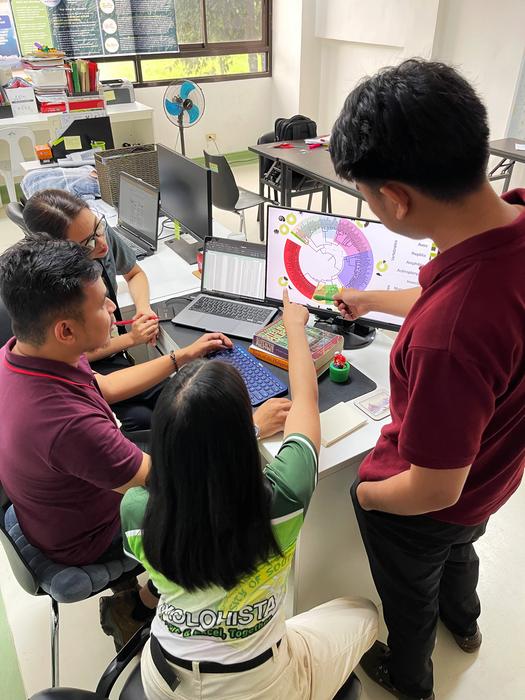
Credit: Tanalgo et al.
The Philippine Archipelago, with more than 7,100 islands, has one of the highest levels of endemism globally and is a hotspot for biodiversity conservation. Mindanao, the second largest group of islands in the country, is a treasure trove of terrestrial species, boasting one of the highest densities of unique flora and fauna on the planet. However, despite its ecological significance, comprehensive biodiversity records and data for the region have remained inaccessible until now.
The Mindanao Open Biodiversity Information (MOBIOS+) database aims to bridge these critical data gaps by compiling biodiversity information from the 21st century. This monumental undertaking seeks to enhance our understanding of Mindanao’s biodiversity trends, while establishing a database that is openly accessible to researchers and conservationists worldwide.
MOBIOS+ is the first of its kind and, currently, the most comprehensive attempt to create a consolidated database for the biodiversity of Mindanao based on publicly available literature. With a vast collection of biodiversity data, this database will be an invaluable resource to advance regional biodiversity research and analysis.
“It will further facilitate the identification of species and areas that require immediate conservation prioritisation and action, addressing the urgent challenges posed by our rapidly changing planet,” the researchers behind the project write in their data paper, published in the open-access, peer-reviewed Biodiversity Data Journal.
The MOBIOS+ database, available through the Global Biodiversity Information Facility (GBIF) platform, currently comprises an impressive 12,813 georeferenced specimen occurrences representing 1,907 unique taxa. These span across ten animal classes inhabiting terrestrial and freshwater environments within the Mindanao faunal region. The project aims to continuously update the species database, complementing on-ground biodiversity efforts in Mindanao.
Associate Professor Krizler Tanalgo of the Ecology and Conservation Research Laboratory at the University of Southern Mindanao, the project leader behind MOBIOS+, shared his thoughts on this initiative, saying:
“We aim to democratise biodiversity information, making it readily available to researchers, policymakers, and conservation biologists. By doing so, we hope to facilitate well-informed decisions to address pressing environmental challenges, with a particular focus on the often underrepresented Mindanao region, which tends to receive limited attention in terms of research and funding.”
“The MOBIOS+ database is not only a testament to the dedication of the scientific community, but also a beacon of hope for the future of biodiversity conservation in Mindanao and beyond. It will support researchers and conservationists in identifying species and areas that require immediate prioritisation and action, safeguarding the unique and fragile ecosystems of this extraordinary region.”
The Biodiversity Community Integrated Knowledge Library (BiCIKL) project, funded by the European Union Horizon 2020 Research and Innovation Action under grant agreement No 101007492, has supported the publication of this work. The work is part of a special collection supported by the project and looking to demonstrate the advantages and novel approaches in accessing and (re-)using linked biodiversity data.
Original source:
Tanalgo KC, Dela Cruz KC, Agduma AR, Respicio JMV, Abdullah SS, Alvaro-Ele RJ, Hilario-Husain BA, Manampan-Rubio M, Murray SA, Casim LF, Pantog AMM, Balase SMP, Abdulkasan RMA, Aguirre CAS, Banto NL, Broncate SMM, Dimacaling AD, Fabrero GVN, Lidasan AK, Lingcob AA, Millondaga AM, Panilla KFL, Sinadjan CQM, Unte ND (2023) The MOBIOS+: A FAIR (Findable, Accessible, Interoperable and Reusable) database for Mindanao’s terrestrial biodiversity. Biodiversity Data Journal 11: e110016. https://doi.org/10.3897/BDJ.11.e110016
Journal
Biodiversity Data Journal
DOI
10.3897/BDJ.11.e110016
Article Title
The MOBIOS+: A FAIR (Findable, Accessible, Interoperable and Reusable) database for Mindanao’s terrestrial biodiversity
Article Publication Date
9-Oct-2023