• HOME
  • NEWS
  • EXPLORE
    • CAREER
      • Companies
      • Jobs
    • EVENTS
    • iGEM
      • News
      • Team
    • PHOTOS
    • VIDEO
    • WIKI
  • BLOG
  • COMMUNITY
    • FACEBOOK
    • INSTAGRAM
    • TWITTER
Tuesday, September 1, 2026
BIOENGINEER.ORG
No Result
View All Result
  • Login
  • HOME
  • NEWS
  • EXPLORE
    • CAREER
      • Companies
      • Jobs
        • Lecturer
        • PhD Studentship
        • Postdoc
        • Research Assistant
    • EVENTS
    • iGEM
      • News
      • Team
    • PHOTOS
    • VIDEO
    • WIKI
  • BLOG
  • COMMUNITY
    • FACEBOOK
    • INSTAGRAM
    • TWITTER
  • HOME
  • NEWS
  • EXPLORE
    • CAREER
      • Companies
      • Jobs
        • Lecturer
        • PhD Studentship
        • Postdoc
        • Research Assistant
    • EVENTS
    • iGEM
      • News
      • Team
    • PHOTOS
    • VIDEO
    • WIKI
  • BLOG
  • COMMUNITY
    • FACEBOOK
    • INSTAGRAM
    • TWITTER
No Result
View All Result
Bioengineer.org
No Result
View All Result
Home NEWS Science News Health

MMRI publishes breakthrough study detailing a novel approach to minimize damage after a heart attack

Bioengineer by Bioengineer
December 20, 2023
in Health
Reading Time: 3 mins read
0
Jason McCarthy, Ph.D.
Share on FacebookShare on TwitterShare on LinkedinShare on RedditShare on Telegram

UTICA, N.Y. – Jason R. McCarthy, Ph.D., associate professor of biomedical research and translational medicine and scientific operations director at MMRI, recently published an innovative manuscript titled, Biomimetic Nanomaterials for the Immunomodulation of the Cardiosplenic Axis Post-Myocardial Infarction. The manuscript details how, when targeted specifically to the spleen, histone deacetylase (HDAC) inhibitors, chemical compounds that can be used to treat cancers and other diseases, have the potential to improve the healing response following a heart attack.
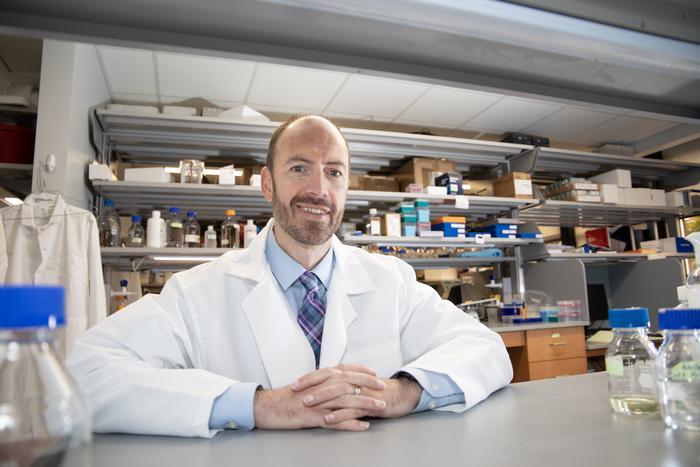
Jason McCarthy, Ph.D.

Credit: MMRI

UTICA, N.Y. – Jason R. McCarthy, Ph.D., associate professor of biomedical research and translational medicine and scientific operations director at MMRI, recently published an innovative manuscript titled, Biomimetic Nanomaterials for the Immunomodulation of the Cardiosplenic Axis Post-Myocardial Infarction. The manuscript details how, when targeted specifically to the spleen, histone deacetylase (HDAC) inhibitors, chemical compounds that can be used to treat cancers and other diseases, have the potential to improve the healing response following a heart attack.

Normally after a heart attack, immune cells migrate from the spleen to the heart in response to injury. Here, McCarthy and his team found that they could design nanomaterials that mimic dead and dying red blood cells, causing them to be retained in the spleen and enabling them to deliver inhibitors that modulate the inflammatory response. Notably, this targeting strategy results in a significant decrease in cardiac scar size and a preservation of heart function, even after just one dose, when given within two hours of heart attack injury.

According to the CDC, heart disease is the leading cause of death in the United States, which affects approximately one in five Americans. As a result of McCarthy’s findings, there is a potential for his strategy to be used more clinically, to significantly reduce cardiac damage and possibly prevent a second event or an arrhythmia following a heart attack.

MMRI scientists who contributed to the study include Jason R. McCarthy, Ph.D., Rajendran JC Bose, Ph.D., Chase W. Kessinger, Ph.D., Khanh Ha, Ph.D., Bing Xu, Ph.D. and Maria I. Kontaridis, Ph.D. This work was a collaboration with scientists at the Medical University of South Carolina, Charleston, South Carolina; McMaster University, Hamilton, Ontario; the Ralph H. Johnson Veterans Affairs Medical Center, Charleston, South Carolina; and Stanford University School of Medicine, Stanford, California.

“We are thrilled to have our study published in Advanced Materials, one of the leading journals in this field of research,” said McCarthy. “This novel concept may have far-reaching applicability for the treatment of a number of both acute and chronic conditions where the spleen may be involved.” 

Looking ahead, McCarthy and his team will use these findings to focus on the mechanisms leading to this therapeutic effect, as well as investigate these materials in several other diseases, such as lupus and pneumonia.

To learn more, visit mmri.edu.


Journal

Advanced Materials

Method of Research

Experimental study

Subject of Research

Not applicable

Article Title

Biomimetic Nanomaterials for the Immunomodulation of the Cardiosplenic Axis Post-Myocardial Infarction

Article Publication Date

7-Nov-2023

Share12Tweet8Share2ShareShareShare2

Related Posts

Wearable monitor improves diagnosis of heart rhythm disorders after fainting

August 31, 2026

Visualisation of magnetic field-induced nanoparticle clusters and mechanical property changes in a breast phantom for inductive moderate hyperthermia

August 31, 2026

Multidisciplinary intervention in frail elderly patients with cardiovascular diseases: a multicentre, single-blinded, randomised controlled trial

August 31, 2026

Machine Learning Model Development and Evaluation for Non-contact Lower Limb Injury Risk Prediction in Elite Male Rugby Union: A Multi-team, Multi-season Analysis

August 31, 2026

POPULAR NEWS

  • β-Sitosterol from Ipomoea carnea Jacq. As a promising anti-inflammatory agent: Evidence from in silico modeling and in vitro validation

    29 shares
    Share 12 Tweet 7
  • Design, fabrication and characterization of a wearable Fiber Bragg grating sensor for cardiorespiratory monitoring using finger plethysmography

    29 shares
    Share 12 Tweet 7
  • KAIST opens the era of industrial-scale microbial foods, proposing growth strategies for the next-generation protein market

    29 shares
    Share 12 Tweet 7
  • Virologist awarded $2 million NIH grant to investigate how virus-infected cells live and die

    29 shares
    Share 12 Tweet 7

About

We bring you the latest biotechnology news from best research centers and universities around the world. Check our website.

Follow us

Recent News

β-Sitosterol from Ipomoea carnea Jacq. As a promising anti-inflammatory agent: Evidence from in silico modeling and in vitro validation

Design, fabrication and characterization of a wearable Fiber Bragg grating sensor for cardiorespiratory monitoring using finger plethysmography

KAIST opens the era of industrial-scale microbial foods, proposing growth strategies for the next-generation protein market

Subscribe to Blog via Email

Enter your email address to subscribe to this blog and receive notifications of new posts by email.

Join 85 other subscribers
  • Contact Us

Bioengineer.org © Copyright 2023 All Rights Reserved.

Welcome Back!

Login to your account below

Forgotten Password?

Retrieve your password

Please enter your username or email address to reset your password.

Log In
No Result
View All Result
  • Homepages
    • Home Page 1
    • Home Page 2
  • News
  • National
  • Business
  • Health
  • Lifestyle
  • Science

Bioengineer.org © Copyright 2023 All Rights Reserved.