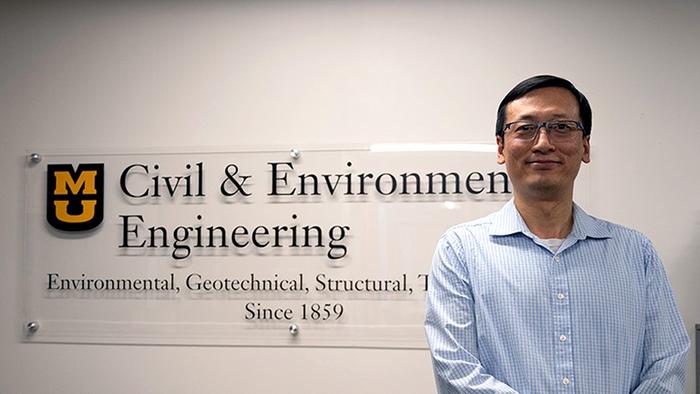

A breakthrough in the field of environmental engineering has emerged from the University of Missouri, where researcher Feng “Frank” Xiao has devised a novel approach for effectively removing per- and polyfluoroalkyl substances (PFAS), commonly referred to as “forever chemicals,” from water sources. These industrial compounds are notorious for their persistence in the environment and human body, raising significant health concerns, including links to various cancers and developmental ailments in children. The innovative method, described in detail in a recent study, leverages commonly used materials and avoids the extreme conditions often required in traditional PFAS degradation techniques.
PFAS are a class of chemicals utilized in a myriad of products, ranging from cosmetics and carpeting to firefighting foams and food packaging. Their unique chemical structure affords them exceptional resistance to degradation in nature, leading to widespread contamination of soil and water sources. For years, scientists have sought efficient means to address this severe contamination without relying on costly or environmentally harmful methods. Xiao’s research represents a pivotal step toward sustainable solutions in the ongoing battle against PFAS pollution.
The crux of Xiao’s methodology lies in the use of granular activated carbon (GAC), a material that has already found extensive application in water filtration systems. GAC consists of carbon-rich granules, derived from sources like coal or wood, which have been subjected to high-temperature treatments to enhance their absorptive properties. By combining GAC with a moderate heating process at 572 degrees Fahrenheit, Xiao’s team achieved an impressive 90% mineralization rate of PFAS, converting these harmful chemicals into harmless inorganic fluorine.
Prior research has indicated that effective mineralization of PFAS typically necessitates extreme temperatures exceeding 1292 degrees Fahrenheit or the use of chemical solvents under high pressure. Such conditions not only drive up operational costs but also raise concerns regarding safety and environmental impact. Xiao argues that the simplicity of his approach—utilizing readily available materials under more moderate conditions—opens doors for local applications in both urban and rural environments, providing communities with a viable solution to PFAS contamination.
The implications of Xiao’s findings extend beyond mere efficiency; they herald a potential shift in how PFAS waste, including contaminated biosolids and spent adsorbent material, is managed. In many agricultural regions, the presence of PFAS in herbicides and veterinary pharmaceuticals poses significant risks, both to human health and the ecosystem. By employing this new method, farmers and local authorities can dramatically reduce the concentration of PFAS, helping to safeguard water supplies and promote healthier agricultural practices.
Xiao’s research was published in the journal Environmental Science and Technology, signifying its relevance to contemporary environmental issues. Within the engineering community, it is being hailed as an innovative approach to managing PFAS that could prove not only effective but also economically sustainable. The research showcases a nuanced understanding of the interactions between GAC and PFAS under thermal conditions, suggesting that the synergy achieved through this combination amplifies the degradation process significantly.
The importance of this research cannot be overstated, particularly given the widespread prevalence of PFAS in various products and the serious health implications associated with long-term exposure.
Tags: cancer links to forever chemicalseffective PFAS removal methodsforever chemicals contamination solutionsgranular activated carbon in water filtrationhealth risks of per- and polyfluoroalkyl substancesindustrial chemicals in consumer productsinnovative techniques for water purificationMissouri University breakthrough studiesMizzou environmental engineering researchovercoming challenges in chemical degradationPFAS pollution and environmental impactsustainable approaches to PFAS degradation