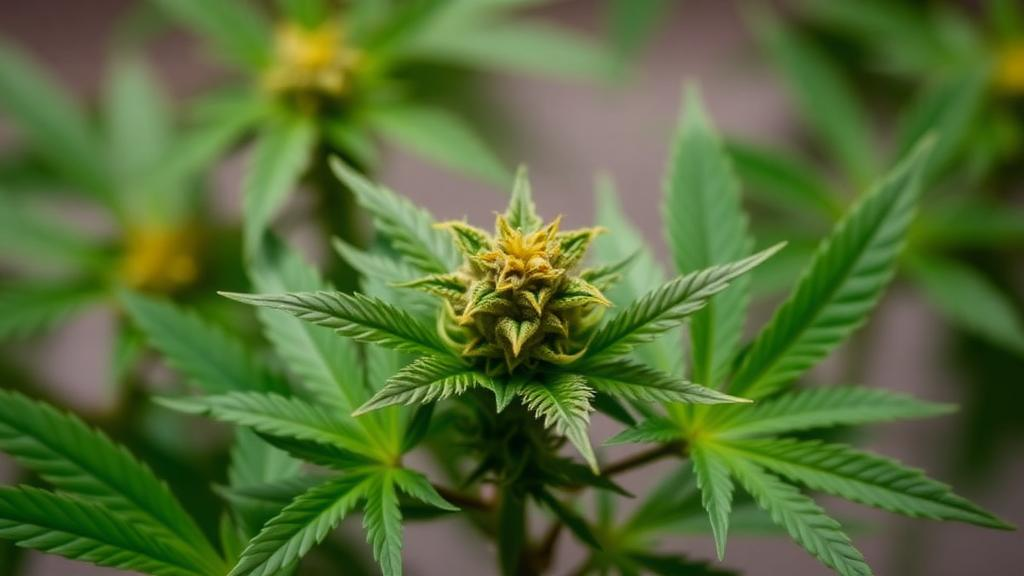
As psilocybin mushrooms move from the fringes of counterculture into the mainstream of psychological research, scientists are beginning to ask a question that has received surprisingly little attention: what happens when people who use cannabis also use psychedelics? A new study published in the International Journal of Mental Health and Addiction by Alexia N. Obrochta and Anita Cservenka of Oregon State University offers one of the first systematic looks at this pattern of co-use, and its findings challenge some common assumptions about how these two substances interact with mental health. The research suggests that people who use both cannabis and psilocybin report lower perceived stress and higher psychological well-being than those who use cannabis alone, a result that could reshape how researchers think about the rapidly changing landscape of substance use in the United States.
The study comes at a moment of remarkable change. Cannabis has been legalized for adult recreational use in a growing number of American states, and psilocybin has followed a similar trajectory, with Oregon establishing the first state-regulated psilocybin services program and other jurisdictions decriminalizing or legalizing the compound. Surveys cited by the authors indicate that psilocybin use has risen sharply in recent years, with nationally representative studies documenting increasing prevalence among adults. Yet while each substance has been studied extensively on its own, the mental health implications of using them together remain poorly understood. This gap matters because co-use is common: people who experiment with psychedelics frequently continue to use other substances, and cannabis is among the most likely companions.
To address this gap, Obrochta and Cservenka recruited participants and divided them into two groups based on their recent substance use. The cannabis-only group comprised 479 individuals who had used cannabis on at least one day in the past 30 days. The co-use group comprised 246 individuals who met the same cannabis criterion and additionally reported using psilocybin on at least one day in the past 90 days, with a typical dose of at least 0.25 grams. This dose threshold is meaningful, because it distinguishes participants who were taking psychoactive amounts of psilocybin from those engaging in sub-perceptual microdosing, allowing the researchers to focus on people whose psychedelic use was likely to produce noticeable effects.
The researchers measured two central outcomes: perceived stress and mental well-being. Perceived stress was assessed with a well-established self-report instrument that captures how unpredictable, uncontrollable, and overloaded respondents find their lives, a measure originally developed by psychologist Sheldon Cohen and colleagues that has become a standard tool in stress research. Well-being was measured with the Warwick-Edinburgh Mental Well-being Scale, a validated instrument that covers both hedonic aspects of mental health, such as positive affect and life satisfaction, and eudaimonic aspects, such as psychological functioning and fulfilling relationships. By combining these two measures, the study captured both the negative and positive poles of mental health rather than focusing solely on symptoms of distress.
The statistical analysis was designed to isolate the specific contribution of psilocybin co-use. The authors controlled for a range of demographic covariates and for the use of other substances, reducing the likelihood that the observed differences simply reflected broader lifestyle or substance use patterns. They also examined sex assigned at birth as a factor, both as an independent predictor and in interaction with co-use status, motivated by a substantial body of prior work showing that the pharmacology and behavioral effects of both cannabis and psychedelics can differ between males and females. Endocannabinoid research has documented sex differences in cannabinoid pharmacology, and emerging preclinical studies suggest that psilocybin’s effects on the stress axis may vary by sex and context, making this an important dimension of the analysis.
The central finding was striking in its direction. After accounting for demographic factors and other substance use, participants in the cannabis and psilocybin co-use group reported lower perceived stress and higher well-being than participants in the cannabis-only group. In other words, among people who use cannabis, those who also used psilocybin appeared to fare better on both measures of mental health. The authors interpret this pattern as indicating that psilocybin use among cannabis users may be associated with better mental health outcomes than cannabis use alone, though they are careful to frame the relationship in associational rather than causal terms.
That caution is essential, and the study’s design cannot settle the question of why co-users report better outcomes. One possibility is that psilocybin genuinely improves stress regulation and well-being, consistent with a growing clinical literature. Randomized trials and meta-analyses have reported that psilocybin-assisted therapy can reduce symptoms of depression and anxiety, and neuroimaging work has shown that psilocybin decreases amygdala reactivity in ways that correlate with enhanced positive mood. A systematic review of the subacute effects of classic serotonergic psychedelics has also described an ‘afterglow’ phenomenon, in which users report improved mood and well-being in the days and weeks following a psychedelic experience. Naturalistic longitudinal studies have similarly found that psilocybin use is associated with persisting improvements in mental health and well-being.
An alternative explanation, however, is reverse causation or self-selection. People who choose to use psilocybin may differ systematically from those who do not: they may be more psychologically open, more engaged in self-exploration, or already experiencing better mental health, which in turn makes them more likely to seek out a psychedelic experience. Some survey research has found that people reduce their use of other substances after psychedelic use, a phenomenon sometimes called psychedelic substitution, while other work has reported associations between psychedelic use and lower rates of cannabis use disorder. It is also possible that the co-use group in this study differed in patterns or motives of cannabis use itself, for example using cannabis less frequently as a coping strategy for stress, a motive that prior research has linked to problematic outcomes. Disentangling these possibilities will require longitudinal and experimental designs that the present cross-sectional approach cannot provide.
The study also carries important public health implications at a time when psilocybin is increasingly accessible outside clinical settings. Researchers have warned that rising publicity and availability of psilocybin present challenges for public health, particularly as people combine it with other substances in uncontrolled environments. Studies of festival and concert attendees have documented simultaneous cannabis and psychedelic use, sometimes producing enhancement of effects and sometimes adverse reactions. Emergency medical treatment following magic mushroom use, while rare relative to the number of exposures, has been documented in international survey research. The new findings do not suggest that combining cannabis and psilocybin is inherently risky or inherently beneficial, but they do highlight that co-use is a distinct pattern of behavior with its own correlates, deserving of targeted research rather than being folded into studies of single substances.
For now, the Oregon State study stands as an early and provocative data point in a field that is still mapping the contours of contemporary psychedelic use. Its strengths lie in its careful group definitions, its use of validated measures of stress and well-being, its statistical control for confounding factors, and its attention to sex as a biological variable, all of which were approved under the oversight of the Oregon State University Institutional Review Board. Its limitations, acknowledged implicitly by the authors’ careful language, are those inherent to self-reported, cross-sectional data collected online, where data integrity is an ongoing concern for researchers. What the study makes clear is that the era in which cannabis and psychedelics could be studied in isolation from one another is ending. As millions of adults report using psilocybin and as legal access expands, understanding how these substances interact in real-world users, for better or worse, will be one of the defining tasks of psychopharmacology in the years ahead.
Subject of Research: Associations between cannabis and psilocybin co-use and self-reported stress and well-being
Article Title: Cannabis and Psilocybin Co-use: Associations with Stress and Well-being
Article References: Obrochta, A. N., & Cservenka, A. (2026). Cannabis and Psilocybin Co-use: Associations with Stress and Well-being. International Journal of Mental Health and Addiction. https://doi.org/10.1007/s11469-026-01744-x
Image Credits: AI Generated
DOI: 10.1007/s11469-026-01744-x
Keywords: psilocybin, cannabis, co-use, stress, well-being, psychedelics, mental health, psychopharmacology, sex differences, substance use, perceived stress, Oregon State University
News Source: Ophelia Keating. (October 13, 2026). Mixing Psilocybin With Cannabis Linked to Lower Stress and Better Well-being in New Study. Scienmag.