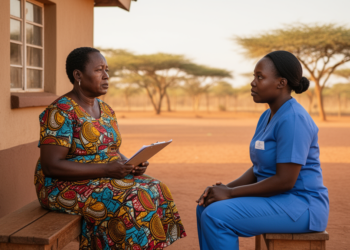
Volunteer community health workers in Bolivia reported high job satisfaction and self-efficacy despite financial limitations, limited time and competing responsibilities at home, school and paid work, according to a mixed-methods study of a Pro Mujer program. The workers associated their motivation with opportunities to help others, acquire new skills, receive incentives, build supportive relationships and pursue career advancement.
The study examined the experiences of volunteer community health workers through qualitative interviews and a quantitative survey. Researchers purposively selected five locations across Bolivia where Pro Mujer implements its community health worker program for interviews. The survey was distributed to participants from all Pro Mujer community health worker project sites. Questions in both instruments addressed workers’ experiences, perceived health effects, motivation, job satisfaction, self-efficacy, professional development and challenges.
Workers described increased self-confidence, self-esteem and pride associated with their community health worker roles. These reported outcomes were closely connected to their capacity to help other people and learn new skills and knowledge. Supportive relationships, incentives and possibilities for professional advancement were also identified as factors influencing motivation, job satisfaction and self-efficacy. The abstract reports that workers felt up-to-date, ongoing training, supportive supervision and adequate incentives would make them more likely to remain in their roles, particularly amid ongoing economic challenges in Bolivia. That statement reflects workers’ expectations rather than a measured effect of these provisions on retention.
Researchers proposed that specialized training, scholarships and mentoring could support professional advancement and sustain motivation and job satisfaction. The abstract presents this as a potential approach, not as an intervention whose effectiveness was tested. Evidence is also bounded by the available summary: it does not provide survey and interview sample sizes, response rates, participant characteristics, quantitative effect estimates, geographic breakdowns, instrument details or a full accounting of the study’s limitations. The findings therefore describe the surveyed and interviewed volunteers within the Pro Mujer program and do not establish the effects of the program on health outcomes or the experiences of community health workers outside it.
Subject of Research: Motivation, job satisfaction and self-efficacy among volunteer community health workers in Bolivia
Article Title: Motivation, job satisfaction, and self-efficacy of community health workers in Bolivia: evidence from a large NGO-run program
Article References: Hurtado, K., Keeney, Y., Mickelson, M., Monje Cuadrado, P. M. D. C., Dunn, N., & Glenn, J. (2026). Motivation, job satisfaction, and self-efficacy of community health workers in Bolivia: evidence from a large NGO-run program. BMC Health Services Research. https://doi.org/10.1186/s12913-026-15694-6
Image Credits: AI Generated
DOI: 10.1186/s12913-026-15694-6
Keywords: community health workers, Bolivia, job satisfaction, self-efficacy, worker motivation, Pro Mujer, mixed methods, volunteer health workers, workforce retention, professional development, Motivation, satisfaction
News Source: Phoebe Ingram. (October 20, 2026). Mixed-methods study links volunteer community health workers’ motivation in Bolivia to training, support and incentives. Scienmag.