


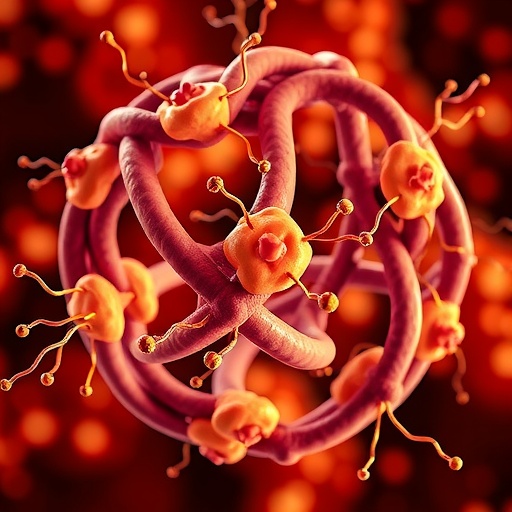
In recent years, the scientific community has shown an increasing interest in the dynamics of mitochondrial morphology, particularly focusing on the processes known as fission and fusion. These processes are vital for maintaining mitochondrial function and integrity, especially within the realm of inflammatory diseases. A groundbreaking study by Xu, W., Xu, X., and Zhang, Y., published in the Journal of Translational Medicine, sheds new light on the intricate mechanisms involved and their potential therapeutic implications.
Mitochondria are often referred to as the powerhouse of the cell due to their critical role in energy production. However, their significance extends beyond mere ATP generation. The balance between mitochondrial fission and fusion is crucial for proper cellular function, influencing apoptosis, cellular metabolism, and inflammatory responses. When this balance is disrupted, it can have dire consequences on overall cellular health, leading to pathologies, particularly in inflammatory conditions.
Recent findings have emerged linking the dysregulation of mitochondrial dynamics to inflammatory diseases. In inflammatory environments, aberrant fission or fusion can exacerbate immune responses, leading to chronic inflammation—a feature of several debilitating conditions, including rheumatoid arthritis, inflammatory bowel disease, and neurodegenerative disorders. Such insights pave the way for exploring mitochondrial dynamics as a therapeutic target in these diseases.
The authors highlight that mitochondrial fission is primarily mediated by proteins such as Drp1 (Dynamin-related protein 1), while fusion involves proteins like Mfn1/2 (Mitofusins) and Opa1. The interplay between these proteins dictates the balance of mitochondrial morphology. When fission predominates, it can lead to the fragmentation of mitochondria, impairing their function and promoting inflammation. On the other hand, mitochondrial fusion supports a robust network that can withstand cellular stress and mitigate inflammatory responses.
Investigating these processes reveals that fission and fusion are not merely structural alterations; they are coordinated events influencing signaling pathways. For instance, during inflammation, Drp1 can be activated, leading to enhanced fission. This increased mitochondrial fragmentation has been linked to heightened production of reactive oxygen species (ROS), further propagating the inflammatory cascade. Thus, understanding the molecular mechanisms that drive these changes can provide therapeutic pathways to mitigate inflammation.
Additionally, the authors discuss promising therapeutic implications of targeting mitochondrial dynamics. For example, pharmacological agents that promote mitochondrial fusion or inhibit fission could potentially restore balance in pathological states characterized by inflammation. Not only might these interventions alleviate symptoms, but they could also target underlying mechanisms, presenting a novel approach to managing chronic inflammatory diseases.
Moreover, studies on mitochondrial dynamics have been shown to intersect with immunological perspectives. In immune cells, such as macrophages, the metabolism is often reprogrammed in response to inflammatory stimuli. The balance of fission and fusion thus plays a role in modulating immune responses. By enhancing our understanding of this relationship, researchers may develop strategies to manipulate mitochondrial dynamics, shaping immune cell function toward resolving inflammation rather than perpetuating it.
One of the most intriguing aspects of this research is the potential to leverage these findings in clinical settings. Developing biomarkers that reflect mitochondrial morphology could serve as indicators for disease state or treatment efficacy. Furthermore, lifestyle interventions that promote mitochondrial health—such as exercise and specific dietary modifications—could complement pharmacological strategies.
As we forge ahead, research in this area is set to expand significantly. New avenues may lead to innovative therapies that integrate mitochondrial dynamics with broader metabolic and immune health strategies. Future clinical trials will likely focus on assessing the safety and efficacy of these mitochondrial-targeted therapies in real-world scenarios that involve inflammatory diseases.
Essentially, the findings from Xu and colleagues encourage a paradigm shift in how we approach the treatment of inflammatory diseases. Rather than viewing symptoms in isolation, there is potential to tackle root causes linked to mitochondrial dysfunction. This holistic approach may not only improve individual patient outcomes but also contribute to a broader understanding of inflammation at the cellular level.
In summary, the study underscores the foundational role of mitochondrial fission and fusion in the context of inflammatory diseases. As our understanding deepens, we may witness a transformation in therapeutic strategies that focus on restoring mitochondrial homeostasis. This could catalyze a new era of treatment paradigms for those suffering from chronic inflammatory conditions, offering hope for enhanced quality of life and better health outcomes.
The implications of this research stretch far and wide, illuminating the path not just for future scientific inquiry, but also for translational medicine that promises to make significant strides in addressing pressing health concerns.
Ultimately, where mitochondrial dynamics meet inflammatory diseases, there lies an opportunity to redefine treatment approaches, emphasizing prevention and restoration over merely managing disease symptoms. As research continues to flourish in this field, we stand on the brink of potentially groundbreaking advancements that hold the promise to reshape our understanding and management of various inflammatory disorders.
Subject of Research: Mitochondrial dynamics in inflammatory diseases.
Article Title: Mitochondrial fission and fusion in inflammatory diseases: mechanisms and therapeutic implications.
Article References:
Xu, W., Xu, X., Zhang, Y. et al. Mitochondrial fission and fusion in inflammatory diseases: mechanisms and therapeutic implications. J Transl Med (2025). https://doi.org/10.1186/s12967-025-07605-w
Image Credits: AI Generated
DOI:
Keywords: Mitochondrial dynamics, fission, fusion, inflammatory diseases, therapeutic implications.
Tags: chronic inflammation and immune responsedysregulation of mitochondrial functionenergy production and inflammationfission and fusion processes in mitochondriainsights from Journal of Translational Medicinemitochondrial dynamics in inflammatory diseasesmitochondrial health and disease pathologiesmitochondrial targeting in disease treatmentneurodegenerative disorders and mitochondrial dysfunctionrelevance of mitochondrial studies in rheumatologyrole of mitochondria in cellular metabolismtherapeutic implications of mitochondrial morphology



