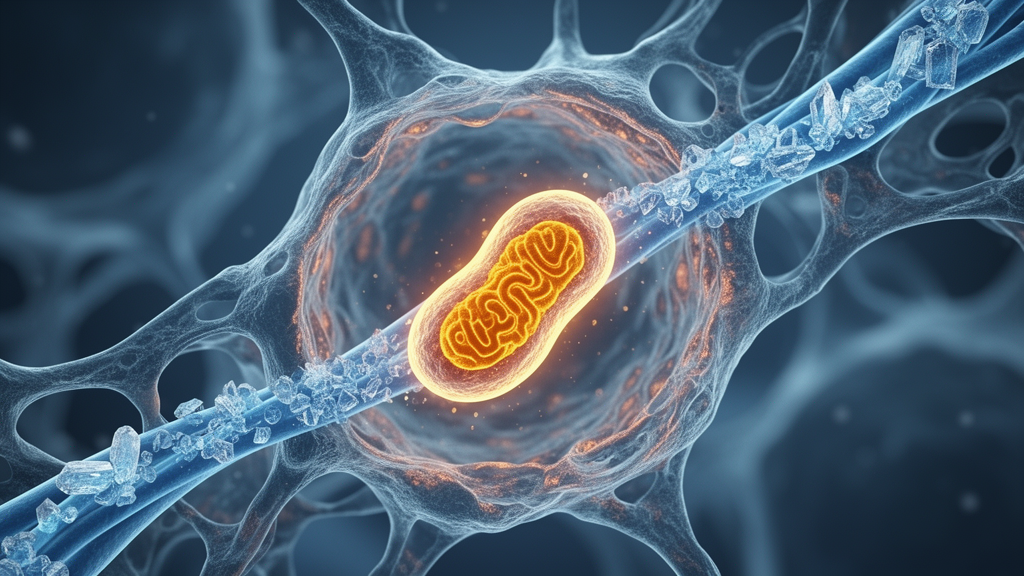
Mitochondrial failure functions as an active biological driver of progressive skeletal deterioration rather than merely representing a passive downstream consequence of aging, according to a comprehensive scientific review published in Frontiers in Cell and Developmental Biology. In the pathological architecture of osteoporosis, dysfunctional organelles disrupt normal osteoblast differentiation, elevate bone-resorbing osteoclast activity, and upset delicate redox equilibrium within the bone marrow niche. Although mitochondrial transplantation has rapidly gained prominence as a potential therapeutic approach to restore cellular bioenergetics and remodel damaged skeletal microenvironments, researchers emphasize that donor organelles cannot be treated as interchangeable biological commodities. Variations in cellular origin, underlying metabolic phenotype, respiratory capacity, proteomic composition, mitochondrial DNA integrity, and environmental disease exposure fundamentally dictate whether organelle transfer successfully enhances osteogenesis or inadvertently triggers osteogenic suppression. As the emerging discipline of organelle-based medicine moves toward clinical applications, selecting suitable donor sources and establishing stringent functional validation metrics have become indispensable prerequisites for skeletal repair.
Skeletal homeostasis relies on continuous structural remodeling that requires robust energetic contributions from oxidative phosphorylation, balanced intracellular calcium regulation, and controlled redox signaling. During healthy bone formation, uncommitted mesenchymal stem cells must orchestrate precise metabolic shifts to sustain matrix synthesis and calcium deposition, processes that depend directly on intact mitochondrial networks. When mitochondrial quality control fails, osteoprogenitors accumulate mitochondrial DNA lesions, lose mitochondrial membrane potential, and generate toxic levels of reactive oxygen species that halt osteogenic lineage progression. The prospect of isolating intact, metabolically active mitochondria from healthy donor cells and transferring them into compromised host tissues offers an attractive theoretical mechanism for metabolic rescue. While certain organelle preparations provide the essential energetic support required for matrix production, others demonstrate negligible therapeutic activity or actively suppress bone-forming cascades.
Direct experimental comparisons highlight substantial divergence in osteogenic outcomes depending on whether donor organelles originate from bone-lineage cells or alternative tissue types. These profound contrasts illustrate that transfer competence is not guaranteed simply by harvesting organelles from viable, non-malignant tissue sources. Donor preparations may transport tissue-specific signaling molecules, specialized regulatory proteins, or distinct lipid assemblies that impart contradictory biological cues to recipient progenitor populations. Moreover, differences between extracellular vesicle-associated organelle fractions and intracellular homogenates suggest that structural packaging and isolation techniques also shape recipient responses.
A donor cell’s baseline metabolic programming represents another decisive parameter governing therapeutic efficacy, independent of its broader taxonomic classification. When researchers compared mitochondrial transfers using oxidative-phosphorylation-dependent MG63 osteoblast-like cells against predominantly glycolytic mesenchymal stem cells, recipient cell outcomes varied dramatically. Organelles sourced from oxidative MG63 cells significantly stimulated osteogenic marker expression, activated bone morphogenetic protein 2 pathways, and promoted structural bone regeneration in vivo within an experimental bone-defect model. In striking contrast, organelles sourced from glycolysis-dominant stem cells failed to elicit comparable osteogenic activity under identical experimental conditions. These experimental findings indicate that glycolysis-dependent stem cells frequently possess bioenergetic platforms unsuited for invigorating dormant bone-forming progenitors. A viable metabolic matching strategy must therefore quantify donor oxygen consumption alongside extracellular acidification rates to ensure that donor organelles supply the comprehensive respiratory machinery, tricarboxylic acid cycle intermediates, and coordinated retrograde signaling cues needed to revitalize energy-deprived host cells.
Pathological exposure within the donor niche further undermines organelle quality, transforming potentially therapeutic structures into biological hazards. In osteoporotic environments, inflammatory signaling and persistent oxidative stress alter resident macrophage populations, causing them to discharge severely damaged mitochondria into the extracellular space. When recipient mesenchymal stem cells internalize these compromised organelles, intracellular reactive oxygen species surge, inducing detrimental metabolic reprogramming marked by the abnormal accumulation of succinate. Excess succinate suppresses osteogenic lineage commitment by triggering succinate receptor 1 inflammatory pathways, stabilizing hypoxia-inducible factor 1-alpha, and altering epigenetic histone demethylation that normally permits osteogenic gene transcription. These findings indicate that autologous mitochondria harvested from elderly or osteoporotic donors cannot automatically be presumed biologically superior, as organelles exposed to pathological microenvironments may already exhibit functional impairment.
Beyond donor origin, physical isolation and processing impose severe biophysical stresses that rapidly degrade mitochondrial function prior to therapeutic administration. To protect isolated organelles, novel pharmacological and bioengineering solutions are currently undergoing preclinical evaluation. Supplementation of isolation buffers with membrane stabilizers such as Poloxamer 188 helps preserve the respiratory control ratio, while advanced biomaterial coatings offer prolonged structural protection. Similarly, preclinical approaches encapsulate young-donor organelles into thermoresponsive, gelatin-methacryloyl artificial cells designed for bone-targeted delivery and controlled release in bone repair.
The successful translation of mitochondrial transplantation into reproducible clinical regimens is hindered by the absence of standardized quality criteria and harmonized manufacturing protocols. Existing experimental studies measure critical parameters such as mitochondrial membrane potential, respiratory control ratios, purity, sterility, and genomic integrity using divergent, uncalibrated laboratory assays. The review authors propose a comprehensive quality framework that categorizes testing requirements into essential screening metrics, recommended characterization standards, and specialized potency assays. Essential screening dictates verifying donor-cell differentiation stage, oxygen consumption, membrane integrity, and freedom from adventitious endotoxins, mycoplasma, or residual cellular debris. Extended characterization must quantify mitochondrial DNA copy numbers, sequence heteroplasmy, baseline reactive oxygen species generation, and organelle fusion-fission dynamics governed by proteins like mitofusin 2 and dynamin-related protein 1. Most crucially, functional release testing must rely on standardized osteogenic potency assays that measure recipient alkaline phosphatase restoration, ATP rescue, and calcium mineralization before batch administration.
Translating these laboratory principles to patient care demands a personalized framework that accounts for the diverse pathophysiological subtypes of skeletal fragility. Postmenopausal osteoporosis, age-related senile osteoporosis, glucocorticoid-induced bone loss, and chronic inflammatory osteopenia present fundamentally distinct microenvironmental hurdles within the bone marrow cavity. Patients suffering from early postmenopausal demineralization may retain sufficient residual cellular vitality to benefit from non-invasive nanosystems designed to stimulate endogenous mitochondrial biogenesis via the SIRT1 and PGC-1-alpha axis. In contrast, advanced senile osteoporosis characterized by extensive marrow senescence, dense inflammatory secretomes, and severe endogenous mitochondrial collapse may strictly require exogenous transplantation of preselected, metabolically qualified, or genetically engineered allogeneic organelles. Matching donor respiratory characteristics, antioxidant defenses, and delivery platforms to the recipient tissue's specific inflammatory state and metabolic deficit is proposed as a hypothesis-driven strategy to optimize outcomes across patient subgroups.
Preliminary clinical trials in non-skeletal disciplines provide encouraging proof-of-concept evidence for procedural feasibility while simultaneously underscoring prevailing translational hurdles. Pediatric patients experiencing severe myocardial ischemia-reperfusion injury during cardiac surgery showed improved ventricular performance following autologous cardiac mitochondrial injections, and phase 1/2a trials using umbilical-cord-derived mitochondria for inflammatory myopathies documented acceptable short-term safety. Local injections of autologous skeletal muscle mitochondria have similarly accelerated chronic pressure ulcer healing in isolated clinical settings. However, other clinical trials, including randomized evaluations of autologous bone marrow mitochondrial transfers in human assisted reproduction, failed to show demonstrable therapeutic advantages. Because no dedicated clinical trials have yet investigated mitochondrial transplantation directly for human osteoporosis, current mechanistic conclusions and proposed donor-matching guidelines remain strictly preclinical, necessitating comprehensive validation in disease-specific animal models and standardized human cell platforms before regulatory authorization.
Ultimately, treating skeletal degeneration through organelle medicine requires a paradigm shift from simplistic physical organelle delivery toward rigorous, product-driven pharmacological standardization. Uncontrolled transplantation using uncharacterized biological isolates poses tangible risks of introducing dysfunctional metabolic cargo, promoting inflammatory cascades, or accelerating bone loss. Realizing the full osteogenic potential of mitochondrial therapy requires treating donor mitochondria as complex, living biological products defined by verified respiratory potency, genomic integrity, and microenvironmental compatibility. By establishing harmonized global release criteria, developing targeted biomaterial delivery systems, and systematically screening donor phenotypes against recipient metabolic requirements, biomedical researchers can transform mitochondrial transplantation from an experimental laboratory hypothesis into an effective, reproducible reality for patients battling osteoporotic bone loss.
Subject of Research: Donor cell selection, functional heterogeneity, and quality control criteria for mitochondrial transplantation in osteoporosis therapy
Article Title: Mitochondrial donor source selection for osteoporosis therapy: functional heterogeneity and quality criteria for osteogenic efficacy
Article References: Li, W., Meng, S., & Zhu, K. (2026). Mitochondrial donor source selection for osteoporosis therapy: functional heterogeneity and quality criteria for osteogenic efficacy. Frontiers in Cell and Developmental Biology, 14, Article 2014138. https://doi.org/10.3389/fcell.2026.2014138
Image Credits: AI Generated
DOI: 10.3389/fcell.2026.2014138
Keywords: osteoporosis, mitochondrial transplantation, osteogenic differentiation, mesenchymal stem cells, osteoblasts, cellular bioenergetics, oxidative phosphorylation, glycolysis, reactive oxygen species, mitochondrial membrane potential, mitochondrial DNA integrity, macrophage polarization, succinate accumulation, regenerative medicine, organelle medicine, bone microenvironment, potency assays, biomaterial delivery
News Source: Drew Townsend. (November 14, 2026). Mitochondrial Donor Selection May Shape Bone Formation in Preclinical Osteoporosis. Scienmag.