• HOME
  • NEWS
  • EXPLORE
    • CAREER
      • Companies
      • Jobs
    • EVENTS
    • iGEM
      • News
      • Team
    • PHOTOS
    • VIDEO
    • WIKI
  • BLOG
  • COMMUNITY
    • FACEBOOK
    • INSTAGRAM
    • TWITTER
Sunday, June 28, 2026
BIOENGINEER.ORG
No Result
View All Result
  • Login
  • HOME
  • NEWS
  • EXPLORE
    • CAREER
      • Companies
      • Jobs
        • Lecturer
        • PhD Studentship
        • Postdoc
        • Research Assistant
    • EVENTS
    • iGEM
      • News
      • Team
    • PHOTOS
    • VIDEO
    • WIKI
  • BLOG
  • COMMUNITY
    • FACEBOOK
    • INSTAGRAM
    • TWITTER
  • HOME
  • NEWS
  • EXPLORE
    • CAREER
      • Companies
      • Jobs
        • Lecturer
        • PhD Studentship
        • Postdoc
        • Research Assistant
    • EVENTS
    • iGEM
      • News
      • Team
    • PHOTOS
    • VIDEO
    • WIKI
  • BLOG
  • COMMUNITY
    • FACEBOOK
    • INSTAGRAM
    • TWITTER
No Result
View All Result
Bioengineer.org
No Result
View All Result
Home NEWS Science News Biology

Missing link in rare inherited skin disease exposed

Bioengineer by Bioengineer
January 29, 2020
in Biology
Reading Time: 2 mins read
0
IMAGE
Share on FacebookShare on TwitterShare on LinkedinShare on RedditShare on Telegram

IMAGE

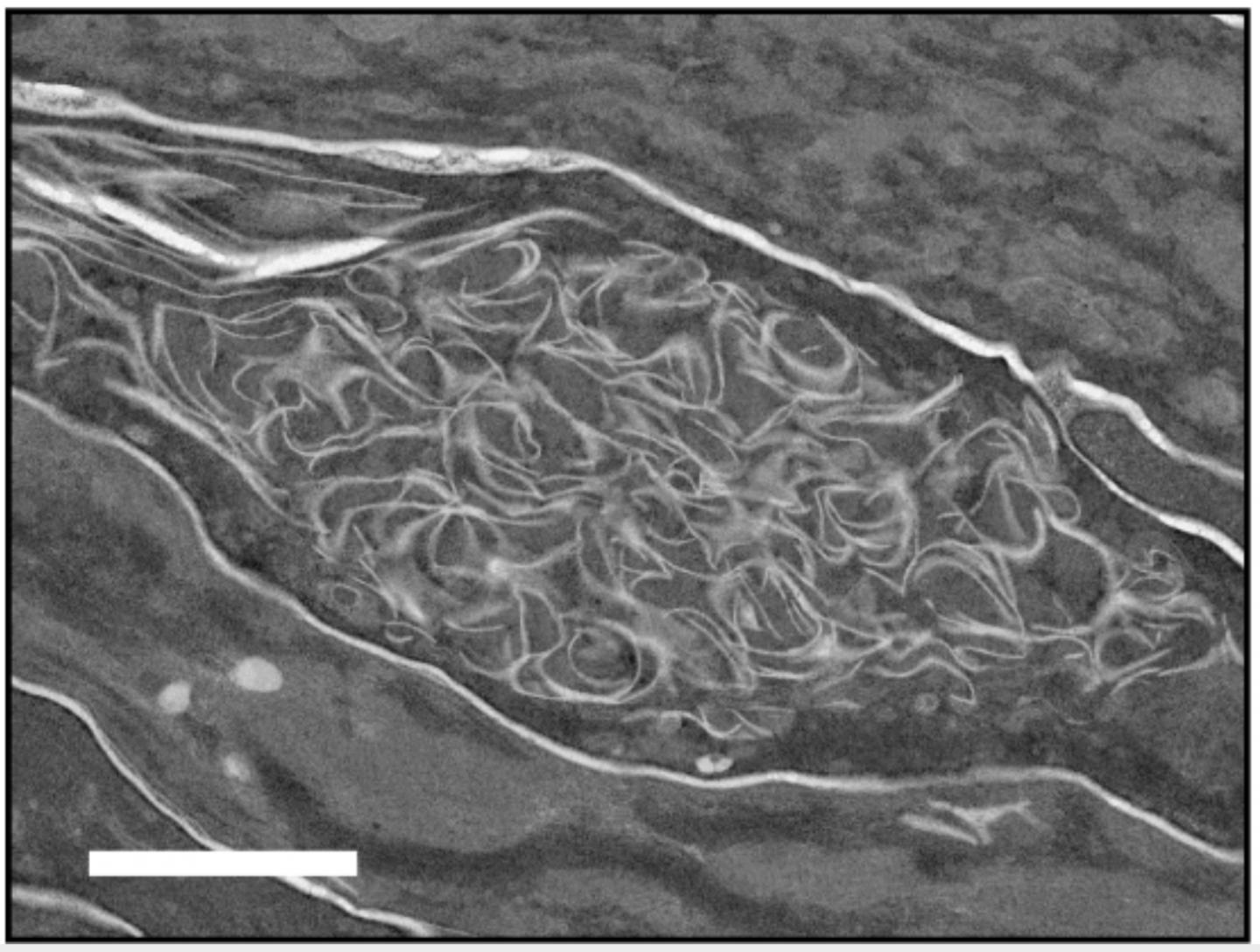
Credit: Yamamoto H., et al., Proceedings of the National Academic of Sciences of the United States of America, January 23, 2020.


Hokkaido University scientists are getting closer to understanding how a rare hereditary disease impairs the skin’s barrier function, which determines how well the skin is protected.

The gene mutation that causes ichthyosis prematurity syndrome–characterized by premature birth; difficulty breathing shortly after birth; and very dry, thick and scaly skin–dramatically reduces the synthesis of acylceramide, a key skin lipid in forming the skin barrier. The discovery provides us with a better understanding of the condition, which is currently untreatable.

Ichthyosis prematurity syndrome is caused by a gene mutation in fatty acid transporter member 4 (FATP4), but the details of how the mutation impairs the skin’s barrier function, leading to dry, scaly skin, has been unclear.

Molecular biologist Akio Kihara of Hokkaido University led a team of researchers in Japan and Germany to investigate the molecular mechanisms behind the disease. When they disrupted the FATP4 gene in mice, the offspring had rigid skin, low body weight, and died within an hour of birth. Water loss from their skin was more than four times higher than normal mice, and their skin was delicate, susceptible to staining.

Investigations revealed microscopic changes in the skin similar to those that occur in people born with ichthyosis prematurity syndrome. These included abnormalities in the outermost layer of the epidermis.

Upon further analysis, the researchers found a group of skin lipids called acylceramides were significantly reduced in the mice, having only 10% of the normal amount. Acylceramide plays a pivotal role in making the skin barrier largely impermeable to pathogens, allergens and chemicals. It also prevents water loss from the body.

Similarly, when the FATP4 gene expression was decreased in human keratin-producing skin cells, they showed a 40% reduction in acylceramide levels compared to normal human keratinocytes.

The evidence suggests FATP4 plays a critical role in synthesizing acylceramides in both humans and mice, providing the missing link in the synthetic pathway. “Our findings help explain acylceramide synthesis and, with further research, could help in the development of treatments for ichthyosis prematurity syndrome and other skin barrier-related symptoms such as atopic dermatitis,” says Akio Kihara.

###

Media Contact
Katrina-Kay Alaimo
[email protected]
81-117-062-188

Original Source

https://www.global.hokudai.ac.jp/blog/missing-link-in-rare-inherited-skin-disease-exposed/

Related Journal Article

http://dx.doi.org/10.1073/pnas.1917525117

Tags: BiologyCell BiologyDermatologyDevelopmental/Reproductive BiologyGeneticsMedicine/Health
Share12Tweet8Share2ShareShareShare2

Related Posts

Natural Hallucinogens: Evolution’s Ecological Tools, Not Mere Chemical Byproducts

June 25, 2026

This Famous Butterfly Revealed: Three Distinct Species Hidden in One

June 25, 2026

Scientists Attack Soybean Cyst Nematode by Starving Its Food Source

June 25, 2026

Decoding the Secret Code of a Crucial Immune Sensor

June 24, 2026
Please login to join discussion

POPULAR NEWS

  • Saying Goodbye to PGY-6: Pediatric Fellowship Realities

    103 shares
    Share 41 Tweet 26
  • Multi-Hospital Study Reveals Long Covid Burden Is Twice as High as Current Estimates

    92 shares
    Share 36 Tweet 23
  • Detection of EDCs in Breast Milk and Infant Urine Up to Six Months Highlights Early Exposure Risks

    77 shares
    Share 31 Tweet 19
  • New Drug Candidate Developed at McMaster Shows Potential for Treating Brain Cancer

    58 shares
    Share 23 Tweet 15

About

We bring you the latest biotechnology news from best research centers and universities around the world. Check our website.

Follow us

Recent News

Tracking Lanthanide-Labeled Microplastics in Plants

POSTECH Researchers Slash Cost of Reconstituted Cell-Free Systems by 95%

AI and Physics Collaborate to Design Advanced Hydrogen Storage Materials

Subscribe to Blog via Email

Success! An email was just sent to confirm your subscription. Please find the email now and click 'Confirm' to start subscribing.

Join 82 other subscribers
  • Contact Us

Bioengineer.org © Copyright 2023 All Rights Reserved.

Welcome Back!

Login to your account below

Forgotten Password?

Retrieve your password

Please enter your username or email address to reset your password.

Log In
No Result
View All Result
  • Homepages
    • Home Page 1
    • Home Page 2
  • News
  • National
  • Business
  • Health
  • Lifestyle
  • Science

Bioengineer.org © Copyright 2023 All Rights Reserved.