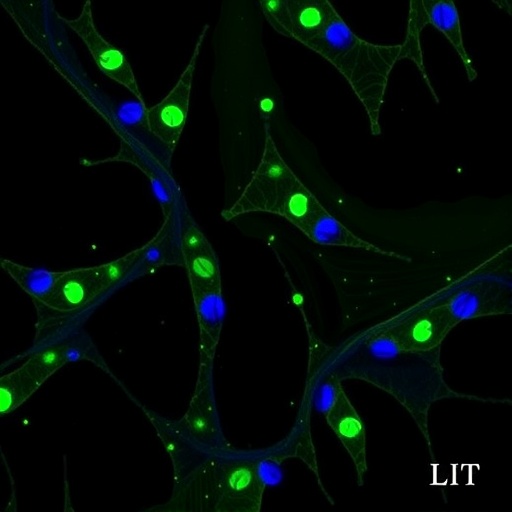
In the rapidly evolving landscape of molecular oncology, a groundbreaking discovery has emerged that could redefine therapeutic strategies against several malignancies. Recent research uncovers the pivotal role of microRNA-770-5p (miR-770-5p) in regulating crucial signaling pathways involved in cancer progression, specifically through its interaction with PRMT5 and the downstream modulation of KLF4 and EGFR pathways. This revelation not only deepens our understanding of tumor biology but also opens new avenues for targeted cancer treatment.
MicroRNAs are small, non-coding RNA molecules that play essential roles in gene regulation, impacting various biological processes, including tumor development and progression. Prior studies have established the significance of microRNAs in oncogenic and tumor suppressor pathways, but miR-770-5p has recently surfaced as a novel and critical player in cancer cell signaling. The current research focuses on miR-770-5p’s function in controlling the delicate balance between proliferation and apoptosis by modulating key molecular actors.
Central to this newfound regulatory axis is protein arginine methyltransferase 5 (PRMT5), an epigenetic modifier known for its involvement in transcriptional repression and chromatin remodeling. PRMT5 has been increasingly recognized as a pro-tumorigenic agent, often upregulated in various cancers, contributing to the maintenance of malignant phenotypes. Intriguingly, miR-770-5p appears to exert its influence by binding to PRMT5, thereby impacting its downstream effectors.
One of the most critical downstream targets affected by this interplay is Krüppel-like factor 4 (KLF4), a transcription factor with dual roles in cancer biology, acting either as a tumor suppressor or an oncogene depending on cellular context. The modulation of KLF4 by the miR-770-5p/PRMT5 axis suggests a sophisticated regulatory mechanism whereby miR-770-5p indirectly controls gene expression programs governing cell fate and tumor progression.
Moreover, the epidermal growth factor receptor (EGFR) signaling pathway, a well-known oncogenic cascade implicated in numerous cancers, is intricately tied to this molecular circuit. EGFR signaling drives cellular proliferation, survival, and migration, making it a prime target for cancer therapeutics. The elucidation of miR-770-5p’s role in regulating EGFR through PRMT5 interaction and KLF4 modulation underscores a complex network that may be exploited for therapeutic interventions.
The researchers employed a combination of molecular biology techniques, including gene expression analysis, protein interaction assays, and functional cell studies, to unravel these mechanistic insights. The data reveal that downregulation of miR-770-5p leads to enhanced PRMT5 activity, which in turn suppresses KLF4 expression and hyperactivates EGFR signaling, fostering aggressive tumor behavior. Conversely, restoring miR-770-5p levels dampens this oncogenic signaling axis, inhibiting tumor cell proliferation and invasiveness.
Importantly, the study delineates how miR-770-5p serves as a molecular switch, fine-tuning the dynamic balance between oncogenic signals and tumor suppressor functions. This balancing act is critical, as disrupted regulation often culminates in unchecked cellular growth and metastasis. The ability to restore or mimic miR-770-5p function may, therefore, represent a strategic therapeutic approach to recalibrate aberrant signaling pathways in cancer.
These findings hold profound clinical implications. Targeted therapies aimed at modulating miR-770-5p levels or its interaction with PRMT5 could offer a dual advantage: suppressing oncogenic EGFR signaling while reinstating tumor suppressive KLF4 functions. Such strategies may overcome resistance mechanisms commonly seen with current EGFR inhibitors, enhancing treatment efficacy and reducing adverse outcomes.
Beyond direct therapeutic potential, the pattern of miR-770-5p expression could serve as a valuable biomarker for prognosis and treatment response. Monitoring this microRNA may provide clinicians with actionable insights into tumor behavior and patient stratification, enabling personalized medicine approaches in oncology.
The interplay of epigenetic regulation, microRNA-mediated gene silencing, and signal transduction highlighted in this study exemplifies the complexity of cancer biology. It reinforces the necessity of integrated molecular analyses to uncover novel regulatory circuits that can be harnessed therapeutically.
This pioneering work also stimulates several intriguing questions for future research. How is miR-770-5p regulated in physiological and pathological contexts? What are the broader implications of its interaction network beyond KLF4 and EGFR? Can synthetic miRNA mimics or inhibitors be effectively delivered in vivo to achieve therapeutic modulation of this pathway?
In light of these discoveries, the scientific community stands at the threshold of exciting developments. The ability to manipulate miR-770-5p and its associated molecular machinery holds promise not only for cancer treatment but potentially for other diseases characterized by disrupted cell signaling and epigenetic alterations.
As research progresses, collaborations between molecular biologists, clinical oncologists, and pharmaceutical scientists will be crucial to translate these fundamental insights into viable therapies. The integration of advanced drug delivery systems, precision medicine frameworks, and robust clinical trials will determine the ultimate impact of targeting the miR-770-5p/PRMT5/KLF4/EGFR axis.
In summary, the identification of miR-770-5p as a master regulator interfacing with epigenetic and growth factor signaling pathways marks a significant milestone in cancer biology. This innovative research charts a new course for understanding and combating malignant diseases through finely tuned molecular interventions.
The future of oncology may well hinge on harnessing such sophisticated regulatory elements, shifting the paradigm from broad-spectrum cytotoxic treatments to precision-targeted molecular therapies. miR-770-5p and its associated signaling network exemplify the promise and potential of next-generation cancer research, inspiring hope for more effective and enduring clinical outcomes.
Subject of Research: Molecular regulation of cancer signaling pathways via miR-770-5p interaction with PRMT5, impacting KLF4 and EGFR signaling.
Article Title: miR-770-5p: A novel molecular target regulating KLF4/EGFR signaling through PRMT5 interaction.
Article References:
Noyan, S., Gur Dedeoglu, B., Can, A. et al. miR-770-5p: A novel molecular target regulating KLF4/EGFR signaling through PRMT5 interaction. Med Oncol 42, 545 (2025). https://doi.org/10.1007/s12032-025-03119-z
Image Credits: AI Generated
DOI: https://doi.org/10.1007/s12032-025-03119-z
Tags: cancer cell proliferation and apoptosiscancer progression regulationepigenetic modifiers in cancerKLF4 and EGFR signaling pathwaysmicroRNA regulation in oncologymiR-770-5p role in cancermolecular oncology breakthroughsoncogenic microRNAsPRMT5 in tumor biologytargeted cancer therapiestherapeutic strategies against malignanciestumor suppressor pathways