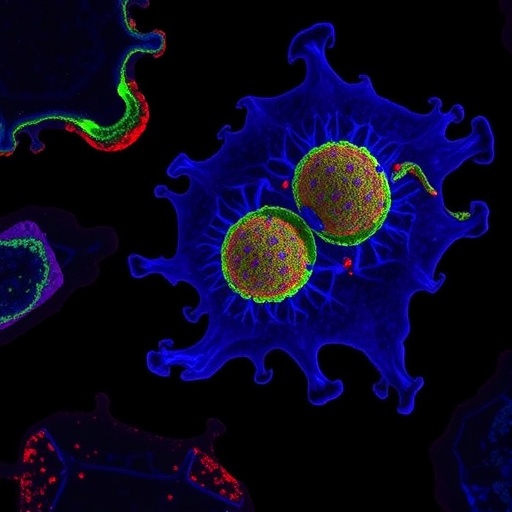
A tiny molecule that teaches both cancer cells and immune cells to fight is offering a new angle on one of oncology’s most stubborn problems: why immunotherapies that succeed spectacularly in some patients fail completely in others. A team at the German Cancer Research Center (DKFZ) in Heidelberg, working with colleagues at University Medicine Greifswald and partner institutions, reports that a single microRNA, miR-155-5p, can simultaneously strip tumors of two key immune-evasion molecules and reprogram the macrophages that surround them from tumor-friendly to tumor-killing. The study, published in BMC Medicine, suggests that coordinating the behavior of different cell types within the tumor microenvironment may be achievable with one molecular switch.
T cell-based immunotherapies, including immune checkpoint blockade and chimeric antigen receptor (CAR) T cells, have transformed outcomes in several cancers. Yet their effectiveness is routinely undermined by two barriers built by the tumor itself. The first is intrinsic resistance: tumor cells downregulate antigen presentation and display checkpoint molecules such as PD-L1 and CD73 that shut down approaching T cells. The second is the tumor microenvironment itself, which becomes dominated by M2-like tumor-associated macrophages, cells that secrete immunosuppressive cytokines, impair antigen presentation, and actively suppress anti-tumor responses. Most therapeutic strategies address one barrier at a time; the new work demonstrates that a single microRNA can act on both.
The researchers focused on microRNAs, short non-coding RNA molecules of roughly 22 nucleotides that bind complementary sequences in messenger RNAs and dampen protein production. Because each microRNA can regulate dozens of targets at once, they are uniquely positioned to orchestrate broad, coordinated changes in cell behavior, a property the team set out to exploit deliberately. Their central question was whether miR-155-5p, and a related candidate called miR-3535, could drive functional reprogramming of both tumor cells and macrophages in a concerted fashion.
Experimentally, the approach was straightforward but comprehensive. Human tumor cell lines drawn from several different cancer entities were transfected with synthetic miR-155-5p or miR-3535, and the resulting changes in immune checkpoint molecule expression and cell proliferation were measured at both the transcript and protein level. In parallel, M2-polarized macrophages generated from peripheral blood mononuclear cells of healthy donors received the same microRNA treatment. The team then profiled cytokine secretion by enzyme-linked immunosorbent assay and carried out transcriptomic analysis, combining RNA sequencing with microarray-based gene expression profiling, to map the macrophage polarization states and immune-regulatory pathways altered by treatment. Transcription factor activity and gene set enrichment analyses were used to identify the regulatory circuits at work.
The results in tumor cells were striking. Both microRNAs reduced expression of CD73, encoded by the NT5E gene, an ectoenzyme that degrades extracellular ATP into immunosuppressive adenosine and is widely regarded as a driver of tumor immune escape. miR-155-5p went further, also suppressing PD-L1 (CD274), the ligand targeted by some of the most widely used checkpoint inhibitor drugs. Knocking down both molecules in a single step effectively removes two of the brakes tumors place on T cells, one that blocks T cell activation through the PD-1 axis and one that poisons the metabolic environment around the tumor.
The macrophage findings were equally significant. When M2-like macrophages, the immunosuppressive, wound-healing subtype that accumulates in tumors, were transfected with either microRNA, they shifted toward a pro-inflammatory M1-like phenotype. This conversion was measurable functionally: treated macrophages secreted markedly more TNFα, a cytokine with direct anti-tumor activity, and CXCL10, a chemokine that recruits activated T cells into tissues. Gene expression analysis confirmed the induction of M1-associated genes across the board.
The transcriptomic data revealed the mechanism in finer detail. MicroRNA treatment activated inflammatory signaling pathways driven by STAT1, a signal transducer and activator of transcription, and by interferon regulatory factors, the downstream effectors of interferon signaling that define the classical inflammatory macrophage state. At the same time, the activity of ZNF703, a zinc finger transcription factor that the study identifies as a transcriptional hub associated with M2 macrophage infiltration and poor clinical prognosis, was reduced. In other words, the microRNAs did not merely nudge macrophages; they flipped the regulatory logic of the cell, amplifying the inflammatory program while simultaneously quieting a master regulator of the tumor-permissive state.
A further observation points to a possible bonus effect on the anti-tumor immune response itself. Both microRNAs increased expression of TAP1, the transporter associated with antigen processing 1, a critical component of the machinery that loads peptide fragments onto MHC class I molecules for display to cytotoxic T cells. Enhanced TAP1 expression suggests improved antigen-processing capacity, potentially making tumor cells and antigen-presenting cells more visible to the immune system. This is particularly relevant because loss of antigen presentation is a well-documented route by which tumors escape both natural immune surveillance and T cell-based therapies.
Beyond their immunological effects, both microRNAs exerted direct anti-proliferative effects across tumor cell lines from multiple entities. That the same molecule slows tumor growth while simultaneously reversing checkpoint expression and repolarizing macrophages is what distinguishes this work from more narrowly targeted approaches. The findings link tumor cell plasticity to neutralization of the immunosuppressive tumor environment within a single regulatory mechanism, rather than treating these as separate problems requiring separate drugs.
The broader implications for cancer immunotherapy are considerable. Current strategies to overcome immune resistance typically involve combining checkpoint inhibitors with each other or with chemotherapy, radiation, or macrophage-targeting agents, an approach that multiplies toxicity and cost. A microRNA-based strategy that acts on several fronts at once could, in principle, simplify this combinatorial challenge. The authors note that the findings support further investigation of microRNA-based strategies in cancer immunotherapy, and the field has already developed delivery tools, including lipid nanoparticles, that could in theory carry synthetic microRNAs to tumors and tumor-associated immune cells in vivo.
Caution is warranted, as always in preclinical work. The experiments were conducted in cell lines and in donor-derived macrophages, not in patients, and the challenge of delivering a microRNA selectively to the right cells in a living tumor remains formidable. miR-155 in particular is a pleiotropic molecule with roles in inflammation and immunity that cut both ways; systemic elevation could carry inflammatory risks, and past clinical experience with nucleic acid therapeutics has taught the field to be skeptical of simple delivery assumptions. The question of dose, timing, and tissue specificity will need to be answered in animal models and, eventually, carefully designed clinical studies.
Even so, the conceptual contribution is substantial. The study demonstrates that microRNAs are capable of coordinating anti-tumor effects across different cell types, a property that individual protein-targeting drugs rarely possess. If the coordinated reprogramming seen in vitro can be reproduced in vivo, miR-155-5p and miR-3535 would represent a template for a new class of immunotherapy, one that does not simply block a single checkpoint or deplete a single cell population, but rewires the conversation between tumor and immune system at multiple points simultaneously. At a time when the majority of patients still do not benefit from existing immunotherapies, strategies that address tumor-intrinsic resistance and microenvironmental suppression in one stroke are exactly the kind of innovation the field has been searching for.
Subject of Research: The role of microRNAs miR-155-5p and miR-3535 in coordinating tumor cell and macrophage reprogramming to overcome immune resistance in cancer
Subject of Research: Medicine
Article Title: miR-155-5p drives coordinated tumor and macrophage reprogramming across multiple cancer entities
Article References: Kordaß, T., Schlosser, A.-K., Czygan, M., Codeco Marques, L. V., Wartusch, M., Nerenz, E., Muliawan, V. S., Kersting, S., Osen, W., & Eichmüller, S. B. (2026). miR-155-5p drives coordinated tumor and macrophage reprogramming across multiple cancer entities. BMC Medicine, 24(1), Article 466. https://doi.org/10.1186/s12916-026-05146-7
Image Credits: AI Generated
DOI: 10.1186/s12916-026-05146-7
Keywords: MicroRNA, miR-155-5p, Tumor microenvironment, Macrophage polarization, Immune checkpoint, CD73, PD-L1, Cancer immunotherapy, Tumor-immune interaction
Cite Scienmag News
APA MLA Chicago
Nathaniel Bowman. (September 10, 2026). miR-155-5p reshapes tumors and macrophages across diverse cancers. Scienmag. https://scienmag.com/mir-155-5p-reshapes-tumors-and-macrophages-across-diverse-cancers/
Nathaniel Bowman. “miR-155-5p reshapes tumors and macrophages across diverse cancers.” Scienmag, 10 September 2026, https://scienmag.com/mir-155-5p-reshapes-tumors-and-macrophages-across-diverse-cancers/. Accessed 10 September 2026.
Nathaniel Bowman. “miR-155-5p reshapes tumors and macrophages across diverse cancers.” Scienmag. September 10, 2026. https://scienmag.com/mir-155-5p-reshapes-tumors-and-macrophages-across-diverse-cancers/
Copy citation Download RIS
Tags: CAR-T cell therapy challengesimmune checkpoint molecule suppressionimmune evasion mechanisms in tumorsimmune evasion molecules in cancerimmune suppression in cancermacrophage reprogramming in cancermicroRNA regulation of cancermicroRNA targeting in oncologymicroRNA-based cancer immunotherapymicroRNA-based cancer therapymiR-155-5p in cancer immunotherapymiR-155-5p tumor immune evasionnovel molecular strategies in oncologyovercoming tumor resistanceovercoming tumor resistance mechanismsreprogramming macrophages for anti-tumor activityT cell checkpoint blockade resistanceT cell-based immunotherapy enhancementtumor microenvironment modulationtumor microenvironment remodelingtumor-associated macrophages polarizationtumor-associated macrophages targeting