

• HOME
  • NEWS
  • EXPLORE
    • CAREER
      • Companies
      • Jobs
    • EVENTS
    • iGEM
      • News
      • Team
    • PHOTOS
    • VIDEO
    • WIKI
  • BLOG
  • COMMUNITY
    • FACEBOOK
    • INSTAGRAM
    • TWITTER
Thursday, March 26, 2026
BIOENGINEER.ORG
No Result
View All Result
  • Login
  • HOME
  • NEWS
  • EXPLORE
    • CAREER
      • Companies
      • Jobs
        • Lecturer
        • PhD Studentship
        • Postdoc
        • Research Assistant
    • EVENTS
    • iGEM
      • News
      • Team
    • PHOTOS
    • VIDEO
    • WIKI
  • BLOG
  • COMMUNITY
    • FACEBOOK
    • INSTAGRAM
    • TWITTER
  • HOME
  • NEWS
  • EXPLORE
    • CAREER
      • Companies
      • Jobs
        • Lecturer
        • PhD Studentship
        • Postdoc
        • Research Assistant
    • EVENTS
    • iGEM
      • News
      • Team
    • PHOTOS
    • VIDEO
    • WIKI
  • BLOG
  • COMMUNITY
    • FACEBOOK
    • INSTAGRAM
    • TWITTER
No Result
View All Result
Bioengineer.org
No Result
View All Result
Home NEWS Science News Health

Milestone reached in new leukemia drug

Bioengineer by Bioengineer
November 19, 2019
in Health
Reading Time: 3 mins read
0
IMAGE
Share on FacebookShare on TwitterShare on LinkedinShare on RedditShare on Telegram

IMAGE

Credit: Vakoc lab/CSHL, 2019

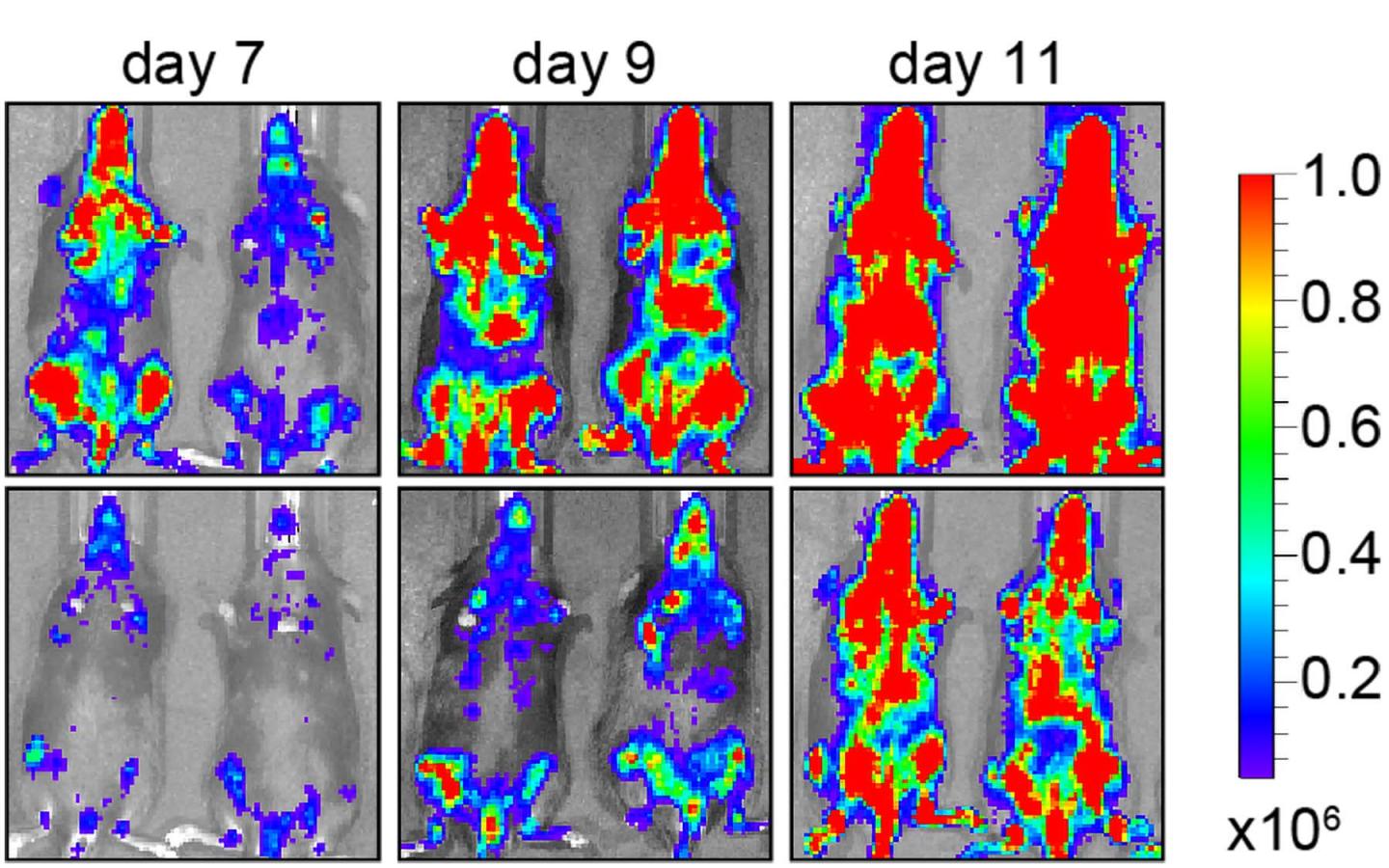
Cold Spring Harbor Laboratory scientists, with chemists and cancer biologists from Dana-Farber Cancer Institute (DFCI), have developed a new therapy that extended the survival of mice with acute myeloid leukemia.

The scientists are the first to demonstrate the anti-cancer effect of blocking the Salt-Inducible Kinase 3 (SIK3) pathway in leukemia using YKL-05-099, a drug developed within the lab of Nathanael Gray at DFCI. SIK3 is a kinase that controls cell division and survival of leukemia cells. Blocking SIK3 prevents leukemia cells from growing.

“Our experiments validate that pharmacological blockade of SIK3 is well-tolerated and extends the survival of leukemic mice,” said CSHL Professor Christopher Vakoc, who co-led the study with Kimberley Stegmaier at DFCI. Yusuke Tarumoto, a former postdoctoral researcher in Vakoc’s lab, and Shan Lu of Stegmaier’s lab are the co-first authors of the paper. Dr. Tarumoto is now a professor at Kyoto University. The team’s findings are published in the journal Blood.

Vakoc refers to this type of leukemia treatment as epigenetic therapy, which can change gene activity within the cancer cell. “Because epigenetics is a cellular system that is malleable and dynamic, it’s something that we can modulate with drugs,” he said. “Developing epigenetic cancer therapies is the core mission of my lab, with SIK3 inhibition in leukemia being our most recently developed strategy.”

In 2018, the Vakoc lab used CRISPR genetic screening to identify the SIK3 kinase as a non-obvious leukemia drug target.

“It’s an under-studied signaling molecule in the pathogenesis of cancer because it’s not mutated in cancer,” Vakoc said.

The subtype of leukemia the researchers focused on, MLL, is an aggressive form of cancer that occurs in infants and can be caused by an abnormal rearrangement of chromosomes, which is known as an MLL translocation. “We discovered SIK3 has a very important role in the MLL translocation positive subtype of leukemia,” Vakoc said.

The most important finding in this study is in revealing a drug development strategy for treating MLL leukemia.

The new compound created by the team to target SIK3 reprograms a transcription factor, which is a protein that can help turn specific genes on or off by binding to DNA. Vakoc’s lab has been at the forefront of trying to reprogram transcription factors in cancer therapy.

“It’s widely considered that this is impossible to do,” he said. “Our lab wants to challenge that idea.”

The study also helped researchers gauge the side effects of the drug. After using YKL-05-099 to suppress SIK3 in mice for a month, the researchers observed the drug to be well-tolerated, not causing any weight loss or significant changes to the animal’s normal blood production.

“We took a basic science idea that we published in a paper last year and now we’ve shown that it may have some usefulness in the clinic,” said Vakoc. “This new study advances our fundamental science towards clinical application, and it’s a very important milestone in that process.”

###

Media Contact
Sara Roncero-Menendez
[email protected]
631-721-3685

Original Source

https://www.cshl.edu/milestone-reached-in-new-leukemia-drug/

Related Journal Article

http://dx.doi.org/10.1182/blood.2019001576

Tags: BiologycancerGeneticsHematologyMedicine/Health
Share12Tweet8Share2ShareShareShare2

Related Posts

Can Psychosocial Factors Influence Cancer Risk?

March 23, 2026

Depression Factors in Elderly: Pre vs. Post-COVID Analysis

March 23, 2026

Hidden Health Crises Among US and UK Volunteers in Ukraine Uncovered in New Study

March 23, 2026

ADA2 Deficiency Boosts Cell Death, Metabolic Issues

March 23, 2026
Please login to join discussion

POPULAR NEWS

  • blank

    Revolutionary AI Model Enhances Precision in Detecting Food Contamination

    96 shares
    Share 38 Tweet 24
  • Imagine a Social Media Feed That Challenges Your Views Instead of Reinforcing Them

    1003 shares
    Share 397 Tweet 248
  • Uncovering Functions of Cavernous Malformation Proteins in Organoids

    54 shares
    Share 22 Tweet 14
  • Promising Outcomes from First Clinical Trials of Gene Regulation in Epilepsy

    51 shares
    Share 20 Tweet 13

About

We bring you the latest biotechnology news from best research centers and universities around the world. Check our website.

Follow us

Recent News

In-Sensor Cryptography Links Physical Process to Digital Identity

Can Psychosocial Factors Influence Cancer Risk?

Depression Factors in Elderly: Pre vs. Post-COVID Analysis

Subscribe to Blog via Email

Success! An email was just sent to confirm your subscription. Please find the email now and click 'Confirm' to start subscribing.

Join 78 other subscribers
  • Contact Us

Bioengineer.org © Copyright 2023 All Rights Reserved.

Welcome Back!

Login to your account below

Forgotten Password?

Retrieve your password

Please enter your username or email address to reset your password.

Log In
No Result
View All Result
  • Homepages
    • Home Page 1
    • Home Page 2
  • News
  • National
  • Business
  • Health
  • Lifestyle
  • Science

Bioengineer.org © Copyright 2023 All Rights Reserved.

