A Pinch of Salt Makes Sunflower Microgreens More Nutritious—Up to a Point
A small dose of salt appears to push sunflower microgreens into a surprisingly productive state, boosting their growth, nutritional value and antioxidant defenses before higher concentrations send them into decline. In a study published in BMC Plant Biology, researchers found that seedlings exposed to 25 millimoles per liter of sodium chloride—roughly a mild salinity treatment—produced substantially more plant material and accumulated higher levels of several nutrients and health-associated compounds than untreated plants. The result is an example of hormesis, a biological phenomenon in which a low level of stress stimulates beneficial responses while a stronger dose becomes damaging. For sunflower microgreens, the useful window was narrow: a slightly higher treatment of 50 millimoles per liter still encouraged some growth, but 75 and 100 millimoles per liter significantly impaired development. The findings suggest that carefully calibrated salt exposure could become a simple elicitation technique for indoor growers seeking to increase the value of young edible plants.
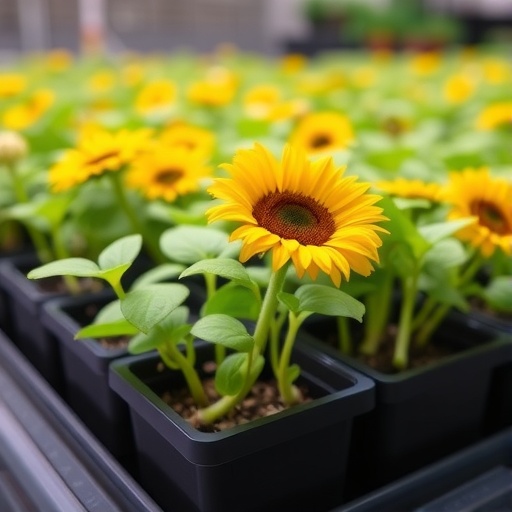
Microgreens are harvested only days after germination, when their stems and first leaves are still developing. Although small, they can contain concentrated amounts of vitamins, minerals, pigments and other metabolites, making them popular both as foods and as experimental systems for studying how plants respond to environmental stress. The study focused on sunflower, Helianthus annuus, whose young shoots are already valued for their texture and nutty flavor. Bardees Mickky and colleagues at Mansoura University and Arish University cultivated the seedlings hydroponically for ten days. The plants were grown using a root-dipping technique in a completely randomized experiment with three vessel replicates for each treatment. Five sodium chloride concentrations were tested, ranging from no added salt to 100 millimoles per liter, under controlled natural environmental conditions. The researchers then measured growth, photosynthesis, water relations, biochemical stress markers, nutritional composition, mineral accumulation, fatty acids and antioxidant activity.
The most striking response occurred at 25 millimoles per liter. Compared with untreated sunflower microgreens, the low-salt plants produced 58.7 percent more fresh shoot mass and 55.4 percent more dry shoot mass. Their shoots were 48.3 percent longer, roots were 25.7 percent longer, and leaf area increased by 81.4 percent. Specific leaf area, a measure related to leaf expansion and tissue investment, rose by 19.7 percent. These changes indicate that the treatment did not merely cause the plants to retain more water or become heavier; it altered their overall pattern of development. A 50-millimole treatment also had growth-promoting effects, but they were weaker. At 75 and 100 millimoles per liter, the pattern reversed, and shoot and root growth, leaf expansion and yield fell significantly. The dose-response curve is characteristic of hormesis: stimulation at low intensity followed by inhibition once the stress exceeds the plant’s coping capacity.
Salt affects plants through two interconnected mechanisms. Initially, dissolved sodium chloride lowers the water potential of the growth solution, making it more difficult for roots to absorb water. This osmotic challenge can slow cell expansion and alter stomatal behavior, the opening and closing of pores that regulate carbon dioxide entry and water loss. If sodium and chloride accumulate excessively, they can also disrupt ion balance and interfere with enzymes, membranes and nutrient uptake. Yet a mild challenge can activate signaling networks before severe injury occurs. Plants may adjust their osmotic balance by producing compatible solutes such as proline, compounds that help maintain cellular hydration without disrupting proteins. They can also alter photosynthesis, transpiration and water-use efficiency. In the sunflower microgreens, the 25-millimole treatment increased proline by 5.7 percent, while measurements of photosynthesis, transpiration, chlorophyll, relative water content and water-use efficiency indicated a changed physiological state rather than uncontrolled damage.
One important clue was that the low-salt treatment did not trigger the biochemical signatures of serious oxidative stress. Salt stress can cause an overproduction of reactive oxygen species, including hydrogen peroxide, which act at low levels as signaling molecules but can damage lipids, proteins and DNA when they accumulate. Lipid peroxidation, the oxidative deterioration of cell membranes, is commonly used as an indicator of that damage. At 25 millimoles per liter, sunflower microgreens showed no significant change in hydrogen peroxide, lipid peroxidation or catalase activity, an enzyme that helps break down hydrogen peroxide. In contrast, the 75- and 100-millimole treatments produced marked increases in hydrogen peroxide and lipid peroxidation. This distinction helps explain why the mild treatment was beneficial: it apparently prompted modest acclimation without overwhelming the plants’ antioxidant systems. The higher doses crossed a threshold at which salt-induced osmotic and ionic stress began to compromise cellular integrity.
The nutritional changes were equally notable, although they came with tradeoffs. At 25 millimoles per liter, total carbohydrates increased by 27.2 percent and total protein by 27.6 percent. The microgreens also accumulated more calcium, magnesium, manganese and zinc, with increases of 11.9, 13.3, 14.3 and 12.9 percent, respectively. Linoleic acid, an unsaturated fatty acid, rose by 5 percent. These shifts could reflect changes in carbon allocation, mineral transport and membrane metabolism as the plants adapted to the salt treatment. But not every component improved. Ash content fell by 27.3 percent, total fats plunged by 69.8 percent, and potassium declined by 12 percent. Iron decreased by 15.2 percent, while palmitic, stearic and oleic acids dropped by 9.7, 12.2 and 4.8 percent. The results therefore do not support the idea that salt universally makes microgreens “healthier.” Instead, salinity reshaped their composition, enhancing some nutritionally important constituents while reducing others.
The plants’ antioxidant profiles showed a similar pattern of selective enhancement. Compared with untreated controls, the 25-millimole treatment increased total antioxidant activity by 38.1 percent and raised DPPH-scavenging activity by 6 percent. DPPH assays use a stable free radical to estimate a sample’s ability to neutralize reactive molecules, providing a broad chemical measure rather than a direct prediction of effects in the human body. The treated microgreens also contained 8.8 percent more total phenolic compounds, 37.5 percent more ascorbic acid and 11.5 percent more carotenoids. Phenols can participate in radical-scavenging reactions, ascorbic acid is a water-soluble antioxidant, and carotenoids contribute both pigment and protection against oxidative reactions. At moderate and severe salt levels, these advantages disappeared and antioxidant-related measurements moved in the opposite direction. The dose was therefore critical: a low stress signal appeared to prime protective chemistry, whereas stronger stress depleted or disrupted it.
The researchers describe the treatment as a potential elicitor, meaning an external stimulus used to encourage plants to manufacture desirable compounds. Elicitors are increasingly being explored in controlled-environment agriculture, where light, temperature, nutrients and irrigation can be adjusted with precision. Salt is inexpensive, widely available and easy to apply, which could make it attractive for hydroponic microgreen production. However, the study does not establish that every sunflower variety, cultivation system or harvest schedule will respond identically. The experiment lasted ten days and used a limited number of vessel replicates, so larger trials would be needed to determine how reliably the response can be reproduced. Growers would also need to monitor electrical conductivity, the practical measure of dissolved salts, because the effective concentration depends on the starting water and nutrient solution. Any food-production application would require checking residual sodium, sensory quality, food safety and the stability of the measured nutrients after harvest and storage.
The findings also illustrate why plant stress cannot be classified simply as good or bad. A plant’s response depends on intensity, duration, developmental stage and genetic background. At a carefully controlled level, salt can act like a training signal: it changes water relations and metabolism, induces compounds such as proline, and stimulates protective molecules without producing substantial oxidative injury. At excessive levels, the same stress reduces water availability, disturbs ion homeostasis and generates damaging reactive oxygen species. For sunflower microgreens, the balance point identified in this experiment was 25 millimoles per liter of sodium chloride. That treatment delivered the largest gains in yield and several measures of nutritional and antioxidant quality, while 50 millimoles per liter provided a weaker benefit and higher concentrations caused harm. The next challenge is translating that laboratory dose into a robust production protocol. If future studies confirm the response across cultivars and facilities, a brief, precisely measured salt treatment could turn an ordinary tray of microgreens into a more productive and chemically distinctive crop—without relying on expensive inputs or complex technology.
Subject of Research: The effects of sodium chloride-induced salt eustress on the growth, physiology, nutritional composition, fatty acids, minerals and antioxidant capacity of sunflower microgreens
Subject of Research: Agriculture
Article Title: Salt eustress modulates physiological responses and enhances yield, nutritional quality, and antioxidant capacity in sunflower microgreens
Article References: Mickky, B., Shams Eldeen, R. & Elnajar, M. “Salt eustress modulates physiological responses and enhances yield, nutritional quality, and antioxidant capacity in sunflower microgreens.” BMC Plant Biology (2026). Original research article
Image Credits: AI Generated
DOI: 10.1186/s12870-026-09786-y
Keywords: sunflower microgreens, sodium chloride, salt eustress, hormesis, hydroponic cultivation, plant stress, antioxidants, nutritional quality, minerals, fatty acids
Tags: antioxidant capacityantioxidant capacity in microgreensboosting microgreen nutritional value through controlled stressedible microgreen cultivationelicitation techniques for microgreen productionhormesis in microgreen cultivationhormesis in plantsindoor microgreen growth techniquesindoor plant stress managementmicrogreen crop management under mild salinitymild salt stress effects on plant nutritionnutrient accumulation in microgreensnutrient accumulation in sunflower microgreensnutritional enhancementoptimal salt concentrations for microgreen productionplant growth promotionsalinity as a plant elicitorsalinity effects on microgreenssalinity impact on edible microgreenssalinity tolerance in seedlingssalt stressstress-induced nutritional improvements in microgreensSunflower microgreen growth enhancementSunflower microgreens