• HOME
  • NEWS
  • EXPLORE
    • CAREER
      • Companies
      • Jobs
    • EVENTS
    • iGEM
      • News
      • Team
    • PHOTOS
    • VIDEO
    • WIKI
  • BLOG
  • COMMUNITY
    • FACEBOOK
    • INSTAGRAM
    • TWITTER
Friday, November 6, 2026
BIOENGINEER.ORG
No Result
View All Result
  • Login
  • HOME
  • NEWS
  • EXPLORE
    • CAREER
      • Companies
      • Jobs
        • Lecturer
        • PhD Studentship
        • Postdoc
        • Research Assistant
    • EVENTS
    • iGEM
      • News
      • Team
    • PHOTOS
    • VIDEO
    • WIKI
  • BLOG
  • COMMUNITY
    • FACEBOOK
    • INSTAGRAM
    • TWITTER
No Result
View All Result
Bioengineer.org
No Result
View All Result
Home NEWS Science News Biology

Migratory Behavior Increases Extinction Rates in Ungulates Across Evolutionary Time

by
November 6, 2026
in Biology
Reading Time: 2 mins read
0
Migratory Behavior Increases Extinction Rates in Ungulates Across Evolutionary Time

Migratory Behavior Increases Extinction Rates in Ungulates Across Evolutionary Time

Share on FacebookShare on TwitterShare on LinkedinShare on RedditShare on Telegram

While widespread instances of migratory collapse documented over the past several decades indicate that migration is a fragile strategy in the modern Anthropocene, the researchers investigated whether this fragility extends deeper into evolutionary history.

To evaluate whether migration enhances extinction rates across deep time, the authors applied phylogenetic imputation to infer the migratory habits of 51 ungulate species that went extinct during the late Quaternary. Their analysis revealed a striking historical disparity: approximately 80 percent of those recently extinct ungulates—amounting to 41 out of the 51 species—were migratory. In contrast, only 46 percent of extant ungulates, or 95 out of 207 living species evaluated in the study, currently display migratory behavior.

Using Hidden State Speciation and Extinction modeling, the researchers evaluated how migratory habits influenced broader diversification dynamics. The model indicated that migratory species likely experienced higher speciation rates as well as higher extinction rates compared to nonmigratory species, driving elevated lineage turnover across migratory ungulate groups.

Across the globe, the loss of these 51 ungulate species caused a negligible 0.8 percent decline in global ungulate functional richness.

Altogether, the study demonstrates that migration generates complex macroevolutionary consequences by simultaneously enhancing speciation and extinction rates. This dynamic renders migratory behavior an evolutionarily fragile strategy over long timescales. The authors emphasize that this evolutionary fragility is particularly concerning today, as increasingly widespread and intensive anthropogenic activity severs critical gradients of resource availability through human infrastructure and renders environments far more unpredictable through ongoing climate change.

Subject of Research: Macroevolutionary impacts of migratory behavior on ungulate speciation and extinction

Article Title: Phylogenetic evidence that migratory behavior increases ungulate extinction rates

Article References: Abraham, J. O., O’Brien, K., Upham, N. S., Jesmer, B. R., Bibi, F., & Faith, J. T. (2026). Phylogenetic evidence that migratory behavior increases ungulate extinction rates. PLOS Biology, 24(11), e3004072. https://doi.org/10.1371/journal.pbio.3004072

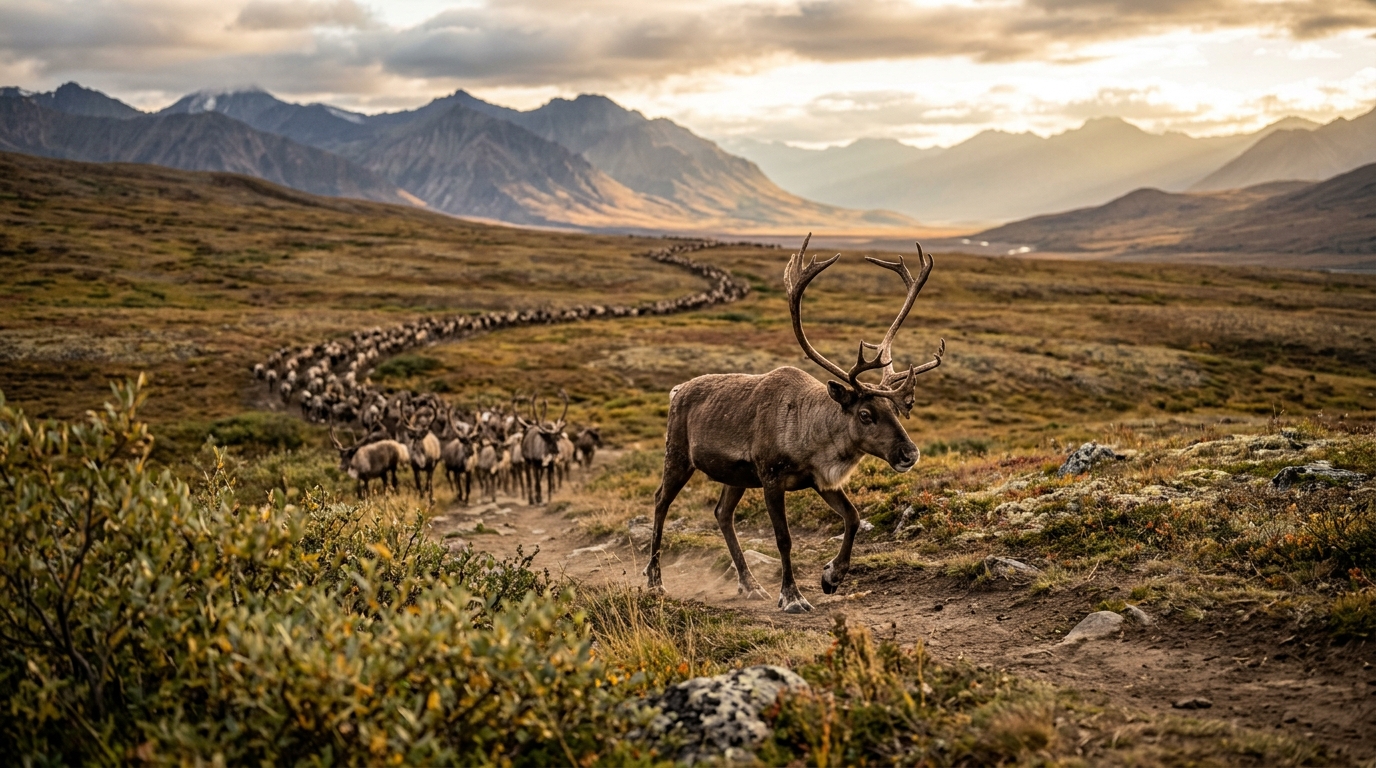
Image Credits: AI Generated

DOI: 10.1371/journal.pbio.3004072

Keywords: ungulates, animal migration, macroevolution, extinction rates, speciation, phylogenetic imputation, lineage turnover, late Quaternary, Phylogenetic, evidence, migratory, behavior

News Source: Gavin Prescott. (November 6, 2026). Migratory Behavior Increases Extinction Rates in Ungulates Across Evolutionary Time. Scienmag.


Tags: animal migrationBehaviorevidenceextinction rateslate Quaternarylineage turnovermacroevolutionmigratoryphylogeneticphylogenetic imputationspeciationungulates
Share12Tweet7Share2ShareShareShare1

Related Posts

Tapeworm Taenia arctos Confirmed in Slovak Brown Bears for the First Time

Tapeworm Taenia arctos Confirmed in Slovak Brown Bears for the First Time

November 6, 2026
Palm Wine Isolate Fructobacillus fructosus Shows Probiotic Potential In Vitro

Palm Wine Isolate Fructobacillus fructosus Shows Probiotic Potential In Vitro

November 6, 2026

Black Garden Ants Display Chronic Pain-Like Responses Following Peripheral Injury

November 6, 2026

Nondisruptive Spatial Imaging Maps Combinations of Epigenetic Marks in Single Cells

November 6, 2026

POPULAR NEWS

  • Diabetes and pre-treatment fatigue flag men at risk of years-long exhaustion after prostate radiotherapy

    Diabetes and pre-treatment fatigue flag men at risk of years-long exhaustion after prostate radiotherapy

    29 shares
    Share 12 Tweet 7
  • Two neighboring Tibetan townships, one shared policy, and two very different fates for their grasslands

    29 shares
    Share 12 Tweet 7
  • Solid-state caloric cooling edges closer to replacing vapour compression

    29 shares
    Share 12 Tweet 7
  • Review examines microbial oil fermentation strategies and industrial scale-up barriers

    29 shares
    Share 12 Tweet 7

About

We bring you the latest biotechnology news from best research centers and universities around the world. Check our website.

Follow us

Recent News

Capping hides true biodiversity gains in forests left unmanaged

Tapeworm Taenia arctos Confirmed in Slovak Brown Bears for the First Time

How 76 Years of Palestinian Mental Health Research Stayed Western, Clinical and Depoliticized

Subscribe to Blog via Email

Enter your email address to subscribe to this blog and receive notifications of new posts by email.

Join 86 other subscribers
  • Contact Us

Bioengineer.org © Copyright 2023 All Rights Reserved.

Welcome Back!

Login to your account below

Forgotten Password?

Retrieve your password

Please enter your username or email address to reset your password.

Log In
No Result
View All Result
  • Homepages
    • Home Page 1
    • Home Page 2
  • News
  • National
  • Business
  • Health
  • Lifestyle
  • Science

Bioengineer.org © Copyright 2023 All Rights Reserved.