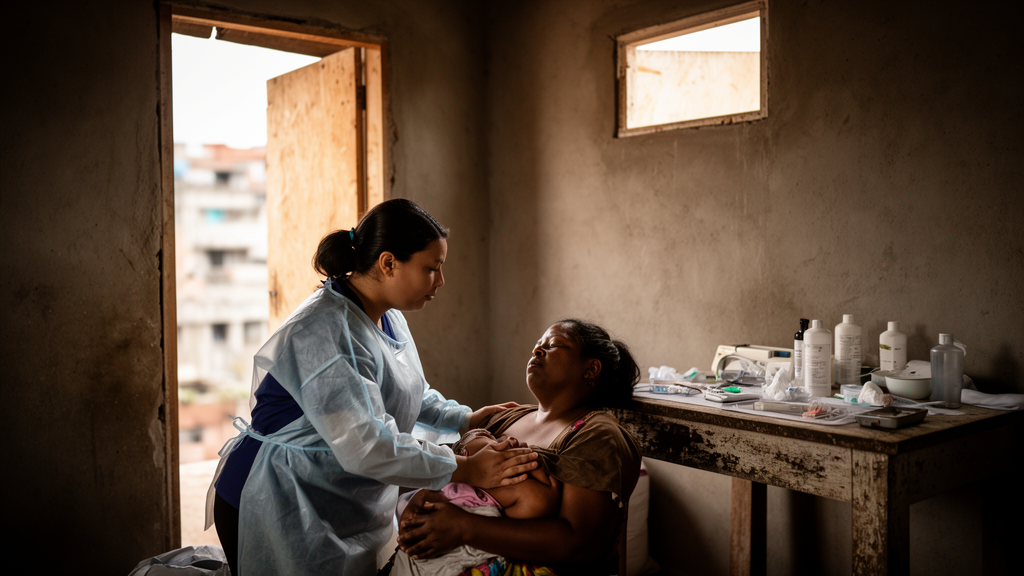
A new qualitative study investigating the lived experiences of midwives in Somalia and Nigeria reveals that these essential healthcare professionals endure systemic instability, resource scarcity, and persistent threats to their safety. The study explored the experiences of graduate midwives transitioning into the workforce and their realities working in health systems impacted by conflict and violent insecurity. The study, conducted within a larger longitudinal cohort project, highlights that these frontline workers rely heavily on personal, ad hoc strategies to manage violence and insecurity, lacking institutionalized protection mechanisms.
Focus group discussions conducted with 48 graduate midwives in Nigeria and 63 in Somalia provided the foundation for this analysis, which utilized a hybrid inductive-deductive coding approach to capture the realities of clinical practice in volatile health systems. Participants described their entry into the workforce as a process fraught with distinct challenges depending on the local context. In Nigeria, the job search and workforce entry were shaped by formal systems, whereas in Somalia they were shaped by informal networks and structural barriers.
The working conditions described by the midwives were uniformly marked by extreme resource scarcity and the burden of unreasonable, heavy workloads. Their working conditions were also marked by infrastructural challenges.
Safety and security concerns emerged as a central theme, with midwives in both Somalia and Nigeria reporting persistent exposure to violence and insecurity. The study indicates that these clinicians operate in a state of constant risk, and their coping mechanisms are largely self-directed rather than supported by systematic safety protocols. This lack of institutional support for their physical security is compounded by the psychological toll of their work, with the findings documenting significant levels of stress, burnout, and moral injury among the study participants.
The research concludes that the profound challenges faced by these midwives are not merely incidental but are systemic issues that require urgent attention and investment. The findings highlight an urgent need to support and invest in this critical and predominantly female health workforce.
Subject of Research: Midwifery practice and workforce experiences in conflict-affected health systems in Somalia and Nigeria.
Article Title: Midwifery practice in conflict settings: lived experiences from Somalia and Nigeria
Article References: Iwu, E. N., Mohamud, A. M., Mohamed, H. H. A., Maina, C., Abimiku, R. H., Israel-Isah, S., Ayodeji, K. O., Odonye, G., Mary, M., Ahmed, M. A., Ekambi, S., Pradhan, I., Tappis, H., & Elnakib, S. (2026). Midwifery practice in conflict settings: lived experiences from Somalia and Nigeria. Conflict and Health. https://doi.org/10.1186/s13031-026-00860-8
Image Credits: AI Generated
DOI: 10.1186/s13031-026-00860-8
Keywords: midwifery, conflict settings, Somalia, Nigeria, workforce retention, health systems, maternal health, qualitative research, moral injury, workplace safety, gender norms, resource scarcity, clinical practice, burnout, health workforce, security challenges, professional integration
News Source: Courtney Benton. (November 18, 2026). Midwives in Conflict Zones Face Severe Workload and Security Challenges. Scienmag.