• HOME
  • NEWS
  • EXPLORE
    • CAREER
      • Companies
      • Jobs
    • EVENTS
    • iGEM
      • News
      • Team
    • PHOTOS
    • VIDEO
    • WIKI
  • BLOG
  • COMMUNITY
    • FACEBOOK
    • INSTAGRAM
    • TWITTER
Thursday, March 26, 2026
BIOENGINEER.ORG
No Result
View All Result
  • Login
  • HOME
  • NEWS
  • EXPLORE
    • CAREER
      • Companies
      • Jobs
        • Lecturer
        • PhD Studentship
        • Postdoc
        • Research Assistant
    • EVENTS
    • iGEM
      • News
      • Team
    • PHOTOS
    • VIDEO
    • WIKI
  • BLOG
  • COMMUNITY
    • FACEBOOK
    • INSTAGRAM
    • TWITTER
  • HOME
  • NEWS
  • EXPLORE
    • CAREER
      • Companies
      • Jobs
        • Lecturer
        • PhD Studentship
        • Postdoc
        • Research Assistant
    • EVENTS
    • iGEM
      • News
      • Team
    • PHOTOS
    • VIDEO
    • WIKI
  • BLOG
  • COMMUNITY
    • FACEBOOK
    • INSTAGRAM
    • TWITTER
No Result
View All Result
Bioengineer.org
No Result
View All Result
Home NEWS Science News

Microscopy technique reveals nanoscale detail of coatings as they dry

Bioengineer by Bioengineer
July 10, 2020
in Science News
Reading Time: 3 mins read
0
IMAGE
Share on FacebookShare on TwitterShare on LinkedinShare on RedditShare on Telegram

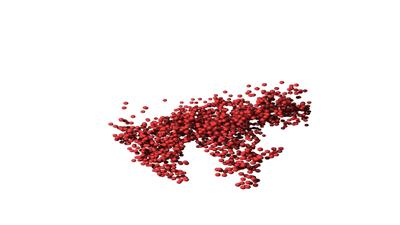
In paper published in Scientific Reports, Lehigh University researchers studying in situ drying behavior of thin film coatings visualize interactions that could impact drug delivery technology
IMAGE

Credit: Kaewpetch, T., Gilchrist, J.F./Lehigh University

Dull. Slow. Unchanging. Like watching paint dry. 

But take a closer look at that paint–all the way down to the nanoscale–and there’s a lot more going on than you might think.  

Researchers in the Gilchrist Laboratory in Lehigh University’s P.C. Rossin College of Engineering and Applied Science are observing the evolution of coatings as they dry with groundbreaking microscale precision. Their results were recently published in Scientific Reports. 

Thin film coatings do much more than spruce up walls. For example, they can be used as pharmaceutical devices in edible films, similar to those to deliver drugs used to fight the opioid epidemic. How these coatings dry can change their properties, which is especially important for films used in drug delivery. 

In their paper, “Chemical vs. mechanical microstructure evolution in drying colloid and polymer coatings,” the Lehigh researchers looked at how particles rearrange themselves during drying when their interactions are tuned. These particles behaved as a surrogate for the active pharmaceutical ingredient in a drug delivery film.

Graduate student Titiporn Kaewpetch looks directly inside these films using high speed confocal laser scanning microscopy to take thousands of images that give nanoscale details of how particles flow and assemble during drying. Gigabytes of data for each film are rendered to reveal their 3-D structure, giving simulation-like detail on the otherwise hidden internal processes that happen. 

The researchers found that when particles attract each other, they form a scaffold that buckles and breaks during drying due to the motion of the top interface. “The microstructure for attractive particles at each point during drying is related to the history of the film evolution,” says James Gilchrist, a professor in the Department of Chemical and Biomolecular Engineering. Their 3-D analysis of the microstructure evolution reveals clear signatures of this process throughout drying as compared with those where particles are repulsive.

“In real drug delivery systems, there are many ingredients interacting with each other, always changing concentration and their interactions throughout drying,” says Gilchrist. “By reducing this process to the essential ingredients, we can see these interactions as they happen. This may allow new insights into manufacturing of these films.”

This paper is based upon work supported by the National Science Foundation (grant No. 1936541). Kaewpetch is supported by the Royal Thai Scholars program.

Related Links:

  • Laboratory for Particle Mixing and Self- Organization (Gilchrist Laboratory)
  • Scientific Reports: “Chemical vs. mechanical microstructure evolution in drying colloid and polymer coatings”
  • Rossin College Faculty Profile: James F. Gilchrist

###

Media Contact
Katie Kackenmeister
[email protected]

Original Source

https://engineering.lehigh.edu/news/article/microscopy-technique-reveals-nanoscale-detail-coatings-they-dry

Related Journal Article

http://dx.doi.org/10.1038/s41598-020-66875-0

Tags: Atomic/Molecular/Particle PhysicsBiomedical/Environmental/Chemical EngineeringChemistry/Physics/Materials SciencesMaterialsNanotechnology/MicromachinesPharmaceutical SciencePharmaceutical/Combinatorial Chemistry
Share12Tweet8Share2ShareShareShare2

Related Posts

Starburst Winds Drain Supernova Energy Quickly

Starburst Winds Drain Supernova Energy Quickly

March 26, 2026
Decoding the Phosphorus Puzzle: How Microplastics and Hydrochar Transform Nutrient Dynamics in Rice Paddies

Decoding the Phosphorus Puzzle: How Microplastics and Hydrochar Transform Nutrient Dynamics in Rice Paddies

March 26, 2026

Microtubules Found to Actively Ensure Accurate Chromosome Distribution During Cell Division

March 25, 2026

Aversive Learning Hijacks Brain Sugar Sensor

March 25, 2026
Please login to join discussion

POPULAR NEWS

  • blank

    Revolutionary AI Model Enhances Precision in Detecting Food Contamination

    96 shares
    Share 38 Tweet 24
  • Imagine a Social Media Feed That Challenges Your Views Instead of Reinforcing Them

    1003 shares
    Share 397 Tweet 248
  • Uncovering Functions of Cavernous Malformation Proteins in Organoids

    54 shares
    Share 22 Tweet 14
  • Promising Outcomes from First Clinical Trials of Gene Regulation in Epilepsy

    51 shares
    Share 20 Tweet 13

About

We bring you the latest biotechnology news from best research centers and universities around the world. Check our website.

Follow us

Recent News

In-Sensor Cryptography Links Physical Process to Digital Identity

Can Psychosocial Factors Influence Cancer Risk?

Depression Factors in Elderly: Pre vs. Post-COVID Analysis

Subscribe to Blog via Email

Success! An email was just sent to confirm your subscription. Please find the email now and click 'Confirm' to start subscribing.

Join 78 other subscribers
  • Contact Us

Bioengineer.org © Copyright 2023 All Rights Reserved.

Welcome Back!

Login to your account below

Forgotten Password?

Retrieve your password

Please enter your username or email address to reset your password.

Log In
No Result
View All Result
  • Homepages
    • Home Page 1
    • Home Page 2
  • News
  • National
  • Business
  • Health
  • Lifestyle
  • Science

Bioengineer.org © Copyright 2023 All Rights Reserved.