A randomized, double-blind crossover clinical trial has revealed that a microencapsulated formulation of coenzyme Q10 provides significantly superior acute bioavailability compared to standard unencapsulated ubiquinone following single-dose oral administration in healthy adult participants. Conducting the investigation across single-dose and three-week supplementation intervals, researchers observed that the microencapsulated delivery system produced significantly elevated plasma concentrations at six, twelve, and twenty-four hours post-ingestion. While the microencapsulated compound achieved an average fold increase in plasma exposure ranging between 1.8 and 2.4 times that of the standard preparation during the first day, the comparative differences between the two formulations leveled off following three weeks of daily consumption, indicating formulation-dependent absorption dynamics during the acute postprandial window.
Coenzyme Q10 serves a critical biochemical function as a lipid-soluble electron transporter within the mitochondrial respiratory chain, facilitating adenosine triphosphate synthesis across energy-demanding tissues such as the heart, liver, and kidneys, while simultaneously providing primary antioxidant defense inside circulating low-density lipoproteins. Despite its biological importance, exogenous uptake from typical dietary sources remains minimal at approximately three to five milligrams per day, and supplemental crystalline ubiquinone exhibits inherently poor gastrointestinal absorption stemming from its high molecular weight, negligible water solubility, and limited lipid solubility. To address these delivery hurdles, investigators evaluated a proprietary microencapsulation process known as Biostile Microencapsulated Technology against conventional unencapsulated ubiquinone compliant with United States, European, Japanese, and British pharmacopeial standards sourced from the same active ingredient batch.
The production process for the investigational microencapsulated product was executed under controlled technological conditions inside an aqueous reactor vessel, combining raw ubiquinone with food-grade gum arabic, corn starch, olive oil, and silicon dioxide under intensive mixing to generate a stable, uniformly dispersed microencapsulated suspension. Acetic and citric acids were subsequently introduced into the slurry to adjust pH levels and maintain physicochemical stability prior to decantation and controlled conditioning. The resulting intermediate underwent freeze-drying or lyophilization to preserve structural integrity, prevent thermal degradation, and limit oxidative stress, after which the dried intermediate was blended with maltodextrin in an industrial mixer to achieve a standardized final product containing thirty percent coenzyme Q10 by weight, packaged into fifty-milligram capsules identical in appearance to the reference formulation.
The trial enrolled twenty-five healthy adult volunteers, comprising fifteen women and ten men aged fifty to sixty-five years recruited from the Primorska region of Slovenia, following ethical approval from the National Medical Ethics Committee of Slovenia and registration on ClinicalTrials.gov. Participants exhibited a mean age of fifty-six years, an average body mass of 75.2 kilograms, a mean body mass index of 25.3 kilograms per square meter, and were confirmed to be non-smokers without active gastrointestinal, hepatic, renal, cardiovascular, or metabolic diseases.
Using a double-blind, two-way crossover framework with MinimPy software stratifying participants by sex and body mass, volunteers were randomly assigned to ingest either one hundred milligrams of standard ubiquinone or one hundred milligrams of the microencapsulated formulation alongside a standardized 500-kilocalorie breakfast. The test meal comprised 150 milliliters of ten-percent fat Greek-type yogurt, fifty grams of white bread, five grams of honey, and one apple to supply uniform dietary lipid content necessary for facilitating intestinal micelle formation. Serial venous blood samples were drawn under supervised clinical conditions prior to ingestion at time zero and subsequently at four, six, twelve, twenty-four, and forty-eight hours post-administration, followed by a two-week washout interval after which participants crossed over to the alternate formulation before continuing daily supplementation for three additional weeks.
Circulating coenzyme Q10 concentrations were quantified using high-performance liquid chromatography coupled with electrochemical detection operated at an oxidation potential of 650 millivolts and an oven temperature of forty degrees Celsius. The chromatographic separation system utilized three specialized columns, including a concentrating column, an analytical column, and a reducing column, alongside mobile phases containing sodium perchlorate dissolved in methanol, distilled water, and isopropanol. Plasma aliquots underwent extraction with one-propanol followed by high-speed centrifugation, yielding an analytical method characterized by a limit of detection of 0.057 micrograms per milliliter and a limit of quantification of 0.172 micrograms per milliliter, with all participant samples testing well above the quantification threshold.
Analysis of the single-dose pharmacokinetic profiles revealed that the microencapsulated formulation produced a significantly greater total systemic exposure, demonstrated by a total area under the concentration-time curve over forty-eight hours that significantly exceeded the standard product. When normalized against individual total cholesterol concentrations to account for lipoprotein transport carriage, the forty-eight-hour area under the curve reached 8729 units for the microencapsulated compound compared to 7606 units for the standard ubiquinone, reflecting a statistically significant advantage with a probability value below 0.01. Linear mixed-model statistical evaluations confirmed a significant interaction between time and treatment, demonstrating that microencapsulation altered both the magnitude and temporal persistence of circulating coenzyme concentrations.
Assessment of discrete post-dose time points revealed that plasma coenzyme Q10 concentrations rose rapidly, with the microencapsulated formulation establishing statistically superior blood levels over the standard product at six, twelve, and twenty-four hours post-consumption. Cholesterol-normalized data showed that maximum relative percentage increases occurred at six hours post-dose, reaching sixty percent above baseline for the microencapsulated product compared to thirty-seven percent for standard ubiquinone. By twelve hours, concentrations of the microencapsulated formulation maintained an average fold increase of 2.3 relative to the control, and approximately seventy-five to ninety-two percent of participants demonstrated higher individual elevations across the acute sampling intervals, with certain subjects exhibiting up to thirteen-fold increases.
Following the subsequent three-week chronic administration phase of one hundred milligrams daily, plasma coenzyme Q10 concentrations reached elevated steady-state levels in both treatment arms, registering an approximate 80 to 87 percent increase over baseline with the standard formulation and a 95 to 96 percent increase with the microencapsulated version. However, the direct statistical comparison between the two groups at three weeks revealed no significant difference in circulating steady-state levels, which the investigators attributed to physiological saturation thresholds governing intestinal absorption capacity over extended periods as well as inter-individual biological clearance variations among subjects.
In addition to pharmacokinetic metrics, the investigation monitored routine biochemical parameters and uncovered an unanticipated significant elevation in circulating vitamin D levels among participants receiving the microencapsulated formulation. While standard fasting glucose, total cholesterol, low-density lipoprotein cholesterol, high-density lipoprotein cholesterol, and C-reactive protein concentrations remained unaffected across both cohorts throughout the study, plasma 25-hydroxyvitamin D concentrations increased significantly after three weeks of daily microencapsulated supplementation. Researchers proposed that enhanced intracellular or mitochondrial delivery might support energy-dependent renal and hepatic enzymatic hydroxylation steps required for vitamin D activation, though they noted that dietary intake and sunlight exposure were not actively controlled.
The investigators emphasized several methodological boundaries, including the relatively modest cohort of twenty-five participants, the three-week chronic administration window, and the enrollment of healthy individuals possessing normal baseline physiological coenzyme levels that may have induced a ceiling effect for broader metabolic shifts. They concluded that while microencapsulation markedly enhances acute gastrointestinal absorption and initial bioavailability, further long-term investigations across larger, clinically diverse populations—particularly cohorts presenting with underlying metabolic dysregulation or baseline coenzyme Q10 deficiencies—are required to clarify extended systemic retention and evaluate potential metabolic interactions.
Subject of Research: Bioavailability and metabolic effects of microencapsulated versus standard coenzyme Q10
Article Title: Comparative study of the bioavailability of two coenzyme Q10 products following single-dose and 3-week oral administration in healthy adults
Article References: Jenko Pražnikar, Z., Mohorko, N., Valenčič, V., Valetič, V., Gmajner, D., Morosetti, M., Orlando, P., & Petelin, A. (2026). Comparative study of the bioavailability of two coenzyme Q10 products following single-dose and 3-week oral administration in healthy adults. Future Journal of Pharmaceutical Sciences, 12(1), Article 66. https://doi.org/10.1186/s43094-026-00999-4
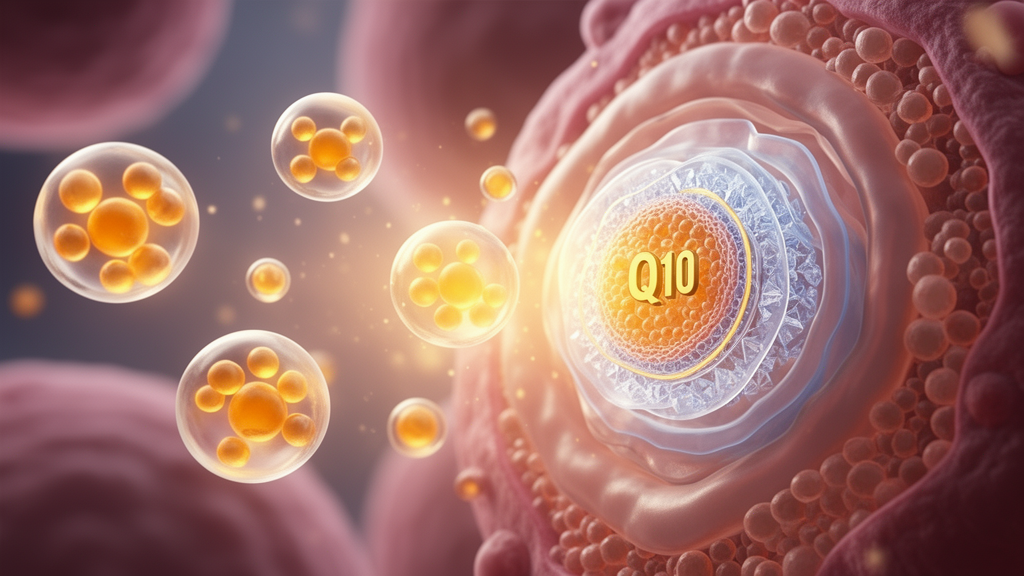
Image Credits: AI Generated
DOI: 10.1186/s43094-026-00999-4
Keywords: Coenzyme Q10, Ubiquinone, Microencapsulation, Bioavailability, Pharmacokinetics, Clinical Trial, Vitamin D, Metabolic Health, Comparative, coenzyme, products, following
News Source: Ophelia Keating. (November 11, 2026). Microencapsulated Coenzyme Q10 Outperforms Standard Formulation in Acute Bioavailability Clinical Trial. Scienmag.