In a groundbreaking study that promises to reshape our understanding of cancer biology, researchers have uncovered compelling evidence linking the microbiota associated with breast, colorectal, and lung cancers. This comprehensive investigation, conducted by a multidisciplinary team and published in Medical Oncology, sheds light on the intricate relationship between microbial populations and tumor development across multiple cancer types. This novel insight into the tumor microenvironment and its microbial constituents opens promising avenues for innovative diagnostic and therapeutic strategies.
The study punctuates a growing conceptual shift in oncology, highlighting that the human microbiome—a complex community of microorganisms residing in and on our bodies—plays a pivotal role far beyond digestion and immunity. In fact, the dysbiosis or imbalance of these microbial communities may not merely be a bystander effect but a contributing factor in carcinogenesis. Understanding which microbial signatures correspond with specific cancer types can unveil previously hidden biological mechanisms, potentially transforming early detection protocols and personalized treatment options.
Researchers employed advanced genomic sequencing to profile microbiota across tumor samples from breast, colorectal, and lung cancer patients. This fine-grained analysis went beyond the classical focus on single microbial species, embracing a holistic view of microbial ecosystems and their dynamic interactions with tumor cells, immune components, and the local microenvironment. By mapping the bacterial, fungal, and viral constituents, the team identified both shared and unique microbial patterns that distinguish these cancers at the microbial level.
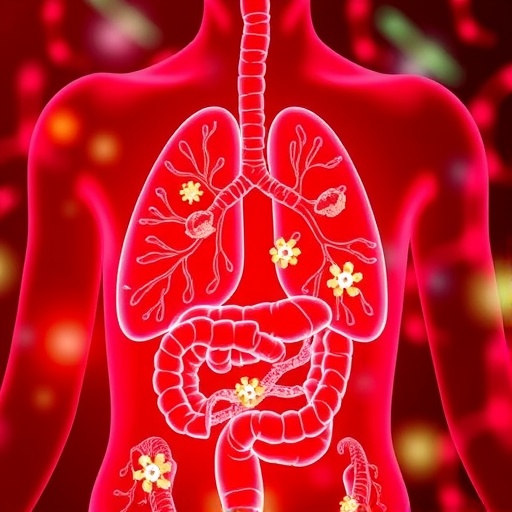
One of the striking findings is the overlap in certain bacterial genera that proliferate in breast, colorectal, and lung tumor tissues. These microbial populations seem to engage in metabolic pathways that can either promote inflammation, alter immune responses, or affect cellular signaling pathways critical to cancer progression. For example, some of these bacteria produce metabolites known to influence epithelial cell proliferation or modulate the tumor suppressor functions, thereby acting as possible facilitators of tumorigenesis.
Importantly, the study also highlights distinct microbial signatures exclusive to each cancer type. In breast cancer tissues, particular bacterial species that metabolize estrogens were identified, suggesting a link between hormonal regulation and local microbial activity. This novel microbiota-hormone axis could potentially explain variations in tumor aggressiveness and responsiveness to hormone therapies in breast cancer patients, creating a tantalizing prospect for microbiome-targeted interventions to enhance treatment efficacy.
In colorectal cancer, the researchers found an abundance of microbial taxa previously implicated in inflammatory bowel diseases, reinforcing the well-established connection between chronic inflammation, microbiota alteration, and colorectal carcinogenesis. These microbiota not only alter the immune landscape but may also produce genotoxins that directly damage DNA, thus fostering the accumulation of mutations critical to tumor growth.
Lung cancer tissues presented a unique microbial profile that could be correlated with environmental exposures such as smoking and air pollution. These microbes are thought to modulate local inflammatory responses and potentially contribute to carcinogen metabolism, thereby influencing tumor initiation and progression. Such findings highlight the complex interplay between external environmental factors, respiratory microbiota, and cancer biology.
Beyond compositional insights, the study also delved into functional analysis of the microbiota’s metabolic capabilities. By integrating metagenomic data with metabolomic profiling, the team inferred how microbial communities might influence cancer metabolism, a hallmark of tumor biology. For instance, microbial metabolites involved in modulating oxidative stress and immune evasion were detected, suggesting that these microbes orchestrate a supportive niche for tumor survival and growth.
The implications of this research extend into clinical realms where the microbiota could serve as biomarkers for early cancer detection. Non-invasive sampling methods such as liquid biopsies could potentially capture circulating microbial DNA signatures reflective of tumor-associated microbiota, offering a revolutionary tool for screening and monitoring cancer progression or therapeutic response.
Moreover, microbiota-modulating therapies, including targeted antibiotics, probiotics, and dietary interventions, might emerge as adjuncts to traditional cancer treatments. By restoring microbial balance or selectively diminishing tumor-promoting microbes, such strategies could improve patient outcomes, reduce treatment resistance, and mitigate adverse effects associated with chemotherapy and radiotherapy.
This work also underscores the importance of caution in interpreting causality, as the cancer-microbiota interplay is bidirectional and highly complex. While the data illustrate significant correlations and plausible mechanistic pathways, further longitudinal studies and experimental validation are needed to disentangle whether microbial changes are a cause or consequence of tumorigenesis or both.
Another salient feature of this research is its multi-cancer comparative framework, which enables cross-talk across tumor types. Such an approach enriches our understanding of common microbial mechanisms in oncogenesis while pinpointing idiosyncratic features of individual cancers. This dual insight creates fertile ground for personalized diagnostics and therapies tailored to the microbiome’s cancer-specific signature.
Technological advancements in high-throughput sequencing, bioinformatics, and systems biology were crucial for this study’s success. Sophisticated algorithms allowed the researchers to not only catalog microbial taxa but also interpret their functions and interactions with host cells at an unprecedented resolution. This integrative methodology represents a new frontier in oncology research, blending microbiology, immunology, and cancer genomics.
The study’s authors advocate for expanding microbiome research into clinical trials to verify potential microbiota-based interventions. They emphasize that understanding the spatial and temporal dynamics of tumor-associated microbes will be key to optimizing therapeutics and identifying patients most likely to benefit from microbiome modulation.
In conclusion, this seminal research reveals that the microbiota is an inseparable component of the cancer ecosystem, influencing the initiation, progression, and therapeutic response of breast, colorectal, and lung cancers. The convergence of microbial and tumor biology promises to unlock new paradigms in cancer management, heralding a future where microbiome-informed precision medicine becomes the norm.
This exciting revelation not only deepens our biological insight but also fuels hope that harnessing the microbiota will revolutionize cancer care, making treatments more effective, less toxic, and increasingly personalized. The research community now stands at the cusp of a microbial renaissance in oncology—one teeming with potential to save countless lives.
Subject of Research: Microbiota relationship between breast, colorectal, and lung cancer types.
Article Title: Microbiota relationship between breast, colorectal, and lung cancer types.
Article References:
Kanimdan, E., Bundgaard-Nielsen, C., Yenigun, V.B. et al. Microbiota relationship between breast, colorectal, and lung cancer types. Med Oncol 43, 72 (2026). https://doi.org/10.1007/s12032-025-03170-w
Image Credits: AI Generated
DOI: https://doi.org/10.1007/s12032-025-03170-w
Tags: advanced genomic sequencing in oncologybreast colorectal lung cancer linkdysbiosis and carcinogenesisimplications of microbiota for cancer researchinnovative cancer diagnosticsmicrobial ecosystems and cancer interactionsmicrobial signatures in cancermicrobiota and cancer connectionsmultidisciplinary research in cancer biologypersonalized cancer treatment strategiesrole of microbiome in tumor developmenttumor microenvironment and microbiota