• HOME
  • NEWS
  • EXPLORE
    • CAREER
      • Companies
      • Jobs
    • EVENTS
    • iGEM
      • News
      • Team
    • PHOTOS
    • VIDEO
    • WIKI
  • BLOG
  • COMMUNITY
    • FACEBOOK
    • INSTAGRAM
    • TWITTER
Saturday, May 16, 2026
BIOENGINEER.ORG
No Result
View All Result
  • Login
  • HOME
  • NEWS
  • EXPLORE
    • CAREER
      • Companies
      • Jobs
        • Lecturer
        • PhD Studentship
        • Postdoc
        • Research Assistant
    • EVENTS
    • iGEM
      • News
      • Team
    • PHOTOS
    • VIDEO
    • WIKI
  • BLOG
  • COMMUNITY
    • FACEBOOK
    • INSTAGRAM
    • TWITTER
  • HOME
  • NEWS
  • EXPLORE
    • CAREER
      • Companies
      • Jobs
        • Lecturer
        • PhD Studentship
        • Postdoc
        • Research Assistant
    • EVENTS
    • iGEM
      • News
      • Team
    • PHOTOS
    • VIDEO
    • WIKI
  • BLOG
  • COMMUNITY
    • FACEBOOK
    • INSTAGRAM
    • TWITTER
No Result
View All Result
Bioengineer.org
No Result
View All Result
Home NEWS Science News Health

Mice regrow brain tissue after stroke with bioengineered gel

Bioengineer by Bioengineer
May 21, 2018
in Health
Reading Time: 2 mins read
0
Share on FacebookShare on TwitterShare on LinkedinShare on RedditShare on Telegram
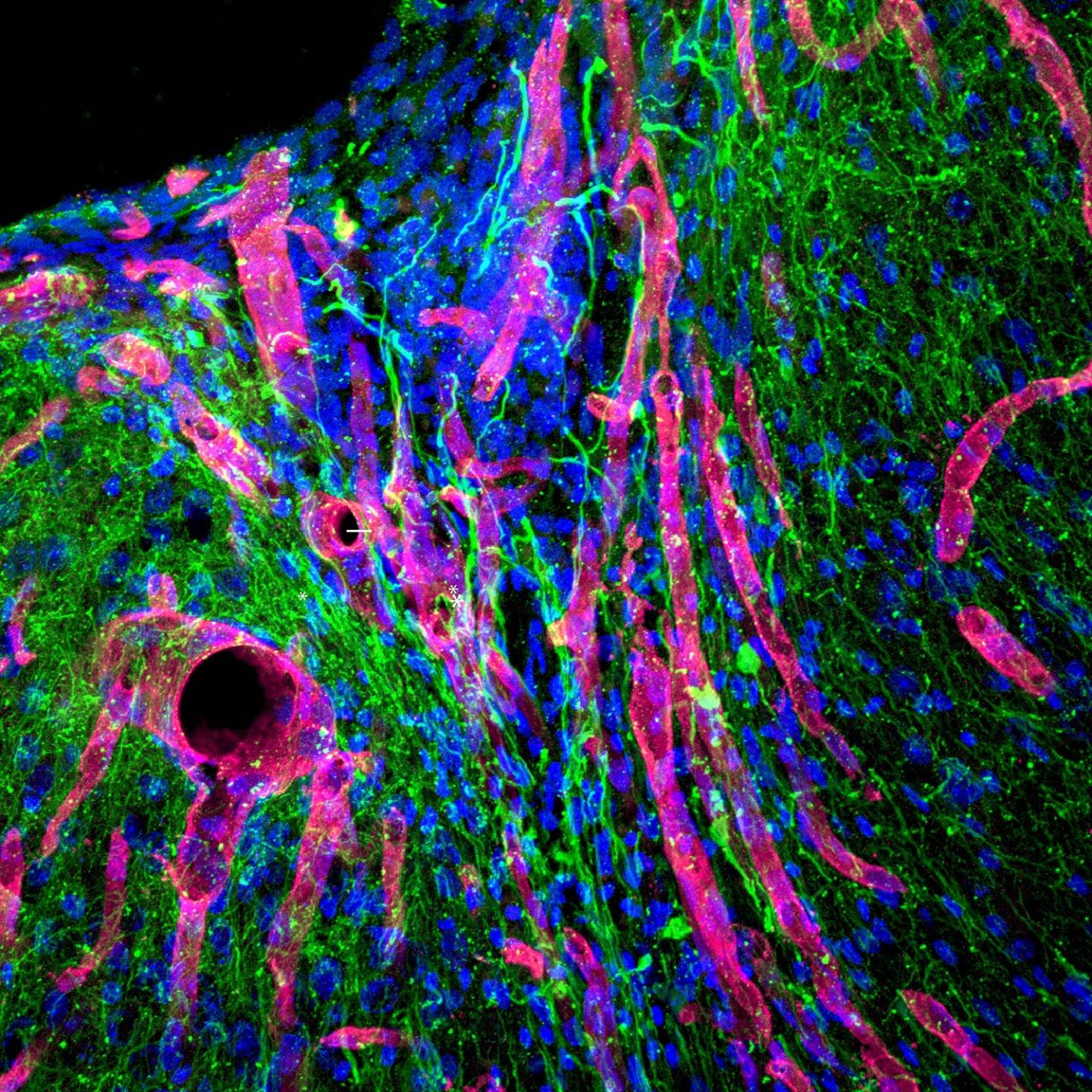
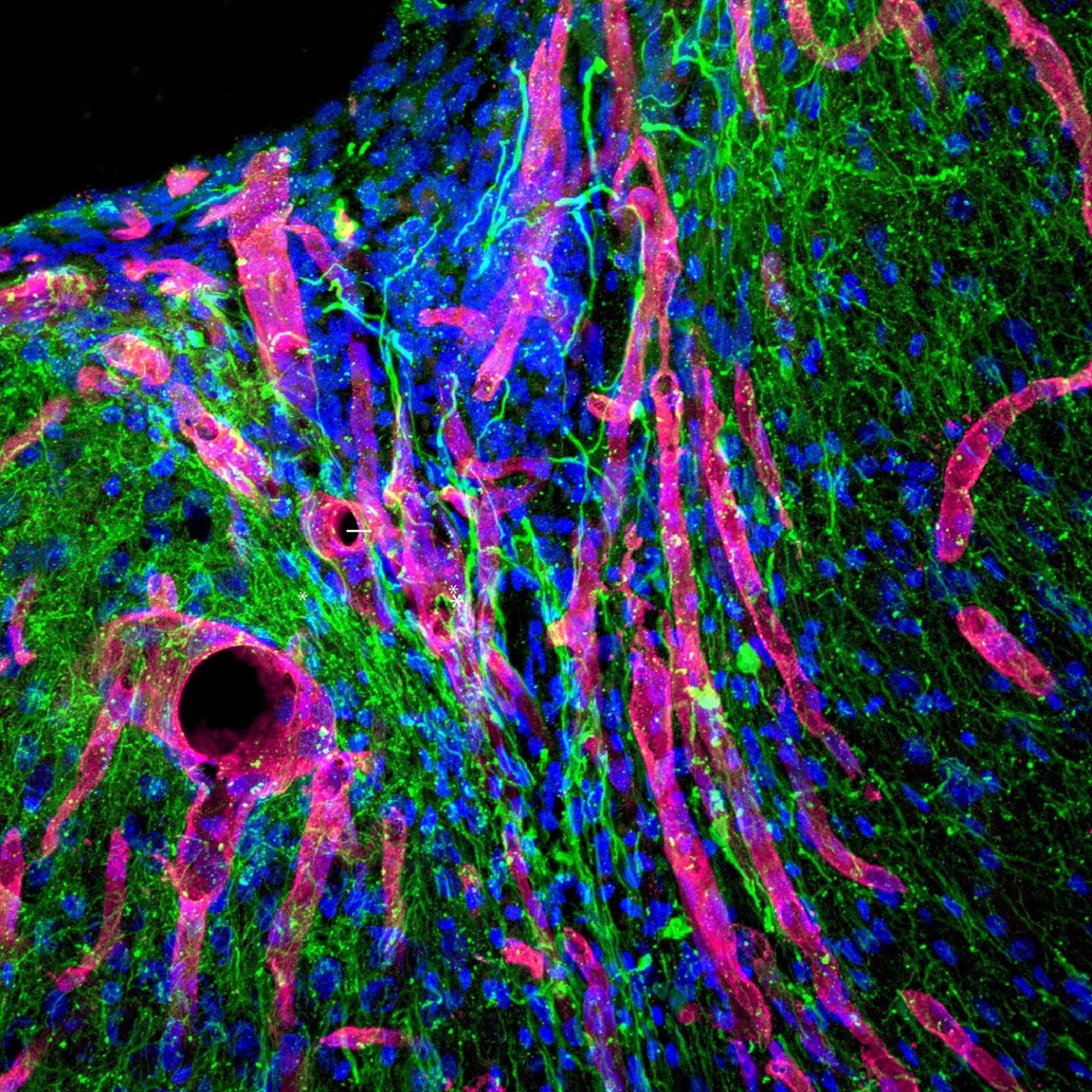
IMAGE

Credit: UCLA Health

In a first-of-its-kind finding, a new stroke-healing gel helped regrow neurons and blood vessels in mice with stroke-damaged brains, UCLA researchers report in the May 21 issue of Nature Materials.

"We tested this in laboratory mice to determine if it would repair the brain in a model of stroke, and lead to recovery," said Dr. S. Thomas Carmichael, Professor and Chair of neurology at UCLA. "This study indicated that new brain tissue can be regenerated in what was previously just an inactive brain scar after stroke."

The results suggest that such an approach may someday be a new therapy for stroke in people, said Dr. Tatiana Segura, a former Professor of Chemical and Biomolecular Engineering at UCLA who is now a professor at Duke University. Carmichael and Segura collaborated on the study.

The brain has a limited capacity for recovery after stroke and other diseases. Unlike some other organs in the body, such as the liver or skin, the brain does not regenerate new connections, blood vessels or new tissue structures. Tissue that dies in the brain from stroke is absorbed, leaving a cavity, devoid of blood vessels, neurons or axons, the thin nerve fibers that project from neurons.

To see if healthy tissue surrounding the cavity could be coaxed into healing the stroke injury, Segura engineered a gel to inject into the stroke cavity that thickens to mimic the properties of brain tissue, creating a scaffolding for new growth.

The gel is infused with molecules that stimulate blood vessel growth and suppress inflammation, since inflammation results in scars and impedes regrowth of functional tissue.

After 16 weeks, stroke cavities in mice contained regenerated brain tissue, including new neural networks – a result that had not been seen before. The mice with new neurons showed improved motor behavior, though the exact mechanism wasn't clear.

"The new axons could actually be working," said Segura. "Or the new tissue could be improving the performance of the surrounding, unharmed brain tissue."

The gel was eventually absorbed by the body, leaving behind only new tissue.

This research was designed to explore recovery in acute stroke, or the period immediately following stroke – in mice, that is five days; in humans, that is two months. Next, Carmichael and Segura are determining if brain tissue can be regenerated in mice long after the stroke injury. More than 6 million Americans are living with the long-term outcomes of stroke, known as chronic stroke.

###

In addition to Carmichael and Segura, other authors of the paper are Lina Nih and Shiva Gojgini, both of UCLA.

The study was supported by funds from the National Institutes of Health.

CONTACT:
Leigh Hopper, Senior Public Information Officer
[email protected]
310-308-0405

Media Contact

Leigh Hopper
[email protected]
310-267-7149
@uclanewsroom

http://www.newsroom.ucla.edu

Share12Tweet8Share2ShareShareShare2

Related Posts

Transitional Care Boosts Heart Failure Outcomes in Elders

May 16, 2026

Gymnopilus Mushrooms Yield Antibacterial Gymnopilin A10, Gymnoprenol B13

May 16, 2026

Metabolic Stress Worsens Parkinson’s via Mitochondrial Ferroptosis

May 16, 2026

Four New Hydroxyl Fatty Acids from Bacillus sp.

May 16, 2026
Please login to join discussion

POPULAR NEWS

  • Research Indicates Potential Connection Between Prenatal Medication Exposure and Elevated Autism Risk

    844 shares
    Share 338 Tweet 211
  • New Study Reveals Plants Can Detect the Sound of Rain

    730 shares
    Share 291 Tweet 182
  • Salmonella Haem Blocks Macrophages, Boosts Infection

    62 shares
    Share 25 Tweet 16
  • Breastmilk Balances E. coli and Beneficial Bacteria in Infant Gut Microbiomes

    58 shares
    Share 23 Tweet 15

About

We bring you the latest biotechnology news from best research centers and universities around the world. Check our website.

Follow us

Recent News

New Blood Test Detects Tumor DNA to Guide Treatment in Advanced Cancer Cases

Transitional Care Boosts Heart Failure Outcomes in Elders

Low-Power Enhanced I2C Controller: RTL to GDSII

Subscribe to Blog via Email

Enter your email address to subscribe to this blog and receive notifications of new posts by email.

Join 82 other subscribers
  • Contact Us

Bioengineer.org © Copyright 2023 All Rights Reserved.

Welcome Back!

Login to your account below

Forgotten Password?

Retrieve your password

Please enter your username or email address to reset your password.

Log In
No Result
View All Result
  • Homepages
    • Home Page 1
    • Home Page 2
  • News
  • National
  • Business
  • Health
  • Lifestyle
  • Science

Bioengineer.org © Copyright 2023 All Rights Reserved.