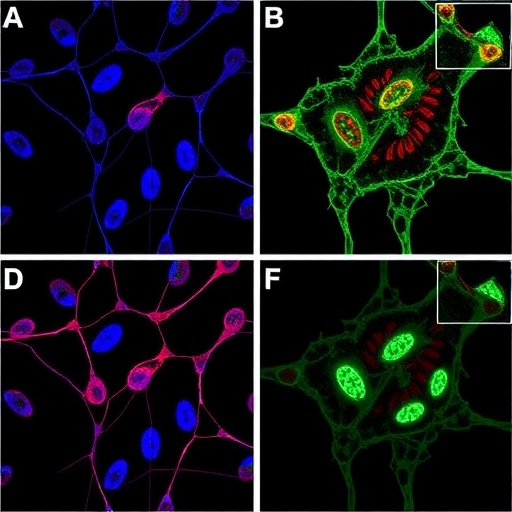
In the relentless pursuit of precision oncology, recent findings have illuminated a compelling molecular mechanism that could redefine treatment paradigms for non-small cell lung cancer (NSCLC), particularly concerning the widely used therapeutic agent Gefitinib. A groundbreaking study led by Kong, Wu, Li, and colleagues provides robust insight into how the intracellular and exosomal microRNA miR-101-3p, modulated by the RNA methyltransferase METTL14, can decisively confer sensitivity to Gefitinib in NSCLC, potentially carving new pathways toward personalized cancer therapy.
NSCLC remains a formidable adversary in lung cancer management, accounting for approximately 85% of all lung cancer cases globally. Despite the advent of targeted therapies, drug resistance frequently emerges, undermining clinical efficacy and patient survival. Gefitinib, an epidermal growth factor receptor (EGFR) tyrosine kinase inhibitor, has revolutionized treatment by specifically targeting aberrant EGFR signaling common in NSCLC. However, intrinsic and acquired resistance mechanisms challenge its success, creating an imperative need to unravel the cellular intricacies dictating therapeutic response.
Central to this innovative research is miR-101-3p, a small non-coding RNA known for its tumor-suppressive roles across various malignancies. The study delineates not only the intracellular functions of miR-101-3p but also its exosomal dynamics—where the microRNA is packaged into extracellular vesicles facilitating intercellular communication within the tumor microenvironment. The dual presence of miR-101-3p signals a sophisticated regulatory axis influencing Gefitinib sensitivity that transcends individual cells and implicates broader tumor ecosystem interactions.
What elevates the significance of miR-101-3p in this context is its regulation by METTL14, a pivotal enzyme catalyzing N6-methyladenosine (m6A) modifications on RNA. This chemical modification profoundly impacts RNA metabolism, including stability, splicing, and translation. The study meticulously illustrates how METTL14 orchestrates miR-101-3p expression at the epitranscriptomic level, thereby modulating its availability and functional capacity. High METTL14 activity correlates with augmented miR-101-3p maturation, which sensitizes NSCLC cells to Gefitinib, whereas METTL14 downregulation diminishes this effect, fostering drug resistance.
Intriguingly, the mechanistic exploration reveals that intracellular accumulation of miR-101-3p targets key oncogenic pathways implicated in resistance, including the regulation of pivotal genes involved in cell proliferation, apoptosis, and survival signaling. The repression of these signaling cascades reinstates Gefitinib efficacy, highlighting miR-101-3p as a molecular linchpin for therapeutic responsiveness. This adds a layer of complexity by suggesting that miR-101-3p functions as a critical mediator that can fine-tune cellular susceptibility to EGFR inhibition.
Equally compelling is the demonstration of exosomal miR-101-3p as a vehicle for horizontal transfer of Gefitinib sensitivity among tumor cells. Exosomes, as nanoscale extracellular vesicles, have garnered attention for their role in disseminating oncogenic factors and mediating cell-to-cell communication. By ferrying miR-101-3p through the tumor milieu, exosomes could propagate Gefitinib sensitivity, essentially ‘educating’ resistant cells to regain their vulnerability to targeted therapy. This discovery propels the conceptual framework of tumor microenvironment modulation as a therapeutic tactic.
The therapeutic implications of these insights are profound. Leveraging METTL14-mediated regulation of miR-101-3p offers a novel stratagem that could synergize with existing EGFR inhibitors to overcome resistance. It paves the way for developing epitranscriptomic modulators or miRNA mimetics as adjuncts to established treatments, enhancing clinical outcomes for patients grappling with resistant NSCLC. Furthermore, miR-101-3p levels, both intracellular and exosomal, hold promise as predictive biomarkers to tailor therapy and monitor response dynamically.
Methodologically, the study harnessed an array of cutting-edge techniques including RNA sequencing, methylated RNA immunoprecipitation, quantitative real-time PCR, and functional assays assessing cell viability and apoptosis. Such rigorous approaches underpin the robustness of the findings, substantiating the causative link between METTL14, miR-101-3p expression, and Gefitinib sensitivity. Additionally, in vitro models were complemented by patient-derived samples, reinforcing the translational relevance of the research.
The clinical translation of these findings could transform the NSCLC therapeutic landscape. By integrating miR-101-3p modulation strategies, clinicians may eventually overcome the recalcitrant problem of Gefitinib resistance, extending the durability and depth of responses in patients. Moreover, exosomal miR-101-3p profiling might emerge as a minimally invasive liquid biopsy modality, facilitating real-time treatment monitoring and personalized intervention adjustments.
Beyond the immediate relevance to NSCLC, this study underscores the broader significance of epitranscriptomic regulation in cancer biology and therapy resistance. METTL14 and m6A modifications are increasingly recognized as master regulators in diverse oncogenic processes, and the elucidation of their interface with microRNAs opens fertile ground for novel drug development. This paradigm shift from genetic to epitranscriptomic targeting holds considerable promise across multiple cancer types.
Importantly, the interplay between intracellular signaling and extracellular vesicle-mediated communication exemplifies the intricacies of tumor biology. The ability of exosomes to modulate drug sensitivity amplifies the emerging recognition that effective cancer treatment must consider not only individual cancer cells but also their dynamic and cooperative ecosystem. Strategies that disrupt this cellular crosstalk could yield unprecedented breakthroughs in overcoming multidrug resistance.
Future research avenues prompted by this study are manifold. Investigations into other m6A-regulated microRNAs and their impact on sensitivity to various targeted therapies could unmask universal principles governing therapeutic responses. Furthermore, the design of precision delivery systems to modulate miR-101-3p or METTL14 activity specifically within tumor cells represents a tantalizing prospect, harnessing advances in nanotechnology and molecular therapeutics.
In conclusion, the compelling work delineated by Kong et al. illuminates a sophisticated regulatory network where METTL14-driven modulation of intracellular and exosomal miR-101-3p orchestrates Gefitinib sensitivity in non-small cell lung cancer. This paradigm-shifting insight not only deepens our molecular understanding of drug resistance but also unveils visionary therapeutic and diagnostic possibilities. As NSCLC continues to challenge the oncology community, such molecular revelations inspire hope for more effective, tailored treatments that can significantly improve patient prognoses and quality of life.
Subject of Research: Regulation of Gefitinib sensitivity in non-small cell lung cancer (NSCLC) by intracellular and exosomal miR-101-3p through METTL14-mediated epitranscriptomic modulation.
Article Title: Intracellular and exosomal miR-101-3p regulated by METTL14 confers Gefitinib sensitivity in NSCLC.
Article References:
Kong, Q., Wu, L., Li, J. et al. Intracellular and exosomal miR-101-3p regulated by METTL14 confers Gefitinib sensitivity in NSCLC. Med Oncol 43, 117 (2026). https://doi.org/10.1007/s12032-026-03242-5
Image Credits: AI Generated
DOI: https://doi.org/10.1007/s12032-026-03242-5
Tags: EGFR tyrosine kinase inhibitorsexosomal microRNA dynamicsGefitinib drug sensitivityMETTL14 regulation of miR-101-3pmicroRNA roles in cancermolecular mechanisms in lung cancernon-small cell lung cancer therapyNSCLC treatment paradigmspersonalized cancer treatment strategiesprecision oncology advancementstargeted therapy resistance mechanismstumor-suppressive microRNAs