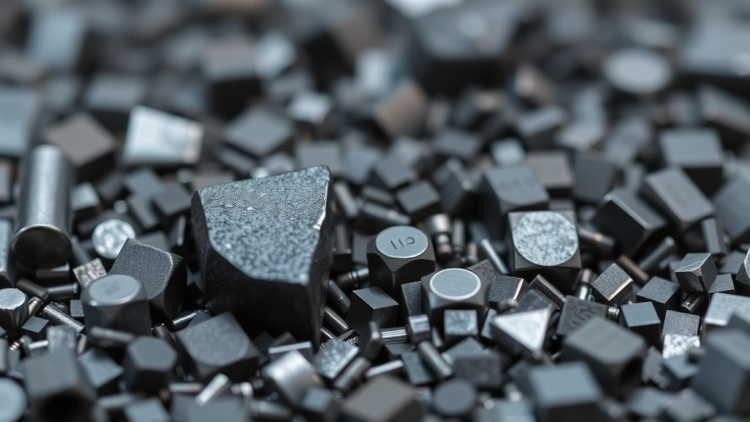
Metallurgy, the science that has underpinned human civilisation for more than six and a half thousand years, is undergoing a transformation so profound that researchers are calling it a new era for the field. From the first hammered copper tools of antiquity to the superalloys that survive inside jet engines and the structural metals bound for space exploration, the ability to extract, shape and understand metals has repeatedly redefined what societies can build. Now, a convergence of artificial intelligence, advanced microscopy, additive manufacturing and sustainability-driven processing is reshaping the discipline from its foundations, and a newly launched scientific journal has been created specifically to capture the discoveries that follow.
The launch of the Journal of Materials Science: Metallurgy, a sister title to the long-established Journal of Materials Science, marks a deliberate return of focus to metals after decades in which the broader field of materials science absorbed and expanded upon metallurgical principles. The inaugural editorial, written by Sophie Primig of UNSW Sydney and Megumi Kawasaki of Oregon State University and published in November 2025 as the first article of the journal’s first volume, sets out why the editors believe metallurgy is once again at the frontier of science rather than a mature discipline resting on its laurels. Their argument rests on simultaneous breakthroughs in four areas: alloy design, processing, characterisation, and performance in extreme environments.
To understand why this moment matters, it helps to trace the intellectual lineage of the field. Metallurgy is often described as one of the oldest sciences, with origins stretching back more than 6,500 years, yet its modern scientific form crystallised in the twentieth century. By the mid-1900s, researchers had begun applying metallurgical principles, particularly those governing phase transformations, thermodynamics and the structure of crystalline solids, to ceramics, polymers and semiconductors. That expansion gave birth to materials science and engineering as an inherently interdisciplinary field, one that integrates physics, chemistry and engineering within a unifying framework known as the processing-structure-property-performance relationship, frequently visualised as the materials science tetrahedron. Each corner of that tetrahedron constrains and enables the others: change how a material is processed and you alter its internal structure, which in turn dictates its properties and ultimately its real-world performance.
The Journal of Materials Science itself was founded in 1966 by Robert W. Cahn, a distinguished physical metallurgist celebrated for his work on the thermodynamics and kinetics of phase transformations in solids. Under his influence the journal quickly became a leading platform for the rapidly growing materials community, and like metallurgy itself it has continued to thrive while broadening its scope to encompass every class of material. The new sister journal reverses that expansion, narrowing the aperture deliberately to metals and alloys at precisely the moment when the field’s rate of discovery is accelerating. The editors describe their aim as capturing a new era of discoveries in one of humanity’s most foundational and continually evolving sciences.
The first engine of that new era is a revolution in alloy design. For most of history, metallurgists worked with alloys built around a single dominant element, with smaller additions of other elements tuned to refine properties: iron with carbon and chromium to make stainless steel, aluminium with copper or lithium to make aerospace alloys, nickel with cobalt and refractory metals to make superalloys. That paradigm is now being challenged by multiple principal element alloys, often called high-entropy alloys, in which four, five or more elements are mixed in near-equal proportions. Because these compositions occupy vast, previously unexplored regions of chemical space, they access property combinations that conventional alloys cannot reach, from exceptional strength at cryogenic temperatures to remarkable resistance to softening at high temperature. Alongside them sit metallic glasses, amorphous metals whose disordered atomic structure confers extraordinary elasticity and corrosion resistance, and, most strikingly, alloy compositions generated by artificial intelligence algorithms that no human designer would have proposed.
The second engine is a rethinking of processing itself. Traditional thermomechanical routes, the carefully choreographed sequences of heating, deformation and heat treatment that metallurgists have refined over generations, are being joined by radically new techniques, most prominently additive manufacturing. When a metal component is built layer by layer from a melt pool measured in fractions of a millimetre, the solidification behaviour, the welding metallurgy and the non-equilibrium solid-state phase transformations all depart from textbook expectations, forcing researchers to reassess fundamental assumptions about how microstructures form. At the same time, sustainable metallurgy is emerging as a design philosophy rather than an afterthought: circular processing routes that recycle alloys with lower environmental footprints, and more ethical stewardship of limited natural resources, are becoming central criteria for how new materials and processes are judged.
The third engine lies in how scientists see and measure metals. Advanced multiscale characterisation now spans from in-situ methods that watch components deform or transform under realistic loads at the laboratory scale, down to atomic-resolution imaging and diffraction that reveal individual dislocations, solute clusters and grain-boundary chemistry. Crucially, this experimental knowledge is increasingly coupled with multiscale modelling and simulation, allowing researchers to connect what happens at the scale of a nano-sized precipitate to the behaviour of an entire turbine disc. The prediction of processing-microstructure-property relationships using machine learning, validated against targeted experiments, is described in the editorial as an emerging and rapidly growing field, one that promises to compress development cycles that once took decades into years or even months.
The fourth engine is the relentless push into extreme environments. Alloys are now engineered to combine superior high-temperature strength with ductility, a combination that has historically involved difficult trade-offs because the microstructural features that resist deformation at high temperature often embrittle the material. Add exceptional corrosion and degradation resistance, and the resulting materials are redefining what the editors call extreme materials can achieve in demanding applications, from hypersonic flight and next-generation nuclear reactors to hydrogen infrastructure and deep-earth energy extraction. Each of these applications demands metals that survive conditions, temperatures, stresses and chemistries, that would destroy conventional alloys within hours.
Against this backdrop, the new journal positions itself as a dedicated platform for high-quality, original research that advances fundamental understanding of metals and alloys. The editors state a particular preference for interdisciplinary studies that integrate modelling, novel experimental approaches and advanced analytical techniques, and they explicitly welcome both work that extends current fundamental understanding and breakthroughs arising from collaboration between industry and academia. That dual emphasis reflects a practical reality of modern metallurgy: the distance between a laboratory discovery and an engineered product remains long, and closing it requires simultaneous progress in theory, experiment and manufacturing practice.
What emerges from the editorial is a portrait of a discipline that is neither nostalgic about its ancient roots nor complacent about its achievements. The materials science tetrahedron that unified the field in the twentieth century still holds, but every corner of it is being redrawn at once. Compositions once dismissed as thermodynamic curiosities are being screened by algorithms and confirmed in the laboratory; components are being solidified under conditions that classical theories never anticipated; microscopes and simulations are converging on the same atoms from opposite directions; and the alloys that result are expected to work where no metal has reliably worked before. For a science older than the pyramids, metallurgy appears to be entering its most dynamic chapter yet, and the research community now has a venue built specifically to document it.
Subject of Research: The launch of a new metallurgy journal and the advances in alloy design, processing, characterisation and extreme-environment performance driving a new era in metallurgical science
Article Title: Editorial: Journal of Materials Science: Metallurgy
Article References: Primig, S., & Kawasaki, M. (2025). Editorial: Journal of Materials Science: Metallurgy. Journal of Materials Science: Metallurgy, 1(1), Article 1. https://doi.org/10.1007/s44492-025-00001-x
Image Credits: AI Generated
DOI: 10.1007/s44492-025-00001-x
Keywords: metallurgy, materials science, high-entropy alloys, alloy design, additive manufacturing, machine learning, sustainable metallurgy, microstructure, phase transformations, extreme environments, metallic glasses, Journal of Materials Science
Cite Scienmag News
APA MLA Chicago
Denise Maddox. (September 26, 2026). Metallurgy Enters a New Era as AI-Designed Alloys Redefine the Science of Metals. Scienmag. https://scienmag.com/metallurgy-enters-a-new-era-as-ai-designed-alloys-redefine-the-science-of-metals/
Denise Maddox. “Metallurgy Enters a New Era as AI-Designed Alloys Redefine the Science of Metals.” Scienmag, 26 September 2026, https://scienmag.com/metallurgy-enters-a-new-era-as-ai-designed-alloys-redefine-the-science-of-metals/. Accessed 26 September 2026.
Denise Maddox. “Metallurgy Enters a New Era as AI-Designed Alloys Redefine the Science of Metals.” Scienmag. September 26, 2026. https://scienmag.com/metallurgy-enters-a-new-era-as-ai-designed-alloys-redefine-the-science-of-metals/
Copy citation Download RIS
Tags: additive manufacturingadditive manufacturing in metalsAI-designed metal alloysalloy designartificial intelligence in metallurgydevelopment of superalloysextreme environmentsfuture of metal sciencehigh entropy alloysJournal of Materials ScienceMachine learningmaterials sciencemetallic glassesmetallurgymetallurgy advancementsmicroscopy in materials analysismicrostructurenew era of metallurgical researchphase transformationsscientific journal launch for metallurgyspace-grade structural metalssustainable metal processingsustainable metallurgytransformation in materials science