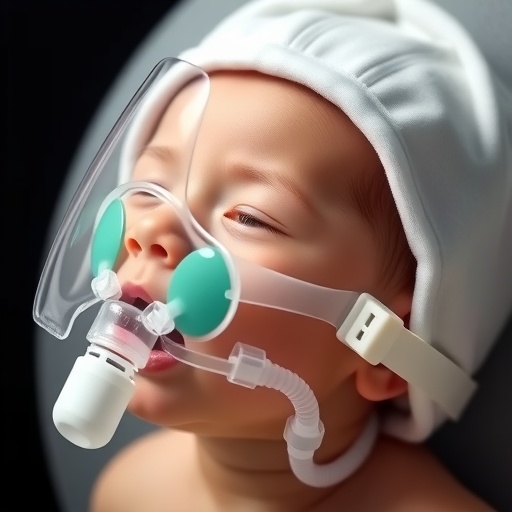
About 10% of newborns need breathing assistance immediately after birth, and premature infants are among those most likely to require it. In delivery rooms, clinicians commonly begin positive-pressure ventilation with a face mask. Yet over recent years, a competing approach—using a nasal interface—has gained attention as a potentially more effective way to deliver the first breaths.
A new meta-analysis in Pediatric Research (2026) updates the evidence base by directly comparing nasal interfaces with face masks in preterm babies born before 37 weeks’ gestation. The focus is not simply on how well ventilation works moment-to-moment, but on patient-centered outcomes, especially mortality.
The study synthesizes data from multiple trials and observational comparisons to estimate the overall effect of the interface choice. By pooling results across different clinical settings, the authors aim to reduce uncertainty that can arise when any single trial is underpowered.
Technically, the intervention concerns how positive pressure is applied to the airway during resuscitation at birth. A face mask can cover the mouth and nose, while a nasal interface delivers ventilation through the nasal route, potentially improving the alignment of airflow with the upper airway and reducing unwanted air leak.
Mortality is the headline outcome, because it integrates both direct respiratory effects and downstream consequences such as complications related to ineffective ventilation. The updated analysis strengthens the statistical power to detect whether one method is consistently associated with better survival.
The findings will be of interest to neonatology teams, particularly in settings where equipment, staff training, and time-critical procedures shape ventilation performance. If nasal interfaces prove superior, the results could influence guidelines on neonatal respiratory support during the earliest minutes of life.
More broadly, the work reflects a growing movement toward refining “how we ventilate” rather than only “whether we ventilate.” Optimizing interface choice may be one of the most practical interventions to improve outcomes in high-risk preterm populations.
Subject of Research: Neonatal respiratory support at birth in preterm infants (<37 weeks’ gestation)
Article Title: Meta-analysis of nasal interfaces versus face mask during respiratory support at birth in less than 37 weeks’ gestation infants.
Article References: Idung, E.E., O’Reilly, M., Morin, C.M.D. et al. Meta-analysis of nasal interfaces versus face mask during respiratory support at birth in less than 37 weeks’ gestation infants. Pediatr Res (2026). https://doi.org/10.1038/s41390-026-05286-9
Image Credits: AI Generated
DOI: https://doi.org/10.1038/s41390-026-05286-9
Keywords:
Tags: airway management in preterm infantsbirth respiratory support methodsclinical trial comparison of ventilation interfacesmeta-analysis of neonatal ventilationnasal interface vs face maskneonatal mortality reduction strategiesneonatal respiratory outcomesneonatal resuscitation techniquesnon-invasive ventilation in newbornspositive-pressure ventilation in preemiespreterm infant respiratory supportrespiratory support for preterm birth