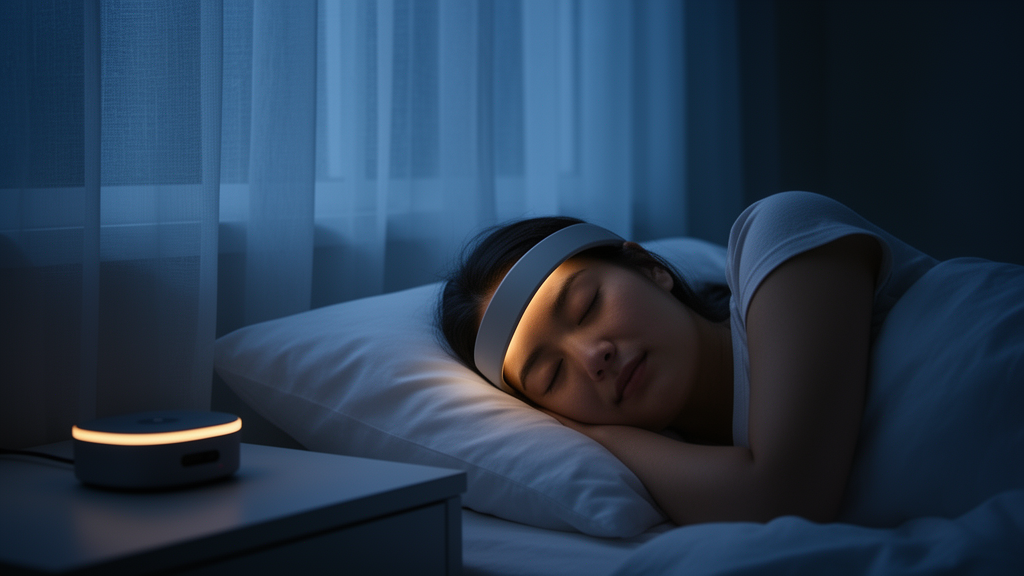
A wearable closed-loop transcranial electrical stimulation system targeting the frontal cortex during sleep significantly increased the duration of stage 2 non-rapid eye movement sleep and heightened sleep spindle density, according to an experimental study published in Frontiers in Network Physiology.
While transcranial electrical stimulation represents an established technique for noninvasive brain modulation that holds broad appeal because of its general safety profile and ease of physical application, its implementation has historically been restricted to specialized laboratory sleep research settings.
To bridge this deployment gap, the research team developed an automated, wearable intervention platform engineered to administer transcranial electrical stimulation directly to the frontal cortex during sleep. The system incorporates an ensemble neural network that performs automated sleep stage decoding in real time, pairing algorithmic classification with stage-specific stimulation logic designed to gate electrical current delivery. This closed-loop configuration was architected to recognize distinct physiological states and immediately trigger predefined electrical interventions calibrated to specific neuroelectrical sleep biomarkers across both non-rapid eye movement and rapid eye movement periods.
In an initial test case of the closed-loop apparatus, the investigators targeted distinct electrophysiological biomarkers across non-rapid eye movement and rapid eye movement sleep stages. Specifically, the stimulation protocol evaluated a dual-frequency intervention strategy that paired frontal spindle-frequency stimulation during stage 2 non-rapid eye movement sleep with frontal theta-frequency stimulation during rapid eye movement sleep. The spindle-frequency stimulation delivered during stage 2 was specifically intended to promote rapid eye movement sleep, whereas the theta-frequency stimulation applied during rapid eye movement episodes aimed to enhance endogenous theta oscillations within the sleeping brain.
The investigators first validated the wearable hardware and decoding algorithms by collecting physiological recordings with the wearable device alongside concurrent, gold-standard laboratory polysomnography.
Empirical evaluation revealed robust agreement between the automated ensemble neural network and conventional manual sleep staging procedures. Overall sleep stage classification concordance between the wearable system and manually scored polysomnography reached 80 percent across sleep recordings. When analyzing the precision of targeted delivery, the sensitivity and precision for electrical stimulation delivered during stage 2 non-rapid eye movement sleep were measured at 0.87 and 0.94, respectively. For stimulation administered during rapid eye movement sleep, the closed-loop system achieved a sensitivity of 0.89 and a precision of 0.91.
Analysis of physiological outcomes confirmed that closed-loop electrical stimulation exerted measurable effects on specific sleep parameters while leaving others unaffected. Administration of frontal electrical stimulation resulted in a statistically significant increase in the total time participants spent in stage 2 non-rapid eye movement sleep, accompanied by a significant rise in sleep spindle density during that same stage. In contrast to these non-rapid eye movement enhancements, the investigators detected no statistically significant physiological effects on rapid eye movement sleep duration or rapid eye movement oscillations.
In evaluating their results, the authors noted that the 80 percent staging agreement aligns well with previous findings from low-channel-count electroencephalography systems and approaches the established upper bounds of human interrater agreement in sleep scoring. The observed extensions in stage 2 sleep and increases in spindle density remain consistent with the established capacity of transcranial electrical stimulation to amplify local endogenous oscillations and prolong targeted network sleep states. Furthermore, the authors explained that neural structures governing rapid eye movement sleep are generally not situated within or adjacent to the frontal cortex, an anatomical distribution that likely diminishes the capacity of frontal electrical stimulation to alter rapid eye movement states.
Subject of Research: Closed-loop wearable transcranial electrical stimulation for sleep stage modulation
Article Title: A wearable system for closed-loop transcranial electrical stimulation during sleep and its application to REM
Article References: Provo, M., Brna, A. P., Brown, R., Aguilar-Simon, M., Jayaprakash, H., Shimizu, R., & Simons, S. (2026). A wearable system for closed-loop transcranial electrical stimulation during sleep and its application to REM. Frontiers in Network Physiology, 6, 1985469. https://doi.org/10.3389/fnetp.2026.1985469
Image Credits: AI Generated
DOI: 10.3389/fnetp.2026.1985469
Keywords: transcranial electrical stimulation, closed-loop neuromodulation, wearable sleep system, N2 sleep, sleep spindles, REM sleep, spindle density, frontal cortex, ensemble neural network, automated sleep scoring, polysomnography, theta oscillations, network physiology, home sleep monitoring, non-rapid eye movement sleep, interrater agreement, endogenous oscillations
News Source: Denise Maddox. (November 20, 2026). Wearable Frontal Electrical Stimulation Prolongs N2 Sleep and Increases Spindle Density. Scienmag.