• HOME
  • NEWS
  • EXPLORE
    • CAREER
      • Companies
      • Jobs
    • EVENTS
    • iGEM
      • News
      • Team
    • PHOTOS
    • VIDEO
    • WIKI
  • BLOG
  • COMMUNITY
    • FACEBOOK
    • INSTAGRAM
    • TWITTER
Wednesday, July 15, 2026
BIOENGINEER.ORG
No Result
View All Result
  • Login
  • HOME
  • NEWS
  • EXPLORE
    • CAREER
      • Companies
      • Jobs
        • Lecturer
        • PhD Studentship
        • Postdoc
        • Research Assistant
    • EVENTS
    • iGEM
      • News
      • Team
    • PHOTOS
    • VIDEO
    • WIKI
  • BLOG
  • COMMUNITY
    • FACEBOOK
    • INSTAGRAM
    • TWITTER
  • HOME
  • NEWS
  • EXPLORE
    • CAREER
      • Companies
      • Jobs
        • Lecturer
        • PhD Studentship
        • Postdoc
        • Research Assistant
    • EVENTS
    • iGEM
      • News
      • Team
    • PHOTOS
    • VIDEO
    • WIKI
  • BLOG
  • COMMUNITY
    • FACEBOOK
    • INSTAGRAM
    • TWITTER
No Result
View All Result
Bioengineer.org
No Result
View All Result
Home NEWS Science News Chemistry

‘Mercury Stories: Understanding Sustainability through a Volatile Element’

Bioengineer by Bioengineer
February 18, 2021
in Chemistry
Reading Time: 2 mins read
0
IMAGE
Share on FacebookShare on TwitterShare on LinkedinShare on RedditShare on Telegram

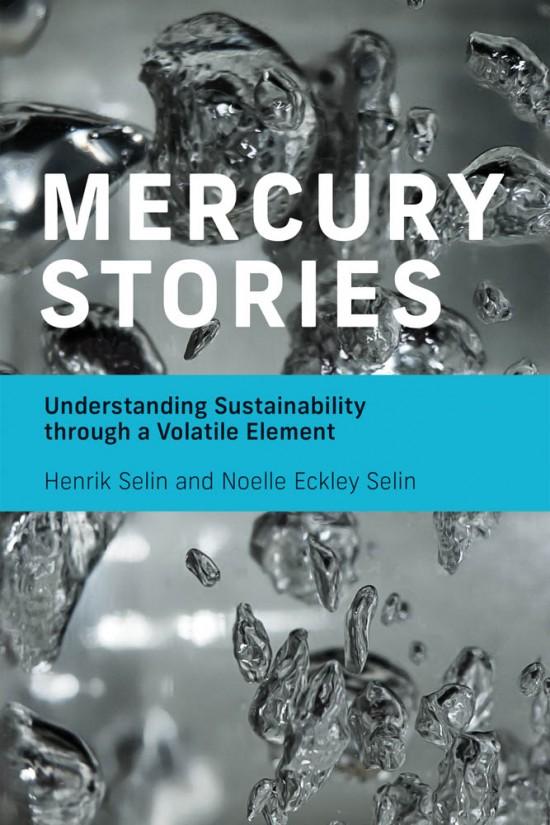
New MIT PRESS book explores volatile element mercury
IMAGE

Credit: The MIT PRESS, 2020.

In “Mercury Stories,” Henrik Selin and Noelle Eckley Selin examine sustainability through analyzing human interactions with mercury over thousands of years. They explore how people have made beneficial use of this volatile element, how they have been harmed by its toxic properties, and how they have tried to protect themselves and the environment from its damaging effects. Taking a systems approach, they develop and apply an analytical framework that can inform other efforts to evaluate and promote sustainability.

After introducing the framework, which uses the lens of a human-technical environmental system and a matrix-based approach to analyze mercury use and exposure, the authors examine five topical mercury systems that each illustrate important issues in mercury science and governance: global cycling of mercury through the atmosphere, land, oceans, and societies; mercury’s dangers to human health, including from occupational, medical, and dietary exposure; mercury emissions to the atmosphere from industrial sources; mercury in commercial products and production processes; and mercury use in artisanal and small-scale gold mining. Finally, looking across the five mercury systems, they distill insights for sustainability analysis more broadly, and draw lessons for researchers, decision-makers, and concerned citizens.

###

About the authors:

Henrik Selin is Associate Professor of International Relations at the Frederick S. Pardee School of Global Studies at Boston University. He is the author of “Global Governance of Hazardous Chemicals” (MIT Press).

Noelle Eckley Selin is Associate Professor in the Institute for Data, Systems, and Society and the Department of Earth, Atmospheric, and Planetary Sciences at MIT. Her research focuses on the environmental transport and fate of mercury and other chemicals.

The book has received great advance praise including the following:

“With a uniquely historical perspective and richly detailed case studies, Mercury Stories offers a new approach for systematically thinking through every element of sustainability as a human, technical, and environmental matter.”
–Harriet Bulkeley, Professor, Durham University and Utrecht University

“Mercury Stories presents a conceptually novel, operationally useful systems framework for analyzing complex interactions among technology, society, and nature, showing how attention to knowledge and institutions can help manage such interactions in pursuit of sustainability.”

–William C. Clark, Harvey Brooks Professor of International Science, Public Policy, and Human Development; Director, Sustainability Science Program, John F. Kennedy School of Government, Harvard University

“Mercury Stories offers a valuable contribution to sustainability science by employing a systems perspective to analyze humanity’s complex interrelationship with mercury. The book illuminates how mercury pollution led to a regulatory revolution in 1970s Japan and ultimately the world through the Minamata Convention.”
–Kazuhiko Takeuchi, President, Institute for Global Environmental Strategies

Media Contact
Nicholas DiSabatino
[email protected]

Tags: Chemistry/Physics/Materials Sciences
Share12Tweet8Share2ShareShareShare2

Related Posts

Cross-Scale Intelligence Framework Enables Predictions for Aquatic Ecosystem Health

Cross-Scale Intelligence Framework Enables Predictions for Aquatic Ecosystem Health

July 15, 2026
Rapid Mass Spectrometry Maps Traditional Chinese Medicine Beyond the Laboratory

Rapid Mass Spectrometry Maps Traditional Chinese Medicine Beyond the Laboratory

July 15, 2026

Atoco Inc. Launches Reticular Science Prize for Emerging Scholars and Innovators

July 15, 2026

Symmetry Holds the Key to Hydrogen’s Quantum Behavior

July 15, 2026
Please login to join discussion

POPULAR NEWS

  • New Drug Candidate Developed at McMaster Shows Potential for Treating Brain Cancer

    58 shares
    Share 23 Tweet 15
  • A varied menu

    51 shares
    Share 22 Tweet 12
  • 研究人员开发认知工具包,实现阿尔茨海默症早期检测

    50 shares
    Share 20 Tweet 13
  • Porcine Heart Transplant

    50 shares
    Share 20 Tweet 13

About

We bring you the latest biotechnology news from best research centers and universities around the world. Check our website.

Follow us

Recent News

Sustainable Healthy Diets Could Reshape Global Agriculture

Accelerometer Study Compares 24-H Movement Patterns Across Prediabetes and Diabetes

Two-Photon Interference Links Independent Atomic and Quantum Dot Single-Photon Sources for Hybrid Networks

Subscribe to Blog via Email

Enter your email address to subscribe to this blog and receive notifications of new posts by email.

Join 85 other subscribers
  • Contact Us

Bioengineer.org © Copyright 2023 All Rights Reserved.

Welcome Back!

Login to your account below

Forgotten Password?

Retrieve your password

Please enter your username or email address to reset your password.

Log In
No Result
View All Result
  • Homepages
    • Home Page 1
    • Home Page 2
  • News
  • National
  • Business
  • Health
  • Lifestyle
  • Science

Bioengineer.org © Copyright 2023 All Rights Reserved.