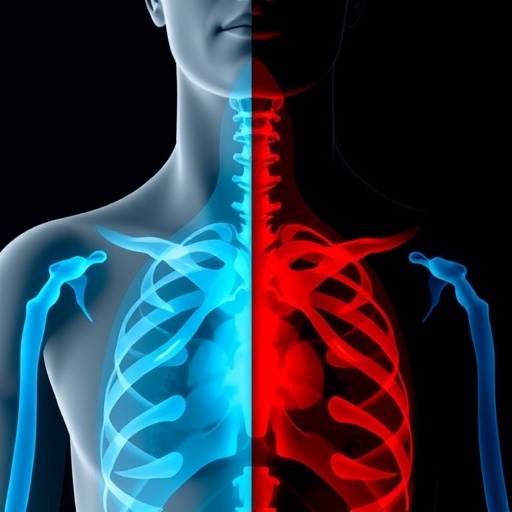
Tuberculosis continues to affect men disproportionately around the world, and a new study led by researchers at University College London suggests that the disparity is driven primarily by differences in exposure to the bacterium rather than by a substantially greater biological tendency among men to develop active disease after infection. The findings, published in EClinicalMedicine, address a long-standing question in tuberculosis research: why do men represent approximately two-thirds of people diagnosed with TB globally? By examining infection and disease progression separately, the researchers found that men were more likely to have already encountered Mycobacterium tuberculosis when they entered the study, but once existing infection was taken into account, their risk of progressing to active TB was not significantly higher than that of women.
Tuberculosis is caused by M. tuberculosis, an airborne bacterium that most commonly infects the lungs. Transmission occurs when a person with active pulmonary TB releases bacteria into the air by coughing, sneezing, speaking or singing. Unlike many short-lived respiratory infections, TB transmission is strongly associated with prolonged or repeated exposure, particularly in crowded, poorly ventilated environments. After inhalation, the bacteria may be contained by the immune system, producing what is known as TB infection without active disease. In some people, however, the infection progresses to active TB, in which bacterial replication causes tissue damage, symptoms and the potential for onward transmission.
The distinction between infection and disease progression was central to the UCL-led investigation. Researchers analysed data from more than 22,000 participants enrolled in 11 prospective cohort studies conducted across 14 countries in Europe, Africa, Asia and South America. Prospective cohort studies follow individuals over time, allowing investigators to determine whether people who begin with infection subsequently develop active disease. This approach is particularly valuable in TB research because a diagnosis of active disease does not reveal by itself whether sex-related differences arise from unequal exposure, differences in immune control of the bacteria, or both.
At the beginning of the study period, men were more likely than women to show evidence of previous or current TB infection. This pattern indicates that men had encountered the bacterium more frequently over their lifetimes. Evidence of infection can persist even when a person has no symptoms and no detectable active disease, reflecting the interaction between the bacteria and the host immune system. The finding does not mean that every infected man will become ill, nor does it imply that women are protected from TB. Instead, it points to a larger cumulative exposure burden among men before the stage at which active disease is assessed.
When the researchers accounted for this difference in baseline infection, men were not significantly more likely than women to develop active TB. In epidemiological terms, the apparent sex gap in TB burden was substantially explained by the greater likelihood that men had already acquired the infection. The results therefore challenge the assumption that men are inherently more susceptible to progression from latent or otherwise controlled infection to active disease. Biological differences may still influence immune responses in particular settings, but this analysis did not identify a strong, independent male disadvantage in progression once exposure was considered.
The result is important because TB control strategies often focus on the point at which infection becomes symptomatic disease, while the earlier process of exposure may receive less attention. If men are diagnosed more often largely because they encounter infectious TB more frequently, interventions that reduce exposure could have a greater effect on the overall sex imbalance than approaches aimed only at preventing progression after infection. Such measures could include earlier detection of infectious cases, improved ventilation, stronger infection-control procedures in high-risk workplaces and living environments, and more accessible testing for people with repeated or prolonged contact with TB.
The researchers say that the next stage of investigation should examine why men experience greater exposure. Possible contributors include occupational conditions, social patterns, household and community environments, lifestyle factors and unequal access to healthcare. Men may be more likely to work in settings where close contact, dust, poor ventilation or limited medical services increase transmission opportunities. Social networks and patterns of mobility may also influence the number and duration of encounters with infectious individuals. Delayed healthcare seeking could further increase exposure, because people with undiagnosed active TB may remain infectious for longer before receiving treatment, although the present study did not establish which specific factors were responsible.
Access to healthcare may affect the observed statistics in several ways. If men are less likely to seek medical attention promptly, active disease can remain undetected and transmission can continue within households, workplaces or communities. Conversely, differences in screening practices could make infection more visible in some groups than others. Understanding these pathways will require studies that collect detailed information about occupation, housing, ventilation, travel, social contact, smoking, alcohol use, income and healthcare access. The authors note that the current analysis could not fully evaluate several of these factors because information on smoking, alcohol consumption and socioeconomic status was not available for every participant.
The study also has limits that affect how broadly its findings can be applied. Some participant groups were small, the populations were largely composed of people at elevated risk of TB, and individuals who received preventive TB treatment were excluded. These features may influence the estimated relationship between infection and subsequent disease and mean that the results should not automatically be interpreted as representing every population worldwide. Nevertheless, by separating the probability of acquiring infection from the probability of developing active disease, the research provides a clearer framework for investigating the global sex gap in tuberculosis. The findings suggest that reducing men’s unequal exposure to M. tuberculosis—through prevention, environmental controls, rapid diagnosis and equitable healthcare—could be a more effective route to narrowing the disparity than focusing exclusively on biological progression after infection.
Subject of Research: Sex differences in tuberculosis exposure and progression from TB infection to active disease.
Web References: University College London research announcement; DOI: http://dx.doi.org/10.1016/j.eclinm.2026.104146
References: EClinicalMedicine, DOI: 10.1016/j.eclinm.2026.104146
Keywords: tuberculosis, TB infection, active tuberculosis, Mycobacterium tuberculosis, men and women, sex differences, airborne disease, infectious disease, public health, UCL, TB exposure, disease progression
Tags: airborne bacterial transmissiongender differences in infectious diseasesgender disparities in TBglobal TB epidemiologyimmune response to TBimpact of exposure environmentinfluence of exposure duration on TB riskrisk factors for TB infectionsocioeconomic factors in TB riskTB infection vs. active diseaseTB prevention and controltuberculosis transmission