• HOME
  • NEWS
  • EXPLORE
    • CAREER
      • Companies
      • Jobs
    • EVENTS
    • iGEM
      • News
      • Team
    • PHOTOS
    • VIDEO
    • WIKI
  • BLOG
  • COMMUNITY
    • FACEBOOK
    • INSTAGRAM
    • TWITTER
Wednesday, October 7, 2026
BIOENGINEER.ORG
No Result
View All Result
  • Login
  • HOME
  • NEWS
  • EXPLORE
    • CAREER
      • Companies
      • Jobs
        • Lecturer
        • PhD Studentship
        • Postdoc
        • Research Assistant
    • EVENTS
    • iGEM
      • News
      • Team
    • PHOTOS
    • VIDEO
    • WIKI
  • BLOG
  • COMMUNITY
    • FACEBOOK
    • INSTAGRAM
    • TWITTER
No Result
View All Result
Bioengineer.org
No Result
View All Result
Home NEWS Science News

Melatonin may protect the small intestine from oral radiation treatment in rats

Bioengineer by Bioengineer
April 12, 2017
in Science News
Reading Time: 2 mins read
0
Share on FacebookShare on TwitterShare on LinkedinShare on RedditShare on Telegram
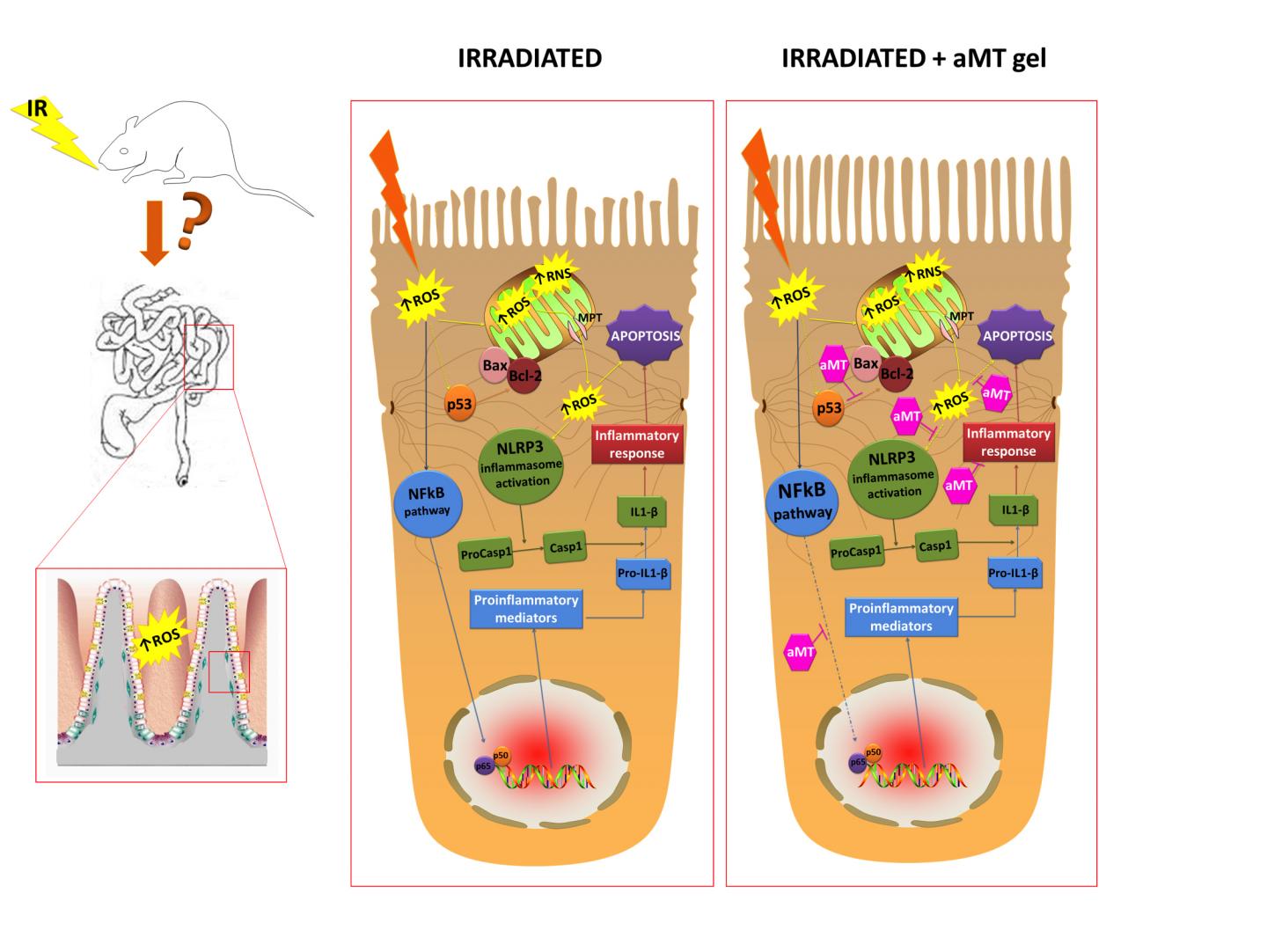
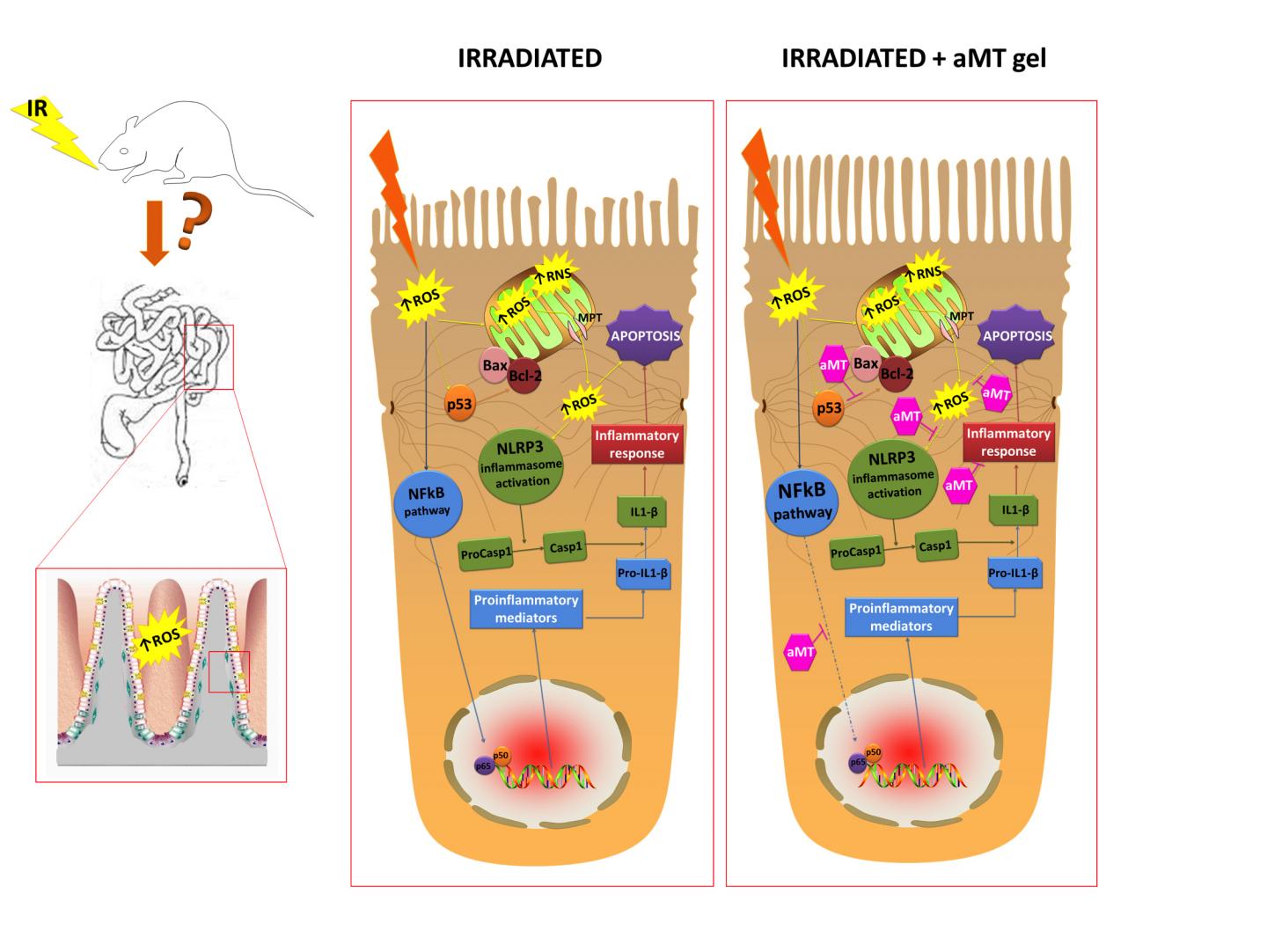
IMAGE

Credit: Fernández-Gil et al (2017)

Oral melatonin can protect the small intestine in rats subjected to radiotherapy of the tongue, according to a study published April 12, 2017 in the open-access journal PLOS ONE by Germaine Escames from Universidad de Granada, Spain, and colleagues.

Gut toxicity — a debilitating condition involving deep ulcerations — can limit the doses of radiotherapy given to cancer patients. However, this side effect currently has no effective treatment. Following up on their previous work suggesting that melatonin might protect the gut from radiotherapy, Escames and colleagues irradiated the tongues of rats daily for five days, treated the rats with oral melatonin-gel for 21 days after radiation, and then assessed their small intestines for changes.

The researchers found that melatonin helped protect the small intestine of rats from radiotherapy, likely by protecting mitochondria and so reducing inflammation. Inflammatory mediators increase intestinal cell death, and the researchers found that melatonin reduced intestinal cell death in rats, thus facilitating intestinal recovery. This work suggests that oral treatment with melatonin might help prevent radiotherapy-induced gut toxicity in cancer patients.

###

In your coverage please use this URL to provide access to the freely available article in PLOS ONE: http://journals.plos.org/plosone/article?id=10.1371/journal. pone.0174474

Citation: Fernández-Gil B, Moneim AEA, Ortiz F, Shen Y-Q, Soto-Mercado V, Mendivil-Perez M, et al. (2017) Melatonin protects rats from radiotherapy-induced small intestine toxicity. PLoS ONE 12(4): e0174474. doi:10.1371/journal.pone.0174474

Funding: This study was partially supported by grant no. SAF2009-14037 from the Spanish Ministry of Economy and Competitivity (MINECO), GREIB.PT_2010_04 from the CEIBiotic Program of the University of Granada, Spain, and CTS-101 from the Consejería de Innovación, Ciencia y Empresa, Junta de Andalucía, Spain.

Competing Interests: Patent pending: This study has been submitted to the patent's offices at the "University of Granada". Please note that the results of this manuscript have been submitted to patent protection (application number P201130792; title: "Use of melatonin for treating and/or preventing mucositis"; date:17/1/2015). However, this does not alter the authors' adherence to PLOS ONE policies on sharing data and materials.

Media Contact

Beth Jones
[email protected]

Home

############

Story Source: Materials provided by Scienmag

Share12Tweet8Share2ShareShareShare2

Related Posts

Space-Mutated Grass Feeds Sheep and Makes Their Meat Taste Better, Study Finds

Space-Mutated Grass Feeds Sheep and Makes Their Meat Taste Better, Study Finds

October 7, 2026
Small AI Model Learns When to Freeze Traffic Lights and Save Pedestrians

Small AI Model Learns When to Freeze Traffic Lights and Save Pedestrians

October 7, 2026

AI and Multi-Omics Could Predict Necrotizing Enterocolitis Before Symptoms Strike

October 7, 2026

Chaotic Printing Turns Simple Static Mixers Into Tools for Microarchitected Materials

October 7, 2026
Please login to join discussion

POPULAR NEWS

  • Alloys That Shrink Their Own Grains: New PIX Mechanism Refines Metals With Heat Alone

    Alloys That Shrink Their Own Grains: New PIX Mechanism Refines Metals With Heat Alone

    29 shares
    Share 12 Tweet 7
  • Endurance Exercise Reshapes the Liver in Males and Females Through Distinct Molecular Routes

    29 shares
    Share 12 Tweet 7
  • Single Transcription Factor PU.1 Rapidly Converts Fibroblasts into Macrophage-Lineage Cells

    29 shares
    Share 12 Tweet 7
  • New Scale Measures How Ready Nurse Educators Really Are for the AI Era

    29 shares
    Share 12 Tweet 7

About

We bring you the latest biotechnology news from best research centers and universities around the world. Check our website.

Follow us

Recent News

Alloys That Shrink Their Own Grains: New PIX Mechanism Refines Metals With Heat Alone

Endurance Exercise Reshapes the Liver in Males and Females Through Distinct Molecular Routes

Single Transcription Factor PU.1 Rapidly Converts Fibroblasts into Macrophage-Lineage Cells

Subscribe to Blog via Email

Success! An email was just sent to confirm your subscription. Please find the email now and click 'Confirm' to start subscribing.

Join 85 other subscribers
  • Contact Us

Bioengineer.org © Copyright 2023 All Rights Reserved.

Welcome Back!

Login to your account below

Forgotten Password?

Retrieve your password

Please enter your username or email address to reset your password.

Log In
No Result
View All Result
  • Homepages
    • Home Page 1
    • Home Page 2
  • News
  • National
  • Business
  • Health
  • Lifestyle
  • Science

Bioengineer.org © Copyright 2023 All Rights Reserved.