


Bacterial bone infections are quite resistant to antibiotics and require new therapeutic approaches
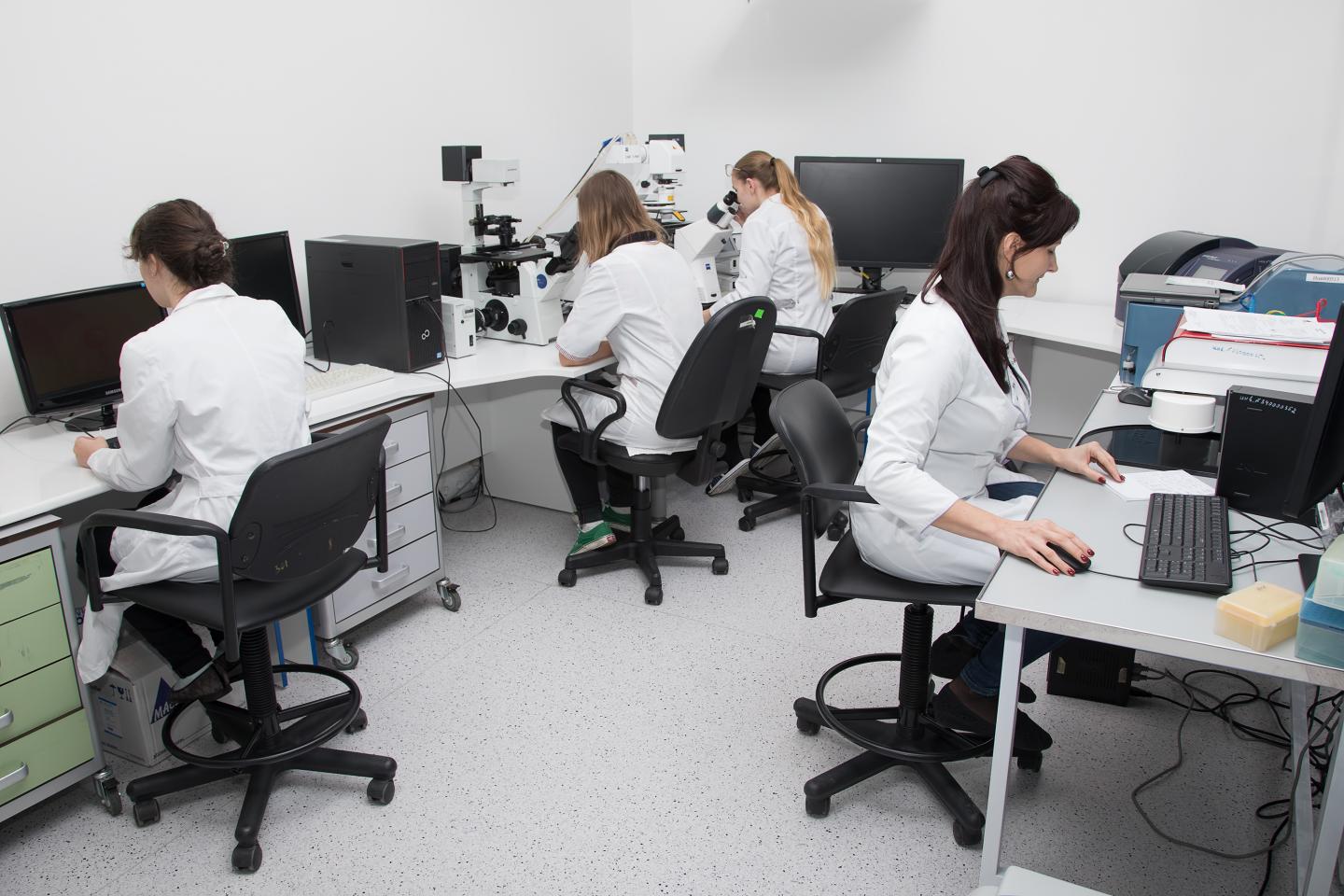
Credit: Larisa Litvinova
Saussurea controversa is a perennial herbaceous plant that has been traditionally used by the people of the Far East, Siberia, Tibet, and Mongolia to treat liver, kidney, digestive tract, and locomotive diseases. Its dried leaves are sold in pharmacies because their decoction is widely used as a medicine against cold and bronchitis. To understand what substances this plant owes its medicinal properties to, a team of scientists from Siberian State Medical University and Tomsk Polytechnic University extracted individual components from the plant and determined their composition. To do so, they passed the substances in gas form through a special station. As the substances were of different size, it took them different time to pass through it. The useful components of the decoction included flavonoids and polysaccharides. These groups of substances are known for their antimicrobial properties and the ability to speed up bone tissue regeneration. Flavonoids are small aromatic molecules, while polysaccharides are high molecular weight hydrocarbons. However, both have a positive effect on bone tissue regeneration.
Infectious locomotive diseases are considered one of the most difficult to treat. The microorganisms that attack bone tissue are often resistant to antibiotics. The restoration of the bone also plays an important role in the healing process. Medics from BFU suggested using Saussurea extract to treat bone tissue infections and tested its ability to affect stem cells. To do so, the extract of Saussurea leaves was added to the substrate with such cells. The growth of the cell culture slowed down under the influence of plant polysaccharides. It turned out that Saussurea did not stimulate the division of stem cells, but made them turn into bone tissue. This was confirmed by specific colouring.
To test the antibacterial properties of Saussurea, the team from BFU added the extract of its leaves into substrate with Staphylococcus aureus. These bacteria cause such deadly diseases as osteomyelitis, endocarditis, pneumonia, and sepsis. Moreover, they are highly resistant to a wide range of antibiotics making the therapy long and complicated. The experiment showed the decrease of S. aureus growth in the substrate with Saussurea compared to a control group.
“The isolated components have antimicrobial and regenerative properties. Our plan is to participate in the development of a medicinal drug for comprehensive treatment of bone diseases and injuries associated with the risk of infectious complications. Plant materials are less toxic. They can be administered as regular pills making the treatment much easier,” concluded Larisa Litvinova, MD, a head of the Basic Laboratory for Immunology and Cell Biotechnologies, Professor of the Department of Fundamental Medicine, Institute of Medicine, Kant Baltic Federal University.
###
Media Contact
Sergey Bulanov
[email protected]
7-921-268-5362
Original Source
http://eng.
Related Journal Article
http://dx.



