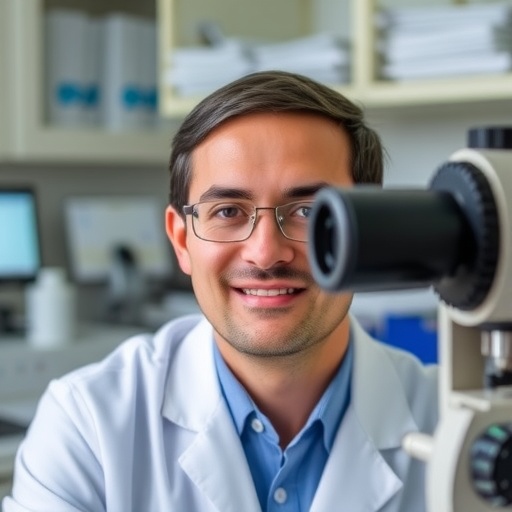
In a groundbreaking advancement for ocular science, a multidisciplinary research team from the University of Minnesota Medical School has embarked on a four-year investigative journey funded by a substantial $2.2 million grant from the National Eye Institute. This highly anticipated project aims to elucidate the intricate molecular foundations of retinal diseases, particularly focusing on age-related macular degeneration (AMD) and the uncommon but debilitating Doyne honeycomb retinal dystrophy, also known as Malattia Leventinese (DHRD/ML). By leveraging cutting-edge approaches in molecular biology and ophthalmologic research, the team aspires to pioneer transformative therapies that address the multifaceted challenges posed by these degenerative eye conditions.
Central to this research initiative is the exploration of extracellular matrix proteins, a class of biomolecules that form the structural and functional scaffolding outside cells. Of particular interest within this complex microenvironment is fibulin-3, an extracellular matrix glycoprotein implicated in maintaining the integrity and homeostasis of retinal tissues. Mutations and alterations in the fibroblast-derived fibulin-3 have been identified as key contributors to the pathogenesis of various blinding disorders, positioning this protein at the forefront of retinal disease research. Understanding fibulin-3’s biological role and its dysregulation promises to unlock novel therapeutic avenues for preventing vision loss.
Professor John Hulleman, PhD, an esteemed ophthalmology and visual neurosciences researcher at the University of Minnesota Medical School, emphasizes the significance of this endeavor. He remarks that the project not only intensifies the focus on fibulin-3’s molecular dynamics but also strives to develop sophisticated tools to dissect its functional interactions within the retinal extracellular matrix. This approach underscores a shift towards targeting the extracellular matrix environment itself, rather than solely focusing on intra-cellular pathways, thus broadening the horizon for innovative treatment modalities.
Age-related macular degeneration, a leading cause of irreversible vision loss among the elderly, is characterized by progressive degeneration of the macula, the central region of the retina responsible for sharp, central vision. Current therapies, while somewhat effective in managing symptoms, often fail to halt or reverse the underlying pathology. The research spearheaded by the University of Minnesota seeks to transcend these limitations by identifying molecular targets within the extracellular matrix that mediate AMD progression, which could lead to breakthrough treatments with enhanced efficacy.
Alongside AMD, the project addresses Doyne honeycomb retinal dystrophy, a rare congenital disorder exhibiting clinical and pathological overlap with AMD. DHRD/ML is marked by the deposition of abnormal extracellular materials within the retina, leading to impaired photoreceptor function and progressive vision deterioration. Dissecting the mechanistic pathways governing extracellular matrix remodeling in DHRD/ML through the lens of fibulin-3 aberrations provides a unique opportunity to develop targeted interventions that can ameliorate or even prevent the disease’s progression.
The research team will undertake a comprehensive pharmacological screening of existing FDA-approved drugs with the objective of repurposing them to mitigate AMD symptoms. This strategy leverages the pharmacokinetic profiles and safety data of known medications, potentially accelerating the timeline for clinical application. Simultaneously, the investigation will delve into the biological mechanisms regulating the synthesis, assembly, and degradation of retinal extracellular matrix proteins, aiming to delineate the homeostatic balances integral to healthy retinal function.
A significant aspect of the study involves characterizing the cellular pathways that control fibulin-3 expression and turnover, which are pivotal in maintaining extracellular matrix stability. Disruptions in these processes can lead to pathological accumulation or deficiency of critical matrix components, contributing to disease pathology. By elucidating these control mechanisms, the team aims to identify molecular checkpoints amenable to therapeutic modulation.
To facilitate these objectives, the researchers employ an array of sophisticated methodologies, including advanced imaging techniques, proteomic analyses, and in vitro cellular models that recapitulate retinal architecture and extracellular matrix interactions. These technologies enable high-resolution tracking of protein dynamics and intercellular communication in both normal and diseased states, generating critical insights into retinal degeneration.
Moreover, the initiative recognizes the intricate interplay between genetic predispositions and environmental factors in retinal disease etiology. Investigations into how fibulin-3 mutations influence extracellular matrix composition under various physiological conditions will enhance understanding of disease variability and patient-specific responses. This knowledge is essential for the future development of personalized medicine approaches tailored to individual molecular profiles.
The translational potential of this project is fortified by its dual approach, combining fundamental scientific inquiry with a pragmatic search for viable therapeutics. The anticipated outcomes include the generation of novel diagnostic biomarkers and the formulation of innovative treatment protocols that could significantly improve patients’ quality of life. This work exemplifies the integration of biomedical research with clinical imperatives, embodying a future where vision preservation is attainable.
Currently active under grant number 2R01EY027785-07A1, this endeavor not only epitomizes the University of Minnesota Medical School’s commitment to scientific excellence but also signifies a beacon of hope for millions affected by retinal degenerative diseases worldwide. Through rigorous investigation and cutting-edge technology, the research team is poised to reshape the landscape of vision science and ocular therapeutics.
As the study progresses, continuous updates and detailed findings are expected to stimulate further scientific inquiry and collaborative efforts across the biomedical community. The potential to bridge gaps between molecular understanding and clinical innovation positions this project as a landmark in the quest to combat retinal blindness.
Subject of Research: Molecular mechanisms and therapeutic development targeting extracellular matrix protein fibulin-3 in retinal diseases including age-related macular degeneration and Doyne honeycomb retinal dystrophy.
Article Title: University of Minnesota Researchers Secure $2.2M NIH Grant to Target Fibulin-3 in Retinal Disorders
News Publication Date: June 16, 2026
Web References:
https://med.umn.edu/bio/john-hulleman-phd
https://med.umn.edu/
Keywords:
Retinal diseases, Age-related macular degeneration, Doyne honeycomb retinal dystrophy, Malattia Leventinese, Fibulin-3, Extracellular matrix, Ophthalmology, Visual neuroscience, Drug repurposing, Molecular biology, Retinopathy, Therapeutic development
Tags: age-related macular degeneration molecular studyDoyne honeycomb retinal dystrophy investigationextracellular matrix proteins in eye diseasesfibulin-3 role in retinal healthMalattia Leventinese treatment developmentmolecular biology in ophthalmologymultidisciplinary retinal disease research teamNIH grant for retinal disease researchnovel therapies for degenerative eye conditionsretinal tissue homeostasis mechanismsUniversity of Minnesota ocular researchvision loss prevention strategies