• HOME
  • NEWS
  • EXPLORE
    • CAREER
      • Companies
      • Jobs
    • EVENTS
    • iGEM
      • News
      • Team
    • PHOTOS
    • VIDEO
    • WIKI
  • BLOG
  • COMMUNITY
    • FACEBOOK
    • INSTAGRAM
    • TWITTER
Monday, August 31, 2026
BIOENGINEER.ORG
No Result
View All Result
  • Login
  • HOME
  • NEWS
  • EXPLORE
    • CAREER
      • Companies
      • Jobs
        • Lecturer
        • PhD Studentship
        • Postdoc
        • Research Assistant
    • EVENTS
    • iGEM
      • News
      • Team
    • PHOTOS
    • VIDEO
    • WIKI
  • BLOG
  • COMMUNITY
    • FACEBOOK
    • INSTAGRAM
    • TWITTER
  • HOME
  • NEWS
  • EXPLORE
    • CAREER
      • Companies
      • Jobs
        • Lecturer
        • PhD Studentship
        • Postdoc
        • Research Assistant
    • EVENTS
    • iGEM
      • News
      • Team
    • PHOTOS
    • VIDEO
    • WIKI
  • BLOG
  • COMMUNITY
    • FACEBOOK
    • INSTAGRAM
    • TWITTER
No Result
View All Result
Bioengineer.org
No Result
View All Result
Home NEWS Science News Biology

Mechanism for precise targeting of the immune response uncovered

Bioengineer by Bioengineer
October 12, 2017
in Biology
Reading Time: 2 mins read
0
Share on FacebookShare on TwitterShare on LinkedinShare on RedditShare on Telegram
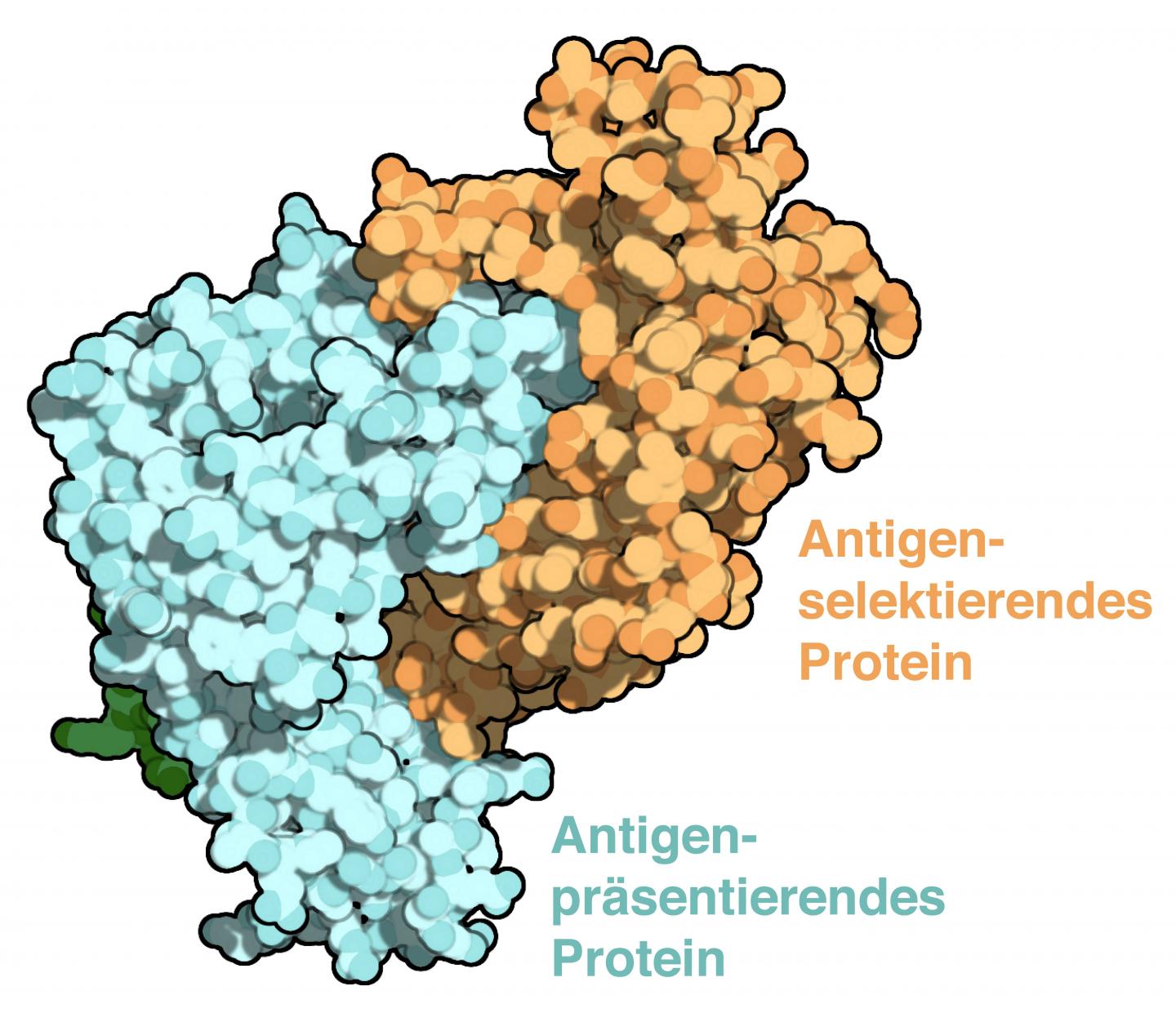
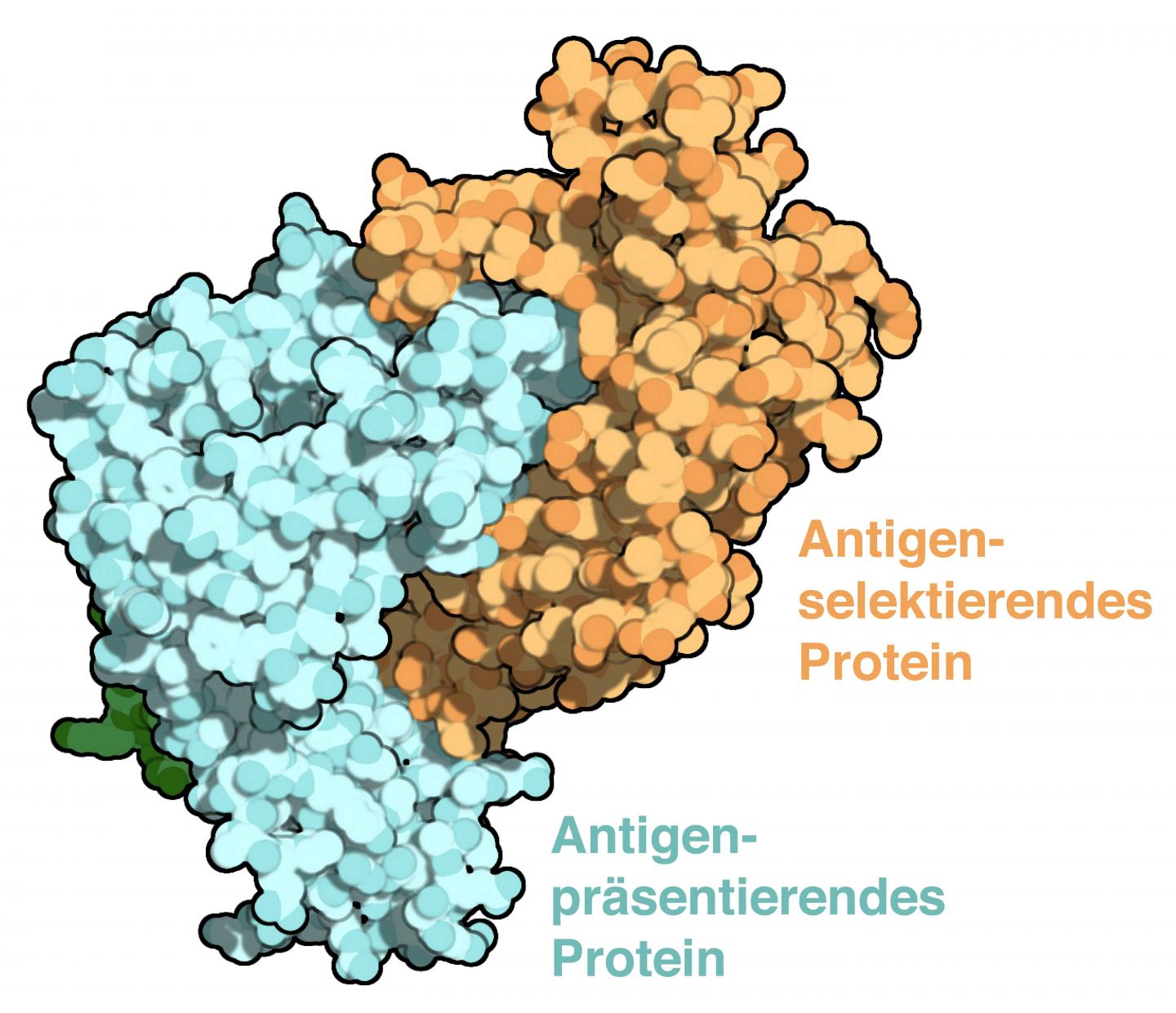
IMAGE

Credit: AG Tampé

FRANKFURT. The immune system checks the health of cells of the body by examining a kind of molecular passport. Sometimes cells present the wrong passport, which can lead to autoimmune diseases, chronic inflammations or cancer. Scientists of the Goethe University Frankfurt explain the process how this happens in the new issue of the journal Science.

Most cells provide the T cells of the adaptive immune system with information about their condition by presenting selected components of their interior (called antigens) on their surface. If these components include fragments of viruses or altered cell components the affected cell is eliminated. The selection of the antigens is essential in this process. Presenting the wrong antigens leads to either healthy cells being attacked by the immune system — causing autoimmune diseases or chronic inflammation — or diseased cells are not recognized enabling cancer cells or virus-infected cells to escape immune surveillance.

Dr. Christoph Thomas and Prof. Robert Tampé from the Institute of Biochemistry at Goethe University have now solved on a molecular level how antigens are selected in the cell for presentation on the cell surface. Their structural biology study shows for the first time the kind of quality control antigens undergo to enable a precise and effective immune response.

"Our work solves a 30 years old problem of cellular immunity, in particular how antigens associated with tumors or pathogens are selected through processes of editing and quality control in order to generate a specific immune response" explains Prof. Robert Tampé the significance of the publication.

###

Publication:

Christoph Thomas, Robert Tampé: Structure of the TAPBPR-MHC I complex defines the mechanism of peptide loading and editing, Science (Oct 12, 2017, First Release)

An image for downloading can be found here: (https://www.dropbox.com/s/t4k1u37h01s0p20/TAPBPR_complex_space_filling.png?dl=0)

Figure legend: Space-filling model of the solved protein complex responsible for the selection of antigens

Contacts:

Prof. Dr. Robert Tampé
49-69-798- 29475
[email protected]

Dr. Christoph Thomas
[email protected]
Institute of Biochemistry, Campus Riedberg
Goethe University Frankfurt, Germany

Media Contact

Prof. Dr. Robert Tampé
[email protected]
49-069-798-29475
@goetheuni

http://www.uni-frankfurt.de

Share12Tweet7Share2ShareShareShare1

Related Posts

Methylation puts parasites in motion

Methylation puts parasites in motion

August 31, 2026
Desiccation promotes DNA damage and rifampin resistance in Mycobacterium tuberculosis

Desiccation promotes DNA damage and rifampin resistance in Mycobacterium tuberculosis

August 31, 2026

Gastrointestinal Parasitism in Cattle and Water Buffaloes in Pakistan: Prevalence and Associated Risk Factors

August 31, 2026

Development of HPLC–PDA method for steviol glycosides analysis in food matrices

August 31, 2026
Please login to join discussion

POPULAR NEWS

  • β-Sitosterol from Ipomoea carnea Jacq. As a promising anti-inflammatory agent: Evidence from in silico modeling and in vitro validation

    29 shares
    Share 12 Tweet 7
  • Design, fabrication and characterization of a wearable Fiber Bragg grating sensor for cardiorespiratory monitoring using finger plethysmography

    29 shares
    Share 12 Tweet 7
  • KAIST opens the era of industrial-scale microbial foods, proposing growth strategies for the next-generation protein market

    29 shares
    Share 12 Tweet 7
  • Virologist awarded $2 million NIH grant to investigate how virus-infected cells live and die

    29 shares
    Share 12 Tweet 7

About

We bring you the latest biotechnology news from best research centers and universities around the world. Check our website.

Follow us

Recent News

β-Sitosterol from Ipomoea carnea Jacq. As a promising anti-inflammatory agent: Evidence from in silico modeling and in vitro validation

Design, fabrication and characterization of a wearable Fiber Bragg grating sensor for cardiorespiratory monitoring using finger plethysmography

KAIST opens the era of industrial-scale microbial foods, proposing growth strategies for the next-generation protein market

Subscribe to Blog via Email

Enter your email address to subscribe to this blog and receive notifications of new posts by email.

Join 85 other subscribers
  • Contact Us

Bioengineer.org © Copyright 2023 All Rights Reserved.

Welcome Back!

Login to your account below

Forgotten Password?

Retrieve your password

Please enter your username or email address to reset your password.

Log In
No Result
View All Result
  • Homepages
    • Home Page 1
    • Home Page 2
  • News
  • National
  • Business
  • Health
  • Lifestyle
  • Science

Bioengineer.org © Copyright 2023 All Rights Reserved.