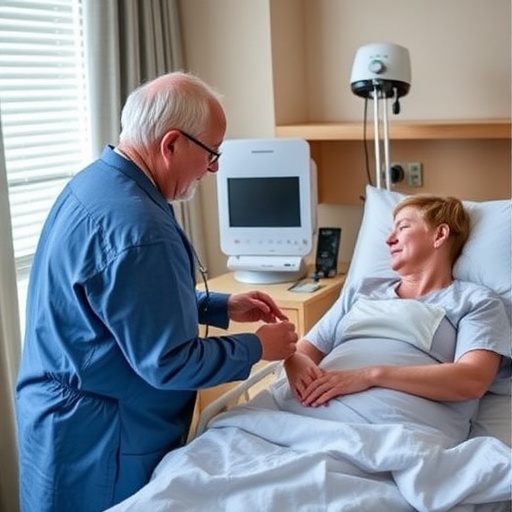
In a groundbreaking advancement poised to transform oncology care, researchers at the Mayo Clinic have successfully demonstrated that intravenous chemotherapy can be safely administered within the comfort of a patient’s home. This innovative approach is the centerpiece of a recent pilot study published in NEJM Catalyst, where a novel care delivery model, termed Cancer CARE Beyond Walls (Connected Access and Remote Expertise), was rigorously evaluated. The model integrates virtual care technology, remote patient monitoring, and in-home clinical services, effectively shifting cancer treatment out of traditional infusion centers and into patients’ living spaces.
Historically, chemotherapy has necessitated extensive visits to specialized infusion centers, often requiring patients to endure long wait times and significant travel burdens. The Mayo Clinic’s model directly addresses these challenges by bringing high-quality medical care to patients, thereby alleviating physical stress and logistical barriers. This paradigm shift in care delivery leverages advanced telemedicine capabilities to maintain real-time clinical oversight, ensuring that patients receive meticulous monitoring without compromising safety or quality standards.
The pilot study enrolled ten cancer patients who collectively underwent 93 intravenous chemotherapy infusions in their homes. Throughout the treatment period, researchers observed zero incidences of treatment-related infusion reactions or catheter-associated infections. Such outcomes provide robust evidence supporting the safety and feasibility of home-based chemotherapy delivery, challenging longstanding assumptions about the limitations of intensive cancer care outside hospital environments.
Dr. Roxana Dronca, the site director of the Mayo Clinic Comprehensive Cancer Center in Florida and architect of the Cancer CARE Beyond Walls initiative, elaborates: “Cancer treatment traditionally imposes considerable time and travel demands on patients. Our model alleviates these burdens by enabling care delivery directly in patients’ homes without sacrificing clinical rigor or safety.” This patient-centered approach fosters a seamless integration of personalized medicine and technology, which together pave the way for transformative improvements in patient experience.
Beyond logistical convenience, the home-based chemotherapy approach offers profound benefits related to patients’ physical and emotional well-being. By eliminating the need for frequent travel and prolonged clinical appointments, patients report diminished stress and less intrusion on their daily routines. Virtual consultations and remote monitoring create a continuous care loop, fostering real-time communication between patients and healthcare providers. This connectivity enhances adherence to treatment protocols and enables rapid intervention if complications arise.
The implications of such a model extend beyond individual patient satisfaction. From a health systems perspective, home-based chemotherapy has the potential to reduce operational costs associated with infusion centers, optimize resource allocation, and ultimately improve healthcare equity. Patients residing in rural or underserved regions—traditionally facing barriers in accessing comprehensive cancer care—may gain newfound access to state-of-the-art treatment modalities, mitigating geographic and socioeconomic disparities.
Encouragingly, patient feedback from the pilot study was overwhelmingly positive, with many expressing high satisfaction and willingness to recommend home treatment to others. This endorsement underscores the potential for broad acceptance and adoption of home-based chemotherapy as a staple in oncology care. Moreover, it signals an evolving patient expectation landscape, where convenience and quality are no longer mutually exclusive but can be synergistically achieved.
Further to these promising results, Mayo Clinic has initiated a randomized clinical trial commenced in August 2023. This larger study is meticulously designed to compare the safety, clinical outcomes, patient quality of life, and economic impact of home-based chemotherapy versus conventional infusion center administration. By systematically evaluating these domains, the research aims to build compelling evidence to support large-scale integration of this care model, thereby revolutionizing cancer treatment paradigms globally.
This ongoing trial also focuses on enhancing clinical trial accessibility. Traditionally, rigorous treatment protocols and frequent on-site visits constrain patient participation, particularly for those with geographic or mobility limitations. Home-based chemotherapy offers a pathway to broaden clinical trial enrollment, accelerating therapeutic advancements and personalized treatment discovery.
The authorship of the pilot study includes Dr. Roxana Dronca as first author, with Dr. Cheryl Willman, Executive Director of Mayo Clinic Cancer Programs, serving as senior author. Their collaborative leadership highlights the multidisciplinary expertise driving this research—from medical oncology to health technology integration. For comprehensive methodological details, disclosures, and funding information, the full study is accessible through NEJM Catalyst.
At its essence, the Cancer CARE Beyond Walls model encapsulates a transformative philosophy: healthcare can and should transcend physical boundaries when safety and quality can be assured through innovative technology and clinical oversight. This philosophy resonates with broader trends in healthcare digitization, as chronic and complex conditions increasingly benefit from hybrid care delivery systems that blend in-person and remote interventions.
As this paradigm gains traction, it will be critical for healthcare systems, policymakers, and industry stakeholders to address infrastructure needs, regulatory frameworks, and reimbursement models—ensuring that the benefits of home-based chemotherapy reach the patients who stand to gain the most. Embracing such transformative care models promises not only to enhance patient experience but also to push the frontiers of oncology treatment into a new era defined by accessibility, precision, and compassion.
The Mayo Clinic’s pioneering work demonstrably positions home-based chemotherapy as a safe, practical, and patient-focused innovation—one that reimagines cancer care delivery for the modern age.
Subject of Research: Home-based intravenous chemotherapy delivery safety, feasibility, and patient experience using integrated virtual care and remote patient monitoring.
Article Title: Cancer CARE (Connected Access and Remote Expertise) Beyond Walls — Safety, Feasibility, and Patient Experience of Home-Based Chemotherapy
News Publication Date: 18-Mar-2026
Web References:
Study: https://catalyst.nejm.org/doi/full/10.1056/CAT.25.0168
Mayo Clinic Homepage: https://www.mayoclinic.org/
Mayo Clinic Cancer CARE Beyond Walls: https://www.mayoclinic.org/medical-professionals/cancer/news/is-home-based-treatment-the-future-of-cancer-care/mac-20577724
National Cancer Institute: https://www.cancer.gov/
References:
Dronca, R.S., Willman, C.L. et al. NEJM Catalyst, 2026.
Keywords: chemotherapy, home-based cancer care, telemedicine, virtual healthcare, remote patient monitoring, oncology treatment, patient-centered care, cancer infusion therapy, clinical trial accessibility, healthcare innovation
Tags: Cancer CARE Beyond Walls programcancer care remote monitoringhome-based chemotherapy deliveryinfusion therapy outside hospitalintravenous chemotherapy at homeMayo Clinic cancer studypatient-centered cancer treatmentreducing travel for cancer patientsremote patient monitoring for chemotherapysafety of home chemotherapytelemedicine in oncologyvirtual oncology care model