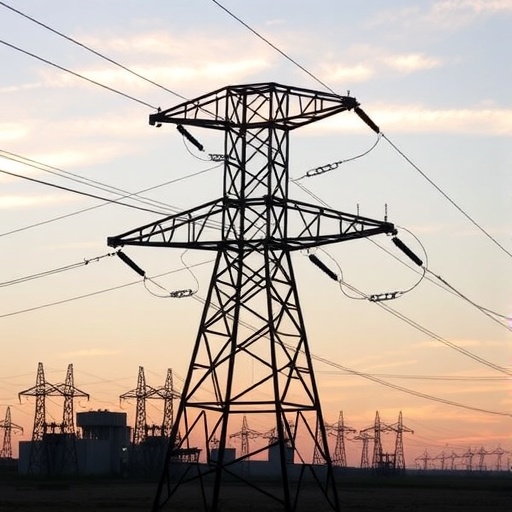
The integration of renewable energy-based distributed energy resources (DERs) such as photovoltaic solar panels and electric vehicles into modern low-voltage electricity distribution networks presents an evolving set of challenges and opportunities. As global efforts to mitigate climate change intensify, these DERs have become vital components in reducing greenhouse gas emissions and transitioning to cleaner energy systems. However, their inherently variable and intermittent nature complicates the operational stability of distribution grids. A recent comprehensive study published in IET Renewable Power Generation sheds light on how the proliferation of these DERs affects the vulnerability of distribution systems and explores effective strategies to mitigate associated risks.
Distribution networks, the final segments of the electrical grid that deliver electricity from transformers directly to end users, have traditionally been designed for unidirectional power flows with relatively predictable demand. The shifting paradigm towards decentralized generation via renewables disrupts this model. Solar panels, for instance, can cause significant voltage fluctuations by injecting power intermittently depending on weather and daylight. Similarly, electric vehicles introduce additional load during charging periods, especially during nighttime when solar generation is absent, intensifying voltage regulation difficulties. These fluctuating conditions pose problems such as sustained overvoltage during peak solar production and undervoltage during evening charging peaks. The study systematically evaluates these phenomena, revealing a complex interplay between renewable generation patterns and consumer demand behaviors in low-voltage networks.
Voltage regulation is critical to maintaining distribution network reliability and consumer equipment safety. The research highlights that solar panel penetration often leads to daytime overvoltage conditions due to excessive generation feeding into the grid without enough demand or storage absorption. Conversely, nighttime undervoltage scenarios emerge when electric vehicle charging ramps up while no solar energy is available, pulling the voltage below acceptable limits. Such deviations from nominal voltage levels not only damage electrical appliances but can also trigger system protections that cause power outages. Addressing these fluctuations demands innovative technical solutions beyond traditional voltage regulation techniques.
One of the most promising mitigation strategies identified is the deployment of community-scale battery energy storage systems (BESS). These systems act as buffers by absorbing surplus solar energy during the day and releasing it during periods of high demand, such as at night when electric vehicles charge. The study quantitatively demonstrates that community-scale storage offers superior cost-effectiveness and operational efficiency compared to decentralized, household-level battery installations. By aggregating storage capacity and enabling coordinated grid interaction, community batteries smooth out voltage fluctuations more reliably, enhance grid resilience, and optimize resource utilization.
Further technical depth is provided by the study’s modeling approaches, which simulate various DER penetration scenarios and storage configurations. Advanced load flow analyses reveal how voltage profiles vary spatially and temporally across different feeder sections. These models incorporate stochastic elements representing solar irradiance variability and discrete electric vehicle charging patterns, providing realistic insights into grid behavior under high renewable penetration. The findings underscore the importance of integrated management frameworks that combine DER monitoring, predictive analytics, and adaptive control mechanisms to maintain voltage stability.
Another crucial aspect addressed is the techno-economic analysis comparing individual versus community storage solutions. The research accounts for capital expenditure, operational costs, and lifecycle performance metrics. It confirms that community-scale BESS reduces per-unit energy storage costs by approximately 52%, due to economies of scale, shared infrastructure, and streamlined maintenance. This economic advantage encourages utilities and local authorities to consider centralized storage hubs as strategic investments enabling sustainable grid modernization.
The study raises pertinent policy implications, advocating for regulatory frameworks that incentivize coordinated storage deployment and facilitate dynamic tariff structures. Such policies would encourage consumers and grid operators to collaboratively manage DERs and storage assets, maximizing renewable integration benefits while mitigating grid vulnerabilities. Grid codes will need updating to consider reverse power flows, voltage rise constraints, and storage dispatch priorities, ensuring safe and efficient operation under evolving energy paradigms.
Voltage stability challenges highlighted in the research illuminate broader technical concerns facing power system engineers and operators. As DER adoption accelerates, the traditional passive distribution grid model must evolve into an active, smart grid capable of real-time adaptation. This includes integration of advanced sensing technologies, automated voltage regulation devices, and distributed control algorithms. The study’s findings provide a foundation for these technological innovations, identifying critical points of vulnerability and the effectiveness of mitigation strategies.
Electric vehicles’ dual role as both a load and potential distributed storage asset is emphasized. While the increased demand from EV charging strains the grid, vehicle-to-grid (V2G) capabilities present underutilized potential for grid support. The research suggests future investigations should explore coordinated EV charging and discharging schemes integrating seamlessly with community-scale storage to further stabilize voltage and balance loads dynamically.
In conclusion, this pioneering study offers crucial insights into the interplay between renewable DER proliferation and distribution network vulnerabilities. It clearly demonstrates that while DERs contribute substantially to decarbonizing the energy sector, their integration requires sophisticated technical solutions. Community-scale battery energy storage emerges as a key enabler for voltage regulation, cost efficiency, and grid reliability. These findings not only guide utilities and policymakers but also inspire ongoing research aimed at achieving a resilient, sustainable, and clean energy future.
Corresponding author Khalil Gholami, PhD, from Deakin University in Australia, succinctly summarizes the research significance: “Cleaner energy brings new grid challenges, making coordinated storage essential for voltage stability.” This statement encapsulates the critical balance between environmental stewardship and infrastructure modernization in the energy transition era.
The publication in IET Renewable Power Generation, a journal dedicated to advancing renewable energy science and applications, aligns with the broader mission to foster innovation in renewable sources, storage technology, system integration, and techno-economic assessments. As the global community pursues ambitious sustainability goals, studies such as this provide essential technical guidance to navigate the complexities of integrating distributed renewables at scale.
Subject of Research: Vulnerability assessment and risk mitigation in low-voltage distribution networks facing high penetration of renewable energy–
Article Title: Assessing Vulnerability and Mitigating Risks in Distribution Networks with High Penetration of Renewable Energy
News Publication Date: 6-May-2026
Web References:
Journal: https://ietresearch.onlinelibrary.wiley.com/journal/17521424
DOI: http://dx.doi.org/10.1049/rpg2.70244
Keywords
Renewable energy, solar energy, electric vehicles, distributed energy resources, battery energy storage systems, voltage regulation, distribution networks, energy storage, grid stability, community-scale storage, techno-economic analysis, smart grids.
Tags: decentralized renewable generation issuesdistributed energy resources challengeselectric vehicle charging effects on distribution networkslow-voltage electricity distribution managementmitigating voltage fluctuations in power gridsphotovoltaic solar panels grid impactreducing greenhouse gas emissions with DERsrenewable energy integration in electric gridsrenewable energy variability and grid stabilitystability of electricity distribution systemsstrategies for grid risk mitigationtransition to cleaner energy systems