
Credit: QUT
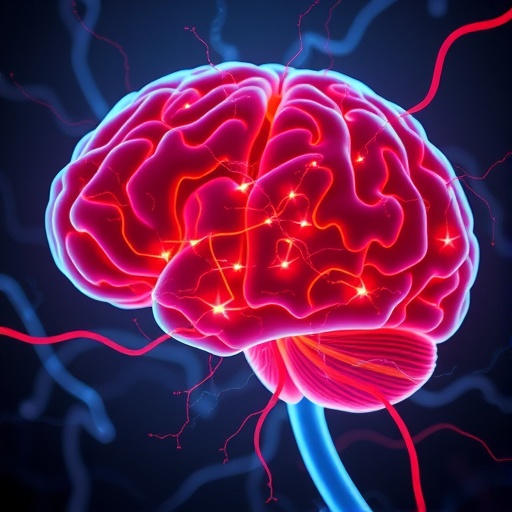
How does the 'brain' of a living cell work, allowing an organism to function and thrive in changing and unfavourable environments?
Queensland University of Technology (QUT) researcher Dr Robyn Araujo has developed new mathematics to solve a longstanding mystery of how the incredibly complex biological networks within cells can adapt and reset themselves after exposure to a new stimulus.
Her findings, published in Nature Communications, provide a new level of understanding of cellular communication and cellular 'cognition', and have potential application in a variety of areas, including new targeted cancer therapies and drug resistance.
Dr Araujo, a lecturer in applied and computational mathematics in QUT's Science and Engineering Faculty, said that while we know a great deal about gene sequences, we have had extremely limited insight into how the proteins encoded by these genes work together as an integrated network – until now.
"Proteins form unfathomably complex networks of chemical reactions that allow cells to communicate and to 'think' – essentially giving the cell a 'cognitive' ability, or a 'brain'," she said. "It has been a longstanding mystery in science how this cellular 'brain' works.
"We could never hope to measure the full complexity of cellular networks – the networks are simply too large and interconnected and their component proteins are too variable.
"But mathematics provides a tool that allows us to explore how these networks might be constructed in order to perform as they do.
"My research is giving us a new way to look at unravelling network complexity in nature."
Dr Araujo's work has focused on the widely observed function called perfect adaptation – the ability of a network to reset itself after it has been exposed to a new stimulus.
"An example of perfect adaptation is our sense of smell," she said. "When exposed to an odour we will smell it initially but after a while it seems to us that the odour has disappeared, even though the chemical, the stimulus, is still present.
"Our sense of smell has exhibited perfect adaptation. This process allows it to remain sensitive to further changes in our environment so that we can detect both very feint and very strong odours.
"This kind of adaptation is essentially what takes place inside living cells all the time. Cells are exposed to signals – hormones, growth factors, and other chemicals – and their proteins will tend to react and respond initially, but then settle down to pre-stimulus levels of activity even though the stimulus is still there.
"I studied all the possible ways a network can be constructed and found that to be capable of this perfect adaptation in a robust way, a network has to satisfy an extremely rigid set of mathematical principles. There are a surprisingly limited number of ways a network could be constructed to perform perfect adaptation.
"Essentially we are now discovering the needles in the haystack in terms of the network constructions that can actually exist in nature.
"It is early days, but this opens the door to being able to modify cell networks with drugs and do it in a more robust and rigorous way. Cancer therapy is a potential area of application, and insights into how proteins work at a cellular level is key."
Dr Araujo said the published study was the result of more than "five years of relentless effort to solve this incredibly deep mathematical problem". She began research in this field while at George Mason University in Virginia in the US.
Her mentor at the university's College of Science and co-author of the Nature Communications paper, Professor Lance Liotta, said the "amazing and surprising" outcome of Dr Araujo's study is applicable to any living organism or biochemical network of any size.
"The study is a wonderful example of how mathematics can have a profound impact on society and Dr Araujo's results will provide a set of completely fresh approaches for scientists in a variety of fields," he said.
"For example, in strategies to overcome cancer drug resistance – why do tumours frequently adapt and grow back after treatment?
"It could also help understanding of how our hormone system, our immune defences, perfectly adapt to frequent challenges and keep us well, and it has future implications for creating new hypotheses about drug addiction and brain neuron signalling adaptation."
###
The study, The topological requirements for robust perfect adaptation in networks of any size, can be accessed here.
QUT Media contacts: Karen Milliner, +6173138 1841 or [email protected]
After hours: Rose Trapnell, +61407585901 or [email protected]
Media Contact
Karen Milliner or Rose Trapnell
[email protected]
61-407-585-901
@qutmedia
http://www.qut.edu.au
Original Source
https://www.qut.edu.au/news?id=130128 http://dx.doi.org/10.1038/s41467-018-04151-6