A groundbreaking study led by researchers from the University of Pittsburgh and UPMC has unveiled compelling real-world evidence that maternal vaccination against respiratory syncytial virus (RSV) during pregnancy dramatically reduces the risk of RSV-related hospitalization in young infants. Published in the esteemed peer-reviewed journal JAMA Network Open, this research marks a pivotal advance in the fight against one of the most significant causes of respiratory illness in early infancy.
Respiratory syncytial virus has long been recognized as a leading cause of hospital admissions in infants throughout the United States, particularly affecting those younger than three months. The virus can trigger severe respiratory distress, sometimes necessitating oxygen therapy or mechanical ventilation. Until recently, preventive strategies for healthy newborns were limited primarily to monoclonal antibody treatments given after birth, which come with logistical challenges and do not confer immunity from birth. This new maternal vaccination approach offers a promising paradigm shift by providing protective antibodies transplacentally during pregnancy.
The clinical investigation meticulously analyzed health records of infants under 90 days old hospitalized for respiratory illnesses over sequential RSV seasons, specifically the 2023–24 and 2024–25 cycles, in western Pennsylvania. The study incorporated only those infants who underwent RSV testing, distinctly excluding those administered monoclonal antibodies to isolate the effect of maternal vaccination. This rigorous methodology enabled the precise evaluation of vaccine effectiveness in a naturalistic healthcare setting.
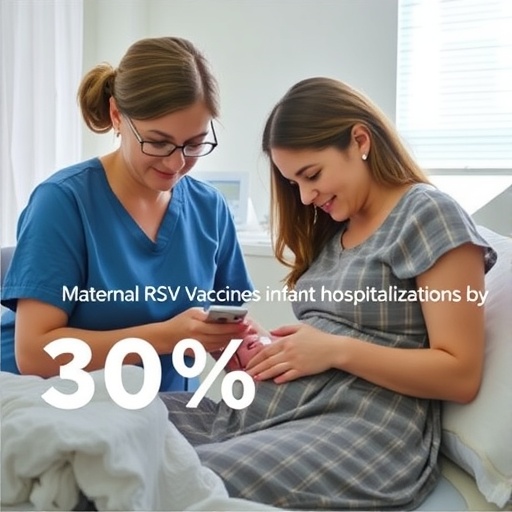
Remarkably, the administration of a single dose of the RSVpreF vaccine—a prefusion F protein vaccine that was granted FDA approval in 2023—during pregnancy was shown to reduce hospitalizations related to RSV by approximately 68%. Even more encouraging was the nearly 69% decrease in hospital admissions due to severe lower respiratory tract infections caused by RSV in this vulnerable population. These figures not only align with the promising data seen in prior controlled clinical trials but also confirm the vaccine’s potency in everyday clinical practice.
The novel RSVpreF vaccine utilizes an advanced platform targeting the prefusion conformation of the RSV F protein, a critical viral element necessary for cell fusion and entry. By stabilizing this prefusion form, the vaccine efficiently stimulates the maternal immune system to generate high-affinity neutralizing antibodies. These antibodies are then transferred to the fetus via the placenta, offering passive immune defense during the neonate’s earliest and most susceptible months.
Lead author Dr. Anne-Marie Rick highlighted the study’s primary motivation: “We centered our research on the outcomes that matter most to families—whether their newborn ends up in the hospital with RSV. Our findings demonstrate a substantial impact on infant health and simultaneous relief for healthcare resources, showcasing the immense potential of maternal RSV vaccination to protect infants when their immune systems are immature.”
The ongoing four-year longitudinal study plans to extend its scope to further RSV seasons, notably 2025–26 and 2026–27. Future research objectives include examining the duration of immune protection conferred through maternal vaccination and assessing efficacy in infants up to 180 days old. These efforts will be instrumental in optimizing immunization timing and public health policies regarding maternal RSV vaccination.
The study’s success was supported by deep collaborative efforts, with research teams from multiple disciplines at the University of Pittsburgh, UPMC, and Pfizer Inc. The investigation was also facilitated by robust data management and analysis platforms such as REDCap, with funding jointly provided by Pfizer and various NIH initiatives, underscoring the vital role of public-private partnerships in translational science breakthroughs.
Of particular scientific interest is how these real-world data complement and validate pre-approval clinical trial results, anchoring the RSVpreF maternal vaccine as a key preventive tool against RSV hospitalization. Public health experts anticipate significant downstream benefits, including reduced infant morbidity, fewer hospital stays, and minimized strain on pediatric intensive care services during seasonal RSV outbreaks.
This advance heralds a new era in infectious disease prevention for neonates globally. Maternal immunization strategies, traditionally focused on diseases like influenza and pertussis, now find a powerful new candidate in the fight against RSV. The findings prompt renewed calls for integrating the RSVpreF vaccine into routine prenatal care, potentially reshaping prevention guidelines to improve infant survival and health outcomes.
Given the gravity of RSV as a public health challenge, especially among the youngest and most fragile patients, these compelling data provide a crucial foundation for clinicians, families, and policymakers to embrace maternal RSV vaccination. Implementation on a broad scale promises to shield countless infants from the devastating impacts of severe respiratory infections during their formative months of life.
In summary, this landmark research conclusively demonstrates that maternal immunization with the RSVpreF vaccine delivers robust protection to infants against RSV-related hospitalizations and severe lung infections. As the study continues and additional data emerge, the medical community stands poised to refine intervention strategies and maximize benefits for newborn health worldwide.
Subject of Research: Maternal vaccination efficacy against respiratory syncytial virus (RSV) in infants.
Article Title: Maternal Respiratory Syncytial Virus Prefusion F Vaccination and Acute Respiratory Illness in Infants.
News Publication Date: June 5, 2026.
Web References:
Published study DOI: 10.1001/jamanetworkopen.2026.16773
Additional RSV information: UPMC RSV Information
Parental guide to respiratory viruses: UPMC Respiratory Virus Guide for Parents
Keywords: RSV, maternal vaccination, respiratory syncytial virus, infant hospitalization, RSVpreF vaccine, prefusion F protein vaccine, neonatal immunity, respiratory illness, vaccine efficacy, pregnancy, pediatric infectious diseases, passive immunity, viral respiratory infections.
Tags: early infancy respiratory illnessinfant health outcomes after maternal vaccinationinfant respiratory distress preventioninfant RSV hospitalization reductionmaternal immunization impact on infantsmaternal RSV vaccination during pregnancymonoclonal antibody alternatives for RSVrespiratory syncytial virus prevention in newbornsRSV vaccine clinical study 2023-2025RSV vaccine real-world effectivenessRSV-related infant hospital admissionstransplacental antibody transfer