Robot-Assisted Radical Prostatectomy: Mastering Nerve-Sparing Techniques to Enhance Patient Outcomes
Robot-assisted radical prostatectomy (RARP) has become the gold standard in the management of localized prostate cancer, offering excellent oncological control through advanced minimally invasive technology. However, despite its superior cancer control rates, postoperative complications like urinary incontinence and erectile dysfunction continue to seriously impact patients’ quality of life. These complications largely stem from the inadvertent damage to the neurovascular bundles (NVBs) that run along the prostate, which are critical for erectile function and contribute to urinary continence. As such, the refinement of nerve-sparing techniques during RARP stands as one of the most nuanced challenges in contemporary urological surgery, requiring surgeons to balance oncologic thoroughness with functional preservation.
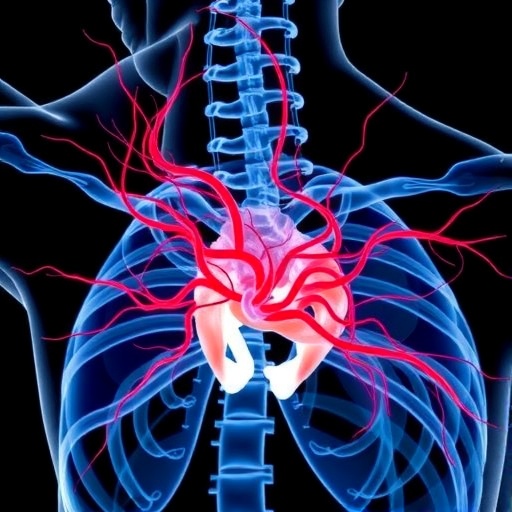
Central to perfecting nerve-sparing procedures is a nuanced understanding of the complex neuroanatomy surrounding the prostate. The NVBs course posterolaterally to the prostate in a delicate and variable fascial arrangement, necessitating precise intraoperative identification and gentle handling. The goal of nerve-sparing surgery is to preserve these bundles to maintain postoperative potency and continence, but this must not compromise oncologic safety, particularly in patients with extracapsular extension (ECE) — where the tumor extends beyond the prostate capsule. Achieving this balance demands tailored surgical approaches depending on tumor stage and location.
Surgeons employ three primary dissection planes during nerve-sparing RARP, each with distinct implications for nerve preservation and tumor clearance. The intrafascial plane involves a dissection very close to the prostatic capsule, enabling maximal preservation of NVBs but carrying the highest risk of positive surgical margins in cases of ECE. In contrast, the interfascial plane strikes a moderate balance, preserving some neural tissue while allowing wider margins to reduce the risk of residual tumor. The extrafascial plane, meanwhile, offers the widest margin clearance but sacrifices nerve preservation entirely and is recommended only for patients at high risk of extracapsular tumor spread.
Dissection strategies also vary by the direction of approach. The antegrade method, progressing from the base to the apex of the prostate, is the traditional route. However, the retrograde technique—the reverse direction—has gained traction as it may reduce traction on the NVBs and enable earlier return of potency and continence postoperatively. By starting dissection at the apex, surgeons can better visualize the NVBs earlier during the procedure, optimizing functional outcomes without compromising oncologic safety.
Beyond conventional planes and approaches, innovative techniques have emerged to further refine nerve preservation. The “Veil of Aphrodite” technique, for instance, carefully mobilizes the NVBs with meticulous fascial dissection to enhance functional recovery. Similarly, the modified clipless antegrade approach avoids thermal and mechanical trauma to the delicate nerves. Retzius-sparing RARP represents a groundbreaking variant that preserves the anterior structures and supports continence mechanisms by avoiding disruption of the Retzius space. Complementing these are adjunctive strategies such as regional hypothermia during surgery intended to reduce nerve ischemic injury and biological membrane wraps designed to promote neural tissue healing.
Standardization of intraoperative assessment has become critical as nerve-sparing maneuvers evolve. Objective grading systems now provide surgeons with reproducible frameworks to evaluate the extent of nerve preservation during RARP. These grading scales enable consistent documentation and comparison of surgical outcomes, facilitating continuous quality improvement and research advancement. They foster better communication among surgical teams and empowerment of patients through enhanced transparency regarding expected postoperative function.
Imaging modalities have revolutionized patient selection and surgical planning for nerve-sparing RARP. Multiparametric magnetic resonance imaging (mpMRI) offers detailed visualization of tumor location and possible extracapsular extension, helping stratify patients into those suitable for nerve-preserving surgery and those requiring wider margins. Similarly, prostate-specific membrane antigen positron emission tomography (PSMA-PET) provides superior sensitivity for detecting microscopic tumor spread, refining risk assessments. Combined, these imaging tools enable personalized surgical strategies balancing oncologic safety and functional preservation.
The integration of emerging technologies promises even greater surgical precision. Neurovascular structure-adjacent frozen section examination (NeuroSAFE) allows intraoperative pathological assessment of margin status adjacent to preserved nerves. This real-time feedback enables tailored resection, minimizing unnecessary nerve sacrifice while ensuring complete tumor removal. As these methods become widely adopted, the potential to safely expand nerve-sparing surgery to a broader patient population grows, potentially transforming standard care paradigms.
Managing challenging cases requires further technical adeptness. Surgeons must adapt nerve-sparing approaches for patients with large prostates, prior pelvic surgery, or radiation—factors that obscure anatomical landmarks and increase surgical complexity. The review offers practical tips and strategies for these scenarios, emphasizing preoperative planning, intraoperative flexibility, and meticulous technique. The cumulative experience underlines that nerve-sparing RARP is not a one-size-fits-all procedure but a tailored art demanding anatomical expertise, technical finesse, and judicious clinical judgment.
As robotic platforms and adjunctive technologies advance, the future of nerve-sparing radical prostatectomy looks promising. Enhanced visualization, refined instrumentation, and the potential integration of artificial intelligence-driven surgical guidance portend further improvements in precision. Additionally, combining surgical excellence with optimized perioperative neuroprotection and rehabilitation protocols may dramatically improve long-term functional outcomes for men undergoing prostate cancer surgery.
In conclusion, nerve-sparing radical robotic prostatectomy embodies the intersection of oncologic rigor and functional preservation in modern urology. This comprehensive review synthesizes anatomical foundations with cutting-edge surgical innovations, offering clinicians a robust framework for patient selection, intraoperative decision-making, and postoperative care. By embracing emerging imaging and pathological evaluation techniques alongside refined nerve-sparing methodologies, urologists can optimize cancer control while substantially enhancing quality of life for prostate cancer patients worldwide.
Subject of Research: Not applicable
Article Title: Preserving the neurovascular bundle during radical robotic prostatectomy: Tips and tricks
News Publication Date: 9-Feb-2026
Image Credits: Higher Education Press
Keywords: Robot-assisted radical prostatectomy, nerve-sparing surgery, neurovascular bundles, prostate cancer, extracapsular extension, dissection planes, multiparametric MRI, PSMA-PET, NeuroSAFE, Retzius-sparing prostatectomy
Tags: advanced urological surgical techniquesbalancing oncologic control and functionextracapsular extension in prostate cancerimproving patient outcomes in RARPminimally invasive prostate cancer surgerynerve-sparing techniques in prostatectomyneuroanatomy of prostate surgeryneurovascular bundle preservationpostoperative erectile dysfunction preventionrobot-assisted radical prostatectomysurgical challenges in nerve preservationurinary continence after prostate surgery