A quiet revolution in biodiversity science has just gone public. The German Ichthyological Society (Gesellschaft für Ichthyologie e.V., GfI) and the City University of Applied Sciences Bremen have unveiled the full scientific description of the GfI-Fischartenatlas, a data portal that consolidates validated fish occurrence records from across Central Europe into a single, openly accessible platform. As of mid-March 2026, the underlying database holds 136,714 records in total, and the primary dataset published to the Global Biodiversity Information Facility (GBIF) contains 62,545 occurrence records covering 264 freshwater and marine fish species from 16 European countries. For a group of animals that has long lagged behind birds, butterflies and flowering plants in the citizen-science era, the release represents one of the most significant openings of fish distribution data ever attempted in the region.
The scale of the data gap the atlas addresses is sobering. More than 36,000 fish species have been described worldwide, yet reliable information on where they live and how they are faring remains scarce for the vast majority. In Europe, at least 37 percent of freshwater fish are considered extinct or endangered, with a further 5.3 percent classified as data deficient. The marine picture is arguably worse in terms of knowledge: 10 percent of European marine fish are rated endangered or potentially endangered, while a striking 20.6 percent are simply data deficient, meaning scientists cannot even assess their risk. Overfishing, pollution, climate change and invasive species are squeezing fish populations from all sides, and conservation planning for most species is stymied not by lack of will but by lack of data.
Part of the problem is structural. European environmental law, including the Water Framework Directive, the Habitats Directive and the Marine Strategy Framework Directive, has generated a steady stream of monitoring data since the early 2000s. But because competencies are organised at national and even federal level, these data are scattered across agencies, formats and languages, and technical and legal obstacles often block their reuse. Historical sources are even more fragmented: apart from a few charismatic or commercially valuable groups such as sturgeons, long-term records are buried in regional atlases, grey literature, environmental impact reports, academic theses and the personal notebooks of amateur naturalists. Meanwhile, the citizen-science wave that transformed ornithology largely bypassed fish, because observing and identifying species underwater is genuinely difficult.
The new atlas grew from an effort to close exactly these gaps. Its predecessor, the Fischartenatlas für Deutschland, was launched in 2006 as a German-language database compiling fish occurrence data from heterogeneous sources, including scientific papers, regional registers and the private collections of society members. In 2007, a collaboration with the University of Salzburg expanded it into a binational atlas covering Germany and Austria, later renamed Fischfauna-Online. Marine fish were subsequently added for German coastal waters, the German Exclusive Economic Zone and the area covered by the Trilateral Wadden Sea Cooperation spanning the Netherlands, Germany and Denmark. What began as a national reference work has matured into a cross-border information platform sitting at the intersection of science, conservation practice and environmental education.
One of the thorniest obstacles to sharing the data openly was legal rather than scientific. Because the database had evolved over nearly two decades and absorbed material of wildly varied provenance, it was unclear whether and how it could be published through GBIF. A recent collaboration with the German National Research Data Infrastructure for Biodiversity (NFDI4Biodiversity) produced a detailed analysis of the relevant legal terrain, covering copyright, database rights, data protection, research ethics and licensing. The conclusion was broadly encouraging: individual species occurrence data do not enjoy copyright protection, with the notable exception of photographic evidence. However, while good scientific practice encourages crediting voluntary contributors by name and institution in the metadata, such disclosure requires individual consent under data protection law. The atlas team published its dataset in line with these recommendations, offering a template that other long-running, volunteer-supported biodiversity projects may soon follow.
The technical architecture behind the portal is as noteworthy as the data themselves. The system runs on the Biodiversity Warehouse software, developed jointly by the biology and computer science departments at the City University of Applied Sciences Bremen, and the data are hosted by the Biodiversity Informatics Department at Museum Koenig in Bonn, part of the Leibniz Institute for the Analysis of Biodiversity Change. Remarkably, the project receives no third-party funding: both the biological and IT content were built without public money, through research-based teaching and the voluntary work of the ichthyological society, with the software developed exclusively within the Master’s programme in Complex Software Systems. The observation data have been mapped to the Access to Biological Collections Data (ABCD) standard across 42 fields, allowing existing harvesting pipelines to feed the records into GBIF and the German Federation for Biological Data under the FAIR principles, and the whole package is released under a Creative Commons CC-Zero public domain waiver.
Each record in the atlas is a carefully structured data point rather than a casual sighting. A single publication can contain many observations, and each observation can yield one or more species records, each pinned to a distribution point on a map. Mandatory fields include the species name, drawn from a drop-down list referenced to Eschmeyer’s Catalogue of Fishes, the species status, the location coordinates and the date range, while optional fields capture details such as location deviation, survey method, images and rights information. Status distinctions cover developmental stage, from adult to juvenile, and condition, whether the animal was alive or a dead record. Survey methods are classified into categories including angling, electrofishing, net fishing, visual observation and ditch clearing. Records sourced from citable literature are transferred directly, but submissions from registered users and personal communications from external parties must pass an additional plausibility check by the editorial team before publication.
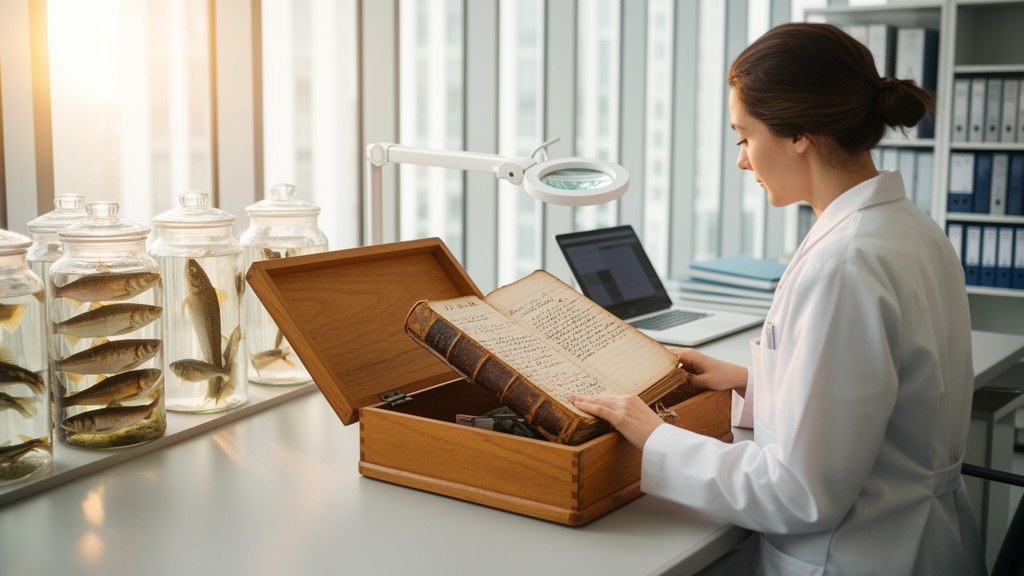
The temporal and geographic reach of the compilation is extraordinary. The records span living time from the 16th century to the present day, giving researchers an unusually deep historical baseline against which to measure modern range shifts and declines. Geographically, the core processing area covers Germany and Austria, the marine areas of the Trilateral Wadden Sea Cooperation and the German Exclusive Economic Zone, bounded roughly between latitudes 46.3 and 55.1 north and longitudes 4.6 and 17.2 east. For species of particular conservation interest, such as those listed under the Habitats Directive, occurrences from neighbouring countries are also considered case by case. The breakdown of the published archive shows the diversity of its sources: 36,243 literature records tied to German 1:25,000 topographic map sheets, 19,882 literature records with exact coordinates, 3,226 records referenced as personal communication and 3,194 recorded through the atlas’s own notification system.
The portal itself is designed to serve audiences far beyond professional ichthyologists. It offers free distribution maps and species descriptions for all freshwater fish species in Germany and Austria, plus marine species from adjacent waters, with detailed information on taxonomy, systematics, morphology and ecology, supplemented by photographs and literature references. The platform is being developed as trilingual, in German, English and Portuguese, extending its potential reach to the Portuguese-speaking scientific community. By making validated, century-spanning distribution data freely available, the GfI-Fischartenatlas positions itself as a science-policy interface where regulators, conservation practitioners, educators and curious naturalists can all draw on the same evidence base for protecting fish biodiversity and the habitats it depends on.
Perhaps the most transferable lesson of the project is educational. The atlas is fully integrated into the biology and computer science curricula in Bremen as a teaching module built on research-based learning. Biology students combine theoretical biodiversity knowledge with hands-on skills in data collection and digital data use, while computer science students tackle the real technical demands of large-scale data processing and interdisciplinary communication. Because the work feeds directly into a live conservation resource, the module offers strong motivational incentives and, the project team argues, a model that other universities and disciplines could readily adapt. In an age when biodiversity is collapsing faster than it can be documented, a volunteer-powered, student-built atlas that turns scattered centuries of fish records into open data may prove to be exactly the kind of infrastructure the field has been waiting for.
Subject of Research: A validated open-access compilation of freshwater and marine fish species occurrence records in Germany, Austria and adjacent European waters
Article Title: The "GfI-Fischartenatlas" of the German Ichthyological Society (GfI) – A compilation of validated fish species occurrence records
Article References: Brunken, H., Braubach, L., Engel, T., Grobe, P., Pfaff, C.-T., Rach, B., Vatterrott, H.-R., & Friedrichs-Manthey, M. (2026). The "GfI-Fischartenatlas" of the German Ichthyological Society (GfI) – A compilation of validated fish species occurrence records. Biodiversity Data Journal, 14, Article e201405. https://doi.org/10.3897/bdj.14.e201405
Image Credits: AI Generated
Keywords: fish biodiversity, occurrence data, GBIF, GfI-Fischartenatlas, ichthyology, citizen science, biodiversity informatics, ABCD data standard, freshwater conservation, marine fish, FAIR data, Germany
News Source: Margaret Porter. (October 18, 2026). Massive New Fish Atlas Maps Centuries of European Fish Records for Everyone. Scienmag.