

• HOME
  • NEWS
  • EXPLORE
    • CAREER
      • Companies
      • Jobs
    • EVENTS
    • iGEM
      • News
      • Team
    • PHOTOS
    • VIDEO
    • WIKI
  • BLOG
  • COMMUNITY
    • FACEBOOK
    • INSTAGRAM
    • TWITTER
Sunday, October 4, 2026
BIOENGINEER.ORG
No Result
View All Result
  • Login
  • HOME
  • NEWS
  • EXPLORE
    • CAREER
      • Companies
      • Jobs
        • Lecturer
        • PhD Studentship
        • Postdoc
        • Research Assistant
    • EVENTS
    • iGEM
      • News
      • Team
    • PHOTOS
    • VIDEO
    • WIKI
  • BLOG
  • COMMUNITY
    • FACEBOOK
    • INSTAGRAM
    • TWITTER
No Result
View All Result
Bioengineer.org
No Result
View All Result
Home NEWS Science News Biology

Markey’s Blackburn earns NIH New Innovator Award for cancer…

Bioengineer by Bioengineer
January 24, 2018
in Biology, Science News
Reading Time: 2 mins read
0
Share on FacebookShare on TwitterShare on LinkedinShare on RedditShare on Telegram
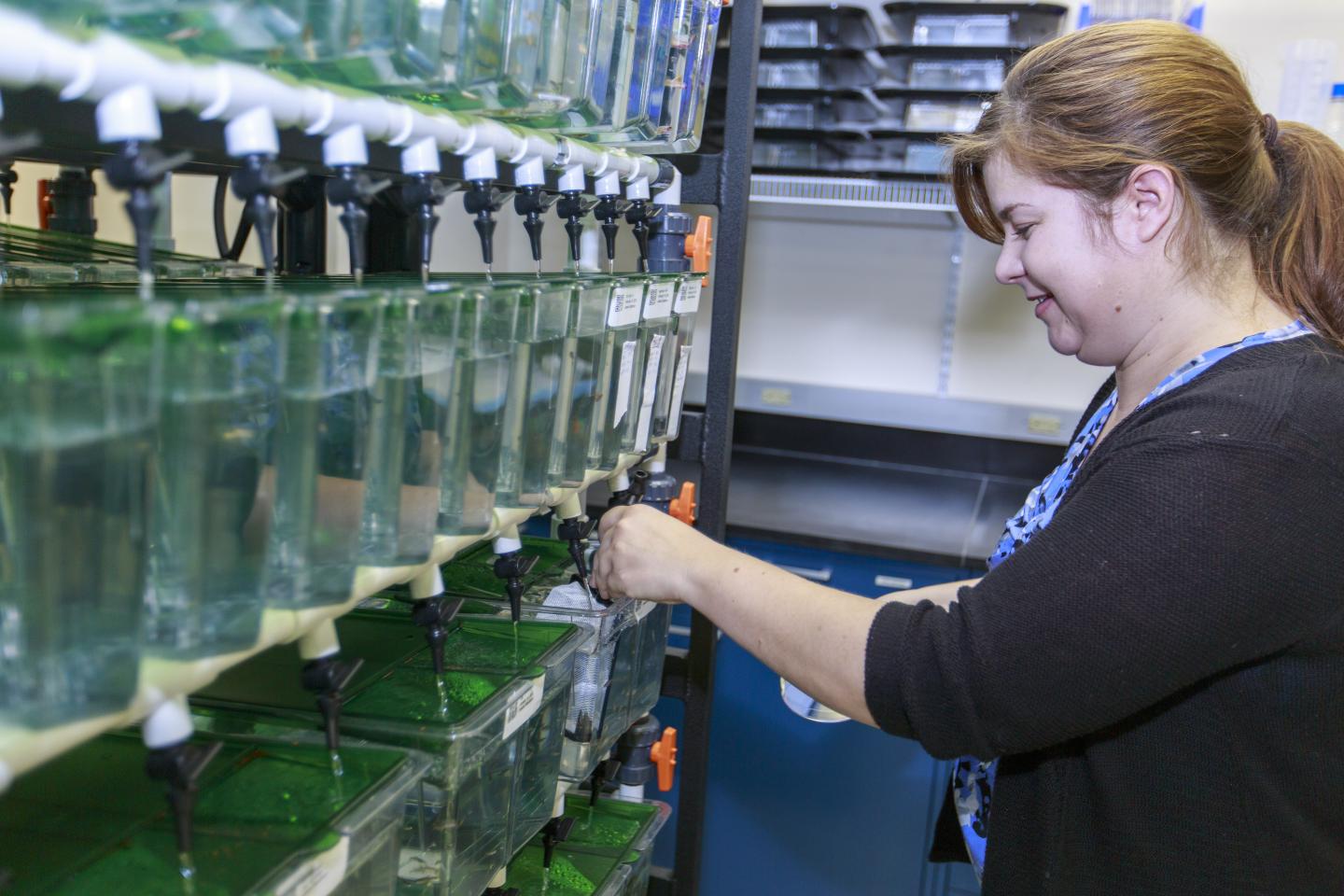
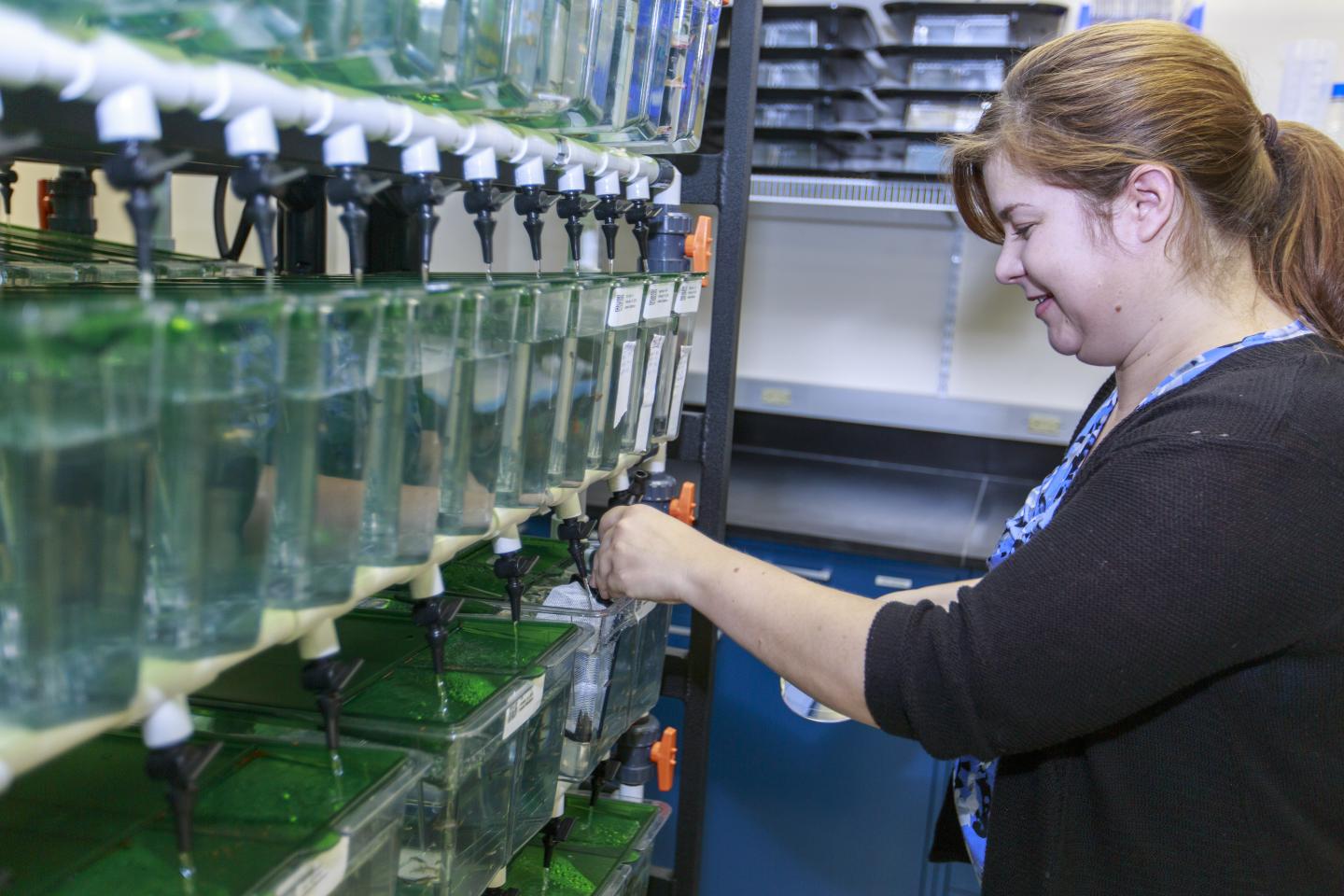
IMAGE

Credit: Jim Morris | UK HealthCare

LEXINGTON, Ky. (Oct. 6, 2017) – University of Kentucky Markey Cancer Center Researcher Jessica Blackburn has earned a prestigious National Institutes of Health's New Innovator Award, a grant totaling $1.5 million over five years to fund pediatric cancer research.

Blackburn, who came to UK from Harvard University in 2015, runs a basic science laboratory using zebrafish as an animal model. This new award will specifically fund research to find causes of leukemia relapse in three ways:

Identifying the unique genetic signature of relapse-causing cells, using single-cell sequencing technology in both zebrafish leukemia models and patient samples. Discovering how and where relapse-driving cells "hide" from chemotherapy in the body using live animal imaging techniques in zebrafish.

Finding new drugs that can specifically kill the cancer cells that cause relapse by screening thousands of compounds zebrafish. Zebrafish labs are far less common than labs that use mice as an animal model of cancer, but Blackburn notes that zebrafish models provide important research advantages, such as in vivo imaging at single-cell resolution and low-cost, high-throughput drug screens, which can complement traditional mouse models.

"The hope for this project is that we will be able to provide new insights the biology of what causes cancer relapse, not only to find better ways to treat it, but to develop treatment strategies that will prevent relapse from happening in the first place," Blackburn said. "I think this work shows that zebrafish models of human diseases – like cancer – are being more widely accepted in the medical fields, and that more people are recognizing the important discoveries that can be made using zebrafish."

The NIH's New Innovator Award was established in 2007 and supports unusually innovative research from early career investigators who are within 10 years of their final degree or clinical residency and have not yet received a research project grant or equivalent NIH grant. It's one of four prestigious awards in the NIH's High-Risk, High-Reward program, which were created to support unconventional approaches to major challenges in biomedical and behavioral research. Applicants of the program are encouraged to think outside-the-box and to pursue exciting, trailblazing ideas in any area of research relevant to the NIH mission.

"I continually point to this program as an example of the creative and revolutionary research NIH supports," said NIH Director Dr. Francis S. Collins. "The quality of the investigators and the impact their research has on the biomedical field is extraordinary."

###

The High-Risk, High-Reward program is part of the NIH Common Fund, which supports a series of exceptionally high-impact programs that cross NIH Institutes and Centers. Common Fund programs pursue major opportunities and gaps in biomedical research that require trans-NIH collaboration to succeed.

Media Contact

Allison Perry
[email protected]
859-323-2399
@universityofky

http://www.uky.edu

Original Source

http://uknow.uky.edu/uk-healthcare/markeys-blackburn-earns-nih-new-innovator-award-cancer-research


Share12Tweet7Share2ShareShareShare1

Related Posts

New Study Examines How Dedicated Dermatology Textbooks Represent Skin of Colour

New Study Examines How Dedicated Dermatology Textbooks Represent Skin of Colour

October 4, 2026
Adding Immunotherapy to Chemo and Bevacizumab Extends Survival in Recurrent Cervical Cancer

Adding Immunotherapy to Chemo and Bevacizumab Extends Survival in Recurrent Cervical Cancer

October 4, 2026

Forskolin Extract Boosts Gut Hormone GLP-1 and Strengthens Intestinal Barrier in Cell Study

October 4, 2026

Empathy, Not Mood, Drives Helping in Autistic Children, Study Finds

October 4, 2026
Please login to join discussion

POPULAR NEWS

  • Alloys That Shrink Their Own Grains: New PIX Mechanism Refines Metals With Heat Alone

    Alloys That Shrink Their Own Grains: New PIX Mechanism Refines Metals With Heat Alone

    29 shares
    Share 12 Tweet 7
  • Endurance Exercise Reshapes the Liver in Males and Females Through Distinct Molecular Routes

    29 shares
    Share 12 Tweet 7
  • Single Transcription Factor PU.1 Rapidly Converts Fibroblasts into Macrophage-Lineage Cells

    29 shares
    Share 12 Tweet 7
  • New Scale Measures How Ready Nurse Educators Really Are for the AI Era

    29 shares
    Share 12 Tweet 7

About

We bring you the latest biotechnology news from best research centers and universities around the world. Check our website.

Follow us

Recent News

Alloys That Shrink Their Own Grains: New PIX Mechanism Refines Metals With Heat Alone

Endurance Exercise Reshapes the Liver in Males and Females Through Distinct Molecular Routes

Single Transcription Factor PU.1 Rapidly Converts Fibroblasts into Macrophage-Lineage Cells

Subscribe to Blog via Email

Success! An email was just sent to confirm your subscription. Please find the email now and click 'Confirm' to start subscribing.

Join 85 other subscribers
  • Contact Us

Bioengineer.org © Copyright 2023 All Rights Reserved.

Welcome Back!

Login to your account below

Forgotten Password?

Retrieve your password

Please enter your username or email address to reset your password.

Log In
No Result
View All Result
  • Homepages
    • Home Page 1
    • Home Page 2
  • News
  • National
  • Business
  • Health
  • Lifestyle
  • Science

Bioengineer.org © Copyright 2023 All Rights Reserved.
