• HOME
  • NEWS
  • EXPLORE
    • CAREER
      • Companies
      • Jobs
    • EVENTS
    • iGEM
      • News
      • Team
    • PHOTOS
    • VIDEO
    • WIKI
  • BLOG
  • COMMUNITY
    • FACEBOOK
    • INSTAGRAM
    • TWITTER
Wednesday, September 23, 2026
BIOENGINEER.ORG
No Result
View All Result
  • Login
  • HOME
  • NEWS
  • EXPLORE
    • CAREER
      • Companies
      • Jobs
        • Lecturer
        • PhD Studentship
        • Postdoc
        • Research Assistant
    • EVENTS
    • iGEM
      • News
      • Team
    • PHOTOS
    • VIDEO
    • WIKI
  • BLOG
  • COMMUNITY
    • FACEBOOK
    • INSTAGRAM
    • TWITTER
  • HOME
  • NEWS
  • EXPLORE
    • CAREER
      • Companies
      • Jobs
        • Lecturer
        • PhD Studentship
        • Postdoc
        • Research Assistant
    • EVENTS
    • iGEM
      • News
      • Team
    • PHOTOS
    • VIDEO
    • WIKI
  • BLOG
  • COMMUNITY
    • FACEBOOK
    • INSTAGRAM
    • TWITTER
No Result
View All Result
Bioengineer.org
No Result
View All Result
Home NEWS Science News Biology

Marine debris study counts trash from Texas to Florida

Bioengineer by Bioengineer
December 28, 2018
in Biology
Reading Time: 2 mins read
0
IMAGE
Share on FacebookShare on TwitterShare on LinkedinShare on RedditShare on Telegram

IMAGE

Credit: Caitlin Wessel

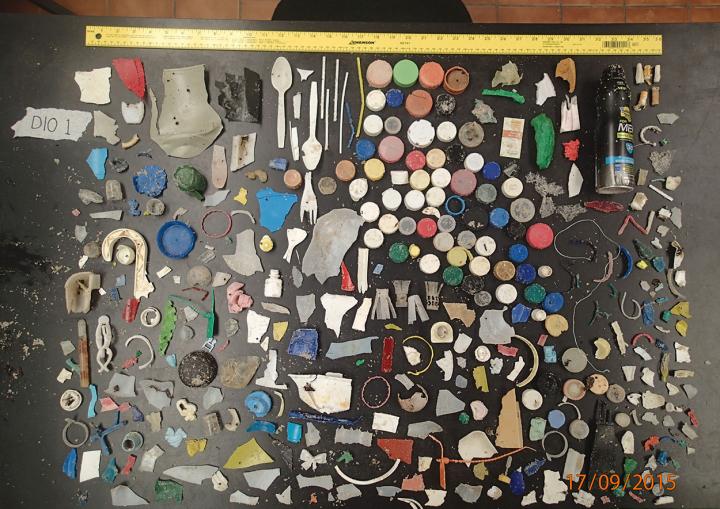
Trash, particularly plastic, in the ocean and along the shoreline is an economic, environmental, human health, and aesthetic problem causing serious challenges to coastal communities around the world, including the Gulf of Mexico.

Researchers from the Dauphin Island Sea Lab and the Mission-Aransas National Estuarine Research Reserve teamed up for a two-year study to document the problem along the Gulf of Mexico shorelines. Their findings are documented in the publication, Accumulation and distribution of marine debris on barrier islands across the northern Gulf of Mexico, in ScienceDirect’s Marine Pollution Bulletin.

From February 2015 to August of 2017, the researchers kept tabs on marine debris that washed up on the shoreline every month at 12 different sites on nine barrier islands from North Padre Island, Texas to Santa Rosa, Florida. The trash was sorted by type, frequency, and location.

The most shocking discovery was that ten times more trash washes up on the coast of Texas than any of the other Gulf states throughout the year.

Most of the trash, 69 to 95 percent, was plastic. The plastic items included bottles and bottle caps, straws, and broken pieces of plastic. Researchers also cited that more trash washed ashore during the spring and summer. This could be because more people are outside and on the water during this time.

###

For more information or to get a pdf copy of the manuscript, please contact Caitlin Wessel at [email protected].

Reference:
Wessel, C., K. Swanson, T. Weatherall, and J. Cebrian. 2019. Accumulation and distribution of marine debris on barrier islands across the northern Gulf of Mexico. Marine Pollution Bulletin 139 (14-22) https://doi.org/10.1016/j.marpolbul.2018.12.023

Media Contact
Angela Levins
[email protected]
251-591-1865

Original Source

https://www.disl.org/about/news/marine-debris-study-counts-trash-from-texas-to-florida

Related Journal Article

http://dx.doi.org/10.1016/j.marpolbul.2018.12.023

Tags: Earth SciencePollution/Remediation
Share12Tweet8Share2ShareShareShare2

Related Posts

Hidden Mosquito Diversity Surfaces in Mexico’s Celestún Mangrove Reserve

Hidden Mosquito Diversity Surfaces in Mexico’s Celestún Mangrove Reserve

September 23, 2026
Tiny Moss Frogs Reveal How Skin and Thyroid Evolve Together for Life on Land

Tiny Moss Frogs Reveal How Skin and Thyroid Evolve Together for Life on Land

September 23, 2026

New Genetic Factor Analysis Method Reveals Hidden Shared Roots of Disease

September 23, 2026

Heavy Water Reveals How E. coli Rewires Its Metabolism Under Isotopic Stress

September 23, 2026
Please login to join discussion

POPULAR NEWS

  • Mimicking Cell Membranes With Tiny Polymers to Regrow Blood Vessels

    29 shares
    Share 12 Tweet 7
  • How Daily Environmental Swings Shape the Brain: Inside the Day2Day Environment Study

    29 shares
    Share 12 Tweet 7
  • Hidden Mosquito Diversity Surfaces in Mexico’s Celestún Mangrove Reserve

    29 shares
    Share 12 Tweet 7
  • RNA Tagging Machine Behind Endometriosis Blood Vessel Growth Revealed

    29 shares
    Share 12 Tweet 7

About

We bring you the latest biotechnology news from best research centers and universities around the world. Check our website.

Follow us

Recent News

Mimicking Cell Membranes With Tiny Polymers to Regrow Blood Vessels

How Daily Environmental Swings Shape the Brain: Inside the Day2Day Environment Study

Hidden Mosquito Diversity Surfaces in Mexico’s Celestún Mangrove Reserve

Subscribe to Blog via Email

Enter your email address to subscribe to this blog and receive notifications of new posts by email.

Join 85 other subscribers
  • Contact Us

Bioengineer.org © Copyright 2023 All Rights Reserved.

Welcome Back!

Login to your account below

Forgotten Password?

Retrieve your password

Please enter your username or email address to reset your password.

Log In
No Result
View All Result
  • Homepages
    • Home Page 1
    • Home Page 2
  • News
  • National
  • Business
  • Health
  • Lifestyle
  • Science

Bioengineer.org © Copyright 2023 All Rights Reserved.