• HOME
  • NEWS
  • EXPLORE
    • CAREER
      • Companies
      • Jobs
    • EVENTS
    • iGEM
      • News
      • Team
    • PHOTOS
    • VIDEO
    • WIKI
  • BLOG
  • COMMUNITY
    • FACEBOOK
    • INSTAGRAM
    • TWITTER
Sunday, January 18, 2026
BIOENGINEER.ORG
No Result
View All Result
  • Login
  • HOME
  • NEWS
  • EXPLORE
    • CAREER
      • Companies
      • Jobs
        • Lecturer
        • PhD Studentship
        • Postdoc
        • Research Assistant
    • EVENTS
    • iGEM
      • News
      • Team
    • PHOTOS
    • VIDEO
    • WIKI
  • BLOG
  • COMMUNITY
    • FACEBOOK
    • INSTAGRAM
    • TWITTER
  • HOME
  • NEWS
  • EXPLORE
    • CAREER
      • Companies
      • Jobs
        • Lecturer
        • PhD Studentship
        • Postdoc
        • Research Assistant
    • EVENTS
    • iGEM
      • News
      • Team
    • PHOTOS
    • VIDEO
    • WIKI
  • BLOG
  • COMMUNITY
    • FACEBOOK
    • INSTAGRAM
    • TWITTER
No Result
View All Result
Bioengineer.org
No Result
View All Result
Home NEWS Science News Biology

Marine cyanobacteria do not survive solely on photosynthesis

Bioengineer by Bioengineer
March 2, 2020
in Biology
Reading Time: 2 mins read
0
IMAGE
Share on FacebookShare on TwitterShare on LinkedinShare on RedditShare on Telegram

IMAGE

Credit: University of Córdoba

Marine cyanobacteria are single-cell organisms that settled in the oceans millions of years ago. They are organisms that, by means of photosynthesis, create organic material by using inorganic substances. Specifically, the cyanobacteria known as Prochlorococcus and Synechococcus are the most abundant photosynthetic organisms on Earth and they generate a large part of the oxygen necessary for life, hence the oceans are the Earth’s real lungs.

Despite the relevance of marine cyanobacteria in the origin and sustainment of life, they continue to be a neverending source of information. In fact, we knew nothing about Prochlorococcus until Professor Sallie W. Chisholm, at the Massachusetts Institute of Technology, discovered it in the 1980’s. At the time, it was thought that these life-creating organisms got their nourishment solely from photosynthesis (like autotrophic organisms). However, research has shown that they also feed on organic compounds from their environment.

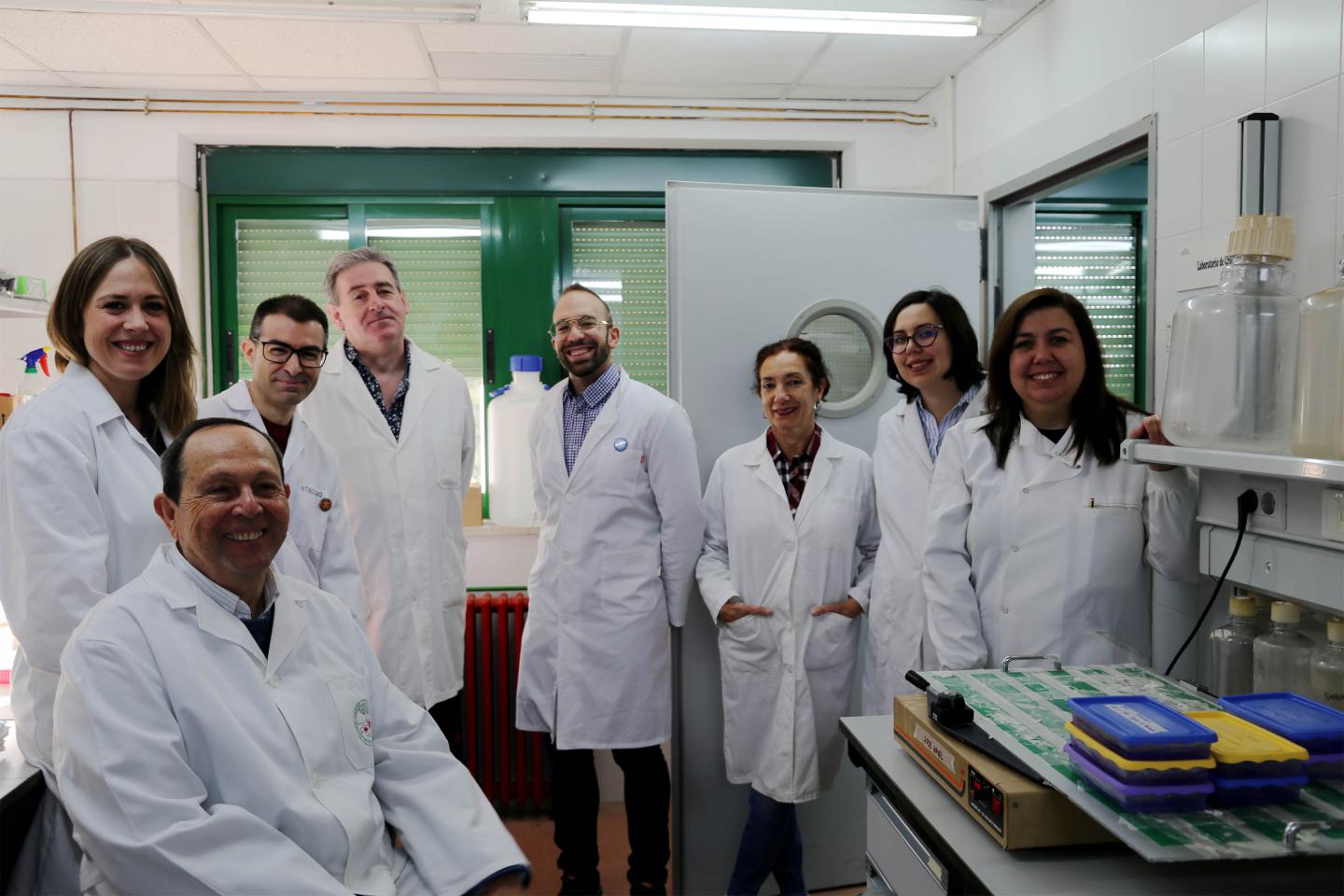
This hypothesis is corroborated by a recently published review article in The ISME Journal, a Nature group journal, led by researchers María del Carmen Muñoz and Guadalupe Gómez, from the Department of Biochemistry and Molecular Biology at the University of Cordoba, who, along with researchers from the Adaptations in the metabolism of nitrogen and carbon in Prochlorococcus group, Antonio López, José Ángel Moreno, Jesús Díez and José Manuel García, analyzed different studies dating back to the beginning of this century. These studies produced evidence that these organisms not only get nourishment from photosynthesis, but also are able to “eat” what they need from their environment.

This research group studied the mechanism of glucose transport in marine cyanobacteria, demonstrating that when they find compounds of this kind that they find appealing, such as glucose, amino acids and compounds containing iron, sulphur and phosphorus, these organisms consume them and become more competitive.

The study of vesicles (small compartments that store compounds) that spread marine cyanobacteria also supports this finding: vesicles contain organic compounds that can feed other bacteria, which provides evidence of how important the use of organic compounds is among these organisms.

This concept change is crucial at an environmental level since it helps to better understand cycles of elements such as carbon, iron, phosphorus and nitrogen. The essential role that cyanobacteria play when producing necessary oxygen for life and sequestering excess carbon dioxide from the atmosphere is strengthened by this review of its nourishment: if cyanobacteria have an advantage by using glucose and other organic compounds taken from their environment, life on Earth also benefits from these advantages.

###

Muñoz-Marín, M.C., Gómez-Baena, G., López-Lozano, A., Moreno-Cabezuelo, J.A., Diez, J., García-Fernández, J.M. Mixotrophy in marine picocyanobacteria: use of organic compounds by Prochlorococcus and Synechococcus. ISME J (2020). https://doi.org/10.1038/s41396-020-0603-9

Media Contact
Elena Lázaro Real
[email protected]
34-957-212-252

Related Journal Article

http://dx.doi.org/10.1038/s41396-020-0603-9

Tags: BiologyEcology/EnvironmentMarine/Freshwater BiologyMicrobiologyMolecular Biology
Share12Tweet8Share2ShareShareShare2

Related Posts

Do Asian Elephants Strategize for Conflicting Outcomes?

Do Asian Elephants Strategize for Conflicting Outcomes?

January 18, 2026
blank

Tracking Fungal Pathogen Evolution Through Comparative Genomics

January 18, 2026

How Traits and Management Shape Equine Intelligence

January 18, 2026

Streamlined Protocols for Orbivirus Consensus Sequencing

January 18, 2026
Please login to join discussion

POPULAR NEWS

  • Enhancing Spiritual Care Education in Nursing Programs

    155 shares
    Share 62 Tweet 39
  • PTSD, Depression, Anxiety in Childhood Cancer Survivors, Parents

    148 shares
    Share 59 Tweet 37
  • Robotic Ureteral Reconstruction: A Novel Approach

    78 shares
    Share 31 Tweet 20
  • Study Reveals Lipid Accumulation in ME/CFS Cells

    54 shares
    Share 22 Tweet 14

About

We bring you the latest biotechnology news from best research centers and universities around the world. Check our website.

Follow us

Recent News

Maximizing Control Authority in Impact-Invariant Systems

Optimizing In Vitro Growth of Bambusa balcooa Roxb.

Understanding NOx Storage in Cold Starts of Zeolite SCR

Subscribe to Blog via Email

Enter your email address to subscribe to this blog and receive notifications of new posts by email.

Join 71 other subscribers
  • Contact Us

Bioengineer.org © Copyright 2023 All Rights Reserved.

Welcome Back!

Login to your account below

Forgotten Password?

Retrieve your password

Please enter your username or email address to reset your password.

Log In
No Result
View All Result
  • Homepages
    • Home Page 1
    • Home Page 2
  • News
  • National
  • Business
  • Health
  • Lifestyle
  • Science

Bioengineer.org © Copyright 2023 All Rights Reserved.