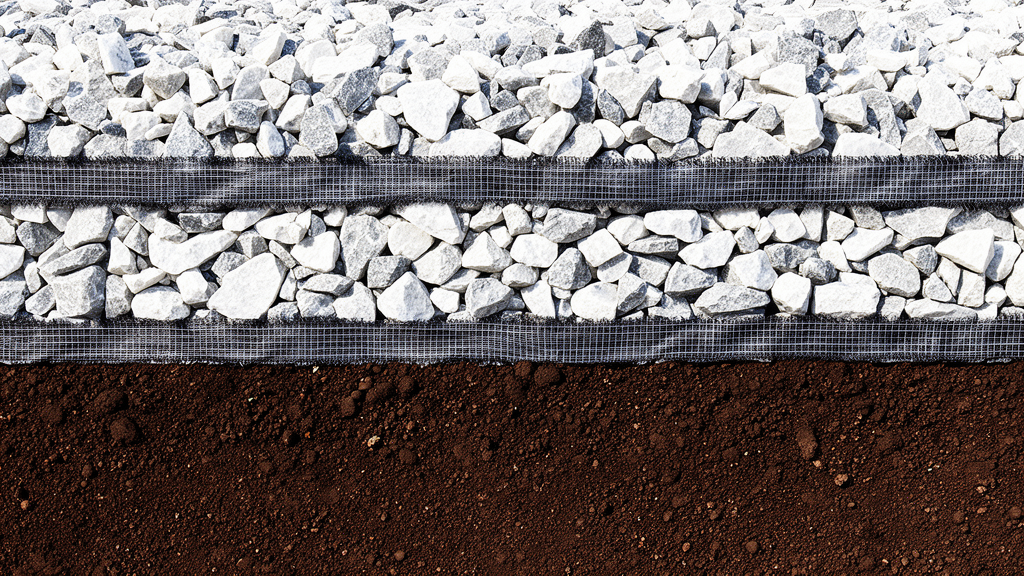
A comprehensive geotechnical investigation conducted by researchers Jagdish Lohar and Neha Shrivastava has demonstrated that marble processing waste can serve as an effective, sustainable structural fill material in reinforced soil structures. The experimental assessment, published in the International Journal of Geo-Engineering, evaluated the engineering behavior of fine particulate marble slurry residue sourced from an industrial processing cluster in the Jaipur district of Rajasthan, India. By comparing the material directly against conventional local soil under identical laboratory test standards, the investigators determined that marble processing waste possesses the mechanical stability, compaction density, and electrochemical compatibility required for modern earth-retention systems. Reinforced soil structures represent a ubiquitous and critical element of modern transportation infrastructure, traditionally demanding massive quantities of mined virgin sands and borrow-pit soils. The findings confirm that diverting this abundant stone-cutting by-product into infrastructure earthworks delivers structural performance comparable to natural earth while cutting material costs by approximately 51 percent.
The global dimensional stone sector produces vast quantities of non-biodegradable mineral waste during the sawing, shaping, and polishing of quarried blocks into commercial architectural products. Industrial assessments indicate that between 15 and 20 percent of quarried stone mass and up to two-thirds of processed marble is converted into slurry or discarded fines. In Rajasthan alone, more than two thousand active processing facilities generate between five and six million tonnes of marble slurry every year, while global estimates record at least 65 million tonnes annually, excluding undocumented artisanal and inland operations. When left to dry in open disposal sites, this slurry transforms into an airborne particulate and ground-level accumulation known as marble processing waste. Uncontrolled surface dumping has progressively swallowed expansive tracts of arable agricultural land, creating acute environmental and land-management burdens. Previous recycling initiatives attempted to blend the waste into ceramics, mortars, concrete, and fired bricks, but those manufacturing pathways remain constrained by low inclusion thresholds of 10 to 30 percent, strict chemical purity demands, and mandatory preprocessing, leaving the bulk of the waste stockpiled in open-air dumps.
To overcome the limitations of low-inclusion recycling, researchers shifted focus toward geotechnical applications capable of bulk mineral consumption without requiring extensive chemical refinement. The internal stability and physical integrity of these geotechnical assets rely entirely on the mechanical interaction and frictional resistance developed along the interface between the backfill grains and the embedded reinforcement. Sliding along the geosynthetic plane and tensile pullout slippage represent the two primary failure mechanisms that design engineers must mitigate. While prior preliminary baseline surveys established that dry marble waste is non-hazardous under domestic and international regulatory standards, no preceding engineering study had rigorously quantified the interface shear and pullout mechanics of marble processing waste interacting directly with commercial geogrid systems, leaving an unresolved technical gap in earthwork engineering.
In the laboratory investigation, representative samples of marble processing waste were analyzed alongside standard local soil collected from an active construction borrow pit to ensure a controlled baseline comparison under matching test protocols. Scanning electron microscopy using a Nova NanoSEM-450 instrument revealed that the marble waste particles exhibit distinct angularity, rough surface textures, micro-cracks, and surface pits resulting from industrial grinding and diamond-blade cutting. In contrast, the natural local soil exhibited smoother, weathered quartz grain geometries. X-ray fluorescence and X-ray diffraction analyses confirmed that the marble processing waste is mineralogically dominated by dolomite and calcite, resulting in elevated concentrations of calcium and magnesium oxides. Conversely, the reference borrow soil consists predominantly of quartz. The higher inherent specific gravity of dolomite and calcite directly influenced the compaction characteristics of the waste material, driving a maximum dry density of 1.84 grams per cubic centimeter under standard compaction testing, which exceeded the density recorded for the local quartz soil.
Grain size distribution analyses classified both the marble processing waste and the local reference soil as silty sand, designated as SM under the Indian soil classification framework. Gradation curves demonstrated that the marble waste possesses a coefficient of uniformity exceeding the minimum threshold of two established by Indian Road Congress guidelines, displaying a well-graded particle distribution relative to the reference soil. Although the fine fraction passing the 75-micrometer sieve in the marble waste exceeded the upper boundaries mandated by standard highway specifications from the American Association of State Highway and Transportation Officials, the Federal Highway Administration, and British Standard 8006-1, it fell comfortably within the 35 percent fine-content ceiling permitted by the National Concrete Masonry Association for reinforced structures equipped with designated drainage systems. Both tested materials proved non-plastic in Atterberg limit determinations, thereby satisfying the non-plasticity criteria prescribed across major structural fill design codes.
Moisture-density evaluations confirmed that the compaction curve of marble processing waste resembles that of natural granular soils while displaying lower sensitivity to fluctuating water contents. The maximum dry density achieved by the compacted waste comfortably surpassed the minimum structural fill thresholds enforced by the Indian Ministry of Road Transport and Highways for embankments exceeding three meters in height and structures located in flood-prone environments. Unlike low-density alternative fills such as sugarcane bagasse ash, paper mill sludge ash, and coal fly ash, which can limit embankment heights, marble waste provides substantial gravitational mass without generating the excessive lateral earth pressures typical of heavy metallurgical slags. Furthermore, 24-hour submerged immersion testing revealed zero volumetric swelling in the marble waste, an outcome attributable to the complete absence of expansive clay minerals, preventing lateral swelling pressures against facing panels.
Adequate hydraulic conductivity and benign electrochemical behavior are vital operational parameters for structural fills placed in proximity to metallic connections, facing panels, and drainage blankets. Permeability measurements at 95 percent of maximum dry density recorded a hydraulic conductivity of 8.7 times 10 to the negative sixth centimeters per second for the marble waste, compared to 7.2 times 10 to the negative third centimeters per second for the coarser local soil. While markedly lower than the reference soil, the permeability of the marble residue safely exceeds the minimum threshold of 8.0 times 10 to the negative sixth centimeters per second required by Indian Road Congress specifications for reinforced marginal fills, though engineers must incorporate engineered drainage layers during design. Electrochemically, the marble waste exhibited a slightly alkaline pH of 8.1, an organic content below 0.5 percent, and an electrical resistivity of 6200 ohm-centimeters. Because the resistivity surpassed the 5000 ohm-centimeter standard threshold, potential corrosion risks to embedded connectors are minimal, waiving the mandate for supplementary chloride and sulfate laboratory testing.
Large-scale direct shear testing performed in a 300-millimeter square shear box under normal stress increments of 50, 100, and 150 kilopascals confirmed the robust shear strength of the marble material. The unreinforced marble waste demonstrated internal friction angles of 36.5 degrees at peak shear strength and 35.9 degrees at the 25-millimeter critical displacement state, both comfortably exceeding the 34-degree minimum recommended by the Federal Highway Administration and British Standard 8006-1. Although the marble particles are angular, their calcite and dolomite mineral matrices are softer than quartz, leading to localized asperity crushing during sustained shear displacement. Consequently, the measured peak shear stresses for the marble waste were marginally below those observed in the harder quartz reference soil, with the strength differential becoming slightly more pronounced as normal confining stresses increased.
To evaluate direct sliding resistance, interface direct shear tests were conducted in accordance with ASTM D5321 using four distinct uniaxial polyester geogrids featuring variable tensile strengths, opening area ratios, and rib surface roughness profiles. Under progressive horizontal displacement, the interface shear stresses climbed to a distinct peak before leveling to residual plateaus. The reduction from peak to residual shear stress was noticeably smaller in the geogrid-reinforced marble specimens than in the unreinforced specimens, demonstrating that transverse geogrid ribs mobilize continuous mechanical interlock during sustained deformation. The direct shear interaction coefficient, which relates interface shear capacity to internal soil shear strength, ranged from 0.70 to 0.85 for marble waste and from 0.71 to 0.88 for local soil at peak conditions. Averaged across all geogrid grades and stress levels, the interaction coefficients of the marble waste were only 2.67 percent lower at peak state and 4.31 percent lower at residual state compared to the natural soil, with interface efficiency factors ranging from 77.59 to 88.95 percent.
Geogrid pullout behavior was evaluated inside a specialized large-scale test box adhering to ASTM D6706 specifications under five normal stress levels spanning 12.5 to 150 kilopascals, simulating soil overburden depths between one and ten meters. Front-end displacement measurements and load cell recordings revealed that pullout resistance mobilized rapidly within the initial five millimeters of movement across all tests. At low normal stresses up to 25 kilopascals, reinforcement failure occurred entirely through progressive slippage along the full embedment length. At intermediate and higher stresses, geogrids with lower ultimate tensile ratings failed via tensile rupture near the clamping zone after mobilizing initial displacement. Across all configurations, the apparent interface coefficient for the marble-geogrid interface ranged from 0.25 to 1.38, compared to 0.26 to 1.68 for local soil. Critically, every tested combination exceeded the benchmark design value of 0.25 recognized by international highway design standards, confirming reliable mechanical anchorage against pullout forces.
Beyond physical mechanics, environmental leachate testing following percolation simulation standards verified that concentrations of hazardous heavy metals leached from the alkaline marble waste remain well below regulatory thresholds enforced by the United States Resource Conservation and Recovery Act, European Council Decision 2003/33/EC, and Indian environmental statutes. Cost evaluations based on regional construction schedules of rates determined that sourcing approved natural soil costs 178.50 Indian rupees per cubic meter when accounting for borrow-pit excavation, agricultural topsoil stripping and replacement, landowner royalties, and site grading. Utilizing unrefined marble processing waste reduces this expenditure to 87.40 rupees per cubic meter, generating a 51 percent savings in structural fill spending. Transportation modeling established an Economic Equality Distance of approximately 40 kilometers, demonstrating that marble waste remains economically advantageous when hauled up to four times the standard haul distance of local soil.
Subject of Research: Geotechnical feasibility and geogrid interaction of marble processing waste as structural fill in reinforced soil structures
Article Title: Marble processing waste as a sustainable structural fill material in reinforced soil structures
Article References: Lohar, J., & Shrivastava, N. (2025). Marble processing waste as a sustainable structural fill material in reinforced soil structures. International Journal of Geo-Engineering, 16(1), Article 24. https://doi.org/10.1186/s40703-025-00253-5
Image Credits: AI Generated
DOI: 10.1186/s40703-025-00253-5
Keywords: marble processing waste, reinforced soil structures, geotechnical engineering, structural fill, geogrids, pullout resistance, direct shear test, interface shear strength, apparent cohesion, compaction characteristics, hydraulic conductivity, calcite and dolomite, waste valorization, sustainable construction, leachate testing, economic equality distance, soil mechanics, polyester geogrids
News Source: Denise Maddox. (November 21, 2026). Marble Processing Waste Shows High Viability as Reinforced Soil Structure Fill. Scienmag.