In the relentless battle against breast cancer, the challenge of preventing tumor recurrence after surgical intervention has remained a formidable obstacle. Traditionally, post-surgical chemotherapy and tissue reconstruction have often been compromised by the limitations of scaffold-based materials that fail to integrate seamlessly with native tissues or degrade at a pace compatible with tissue regeneration. However, a groundbreaking development now promises to revolutionize this landscape: a novel mammary organoid-based drug delivery and tissue regeneration system that combines precise anti-cancer therapy with natural tissue restoration.
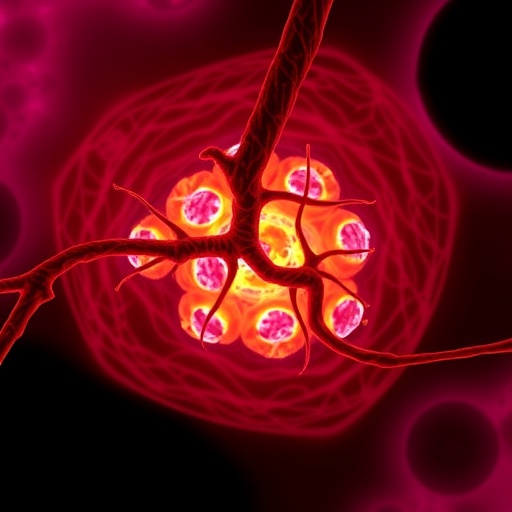
This innovative strategy utilizes engineered mammary organoids—miniature, functional gland-like structures cultured in vitro which mimic biological mammary tissue—to serve as localized drug depots that are implanted post-surgery. The organoids are meticulously manipulated to mimic the process of lactation, during which intracellular cytoplasmic lipid droplets are formed within the cells. Exploiting this physiological phenomenon, researchers have devised a method to load these lipid droplets with a pH-responsive prodrug molecule composed of all-trans retinal paired with doxorubicin, a potent chemotherapeutic agent.
The ingenious encapsulation of this prodrug within lipid droplets harnesses the natural biology of the mammary organoid. Upon stimulation of lactation, these drug-laden lipid droplets are packaged into milk fat globules, which are then secreted through the contractile action of myoepithelial cells surrounding the organoids. This biological mechanism ensures a targeted, localized delivery of chemotherapy directly to the residual tumor cells left behind after breast tumor excision, thereby minimizing systemic toxicity and maximizing therapeutic efficacy.
In a series of experiments involving both mouse mammary organoids and human-induced pluripotent stem cell-derived organoids, this organoid depot system demonstrated an astonishing 96% regression of tumor recurrence in post-surgical breast cancer models. This result not only underscores the potent anti-cancer capacity of the system but also confirms its viability across species lines, providing a significant leap towards clinical applicability in human breast cancer treatment.
Beyond its therapeutic efficacy against cancer, this mammary organoid-based system showcases remarkable regenerative properties. After implantation, the organoids integrate autonomously with the host’s mammary tissue, facilitating restoration of glandular architecture. Over time, these integrated organoids contribute to the reconstitution of the breast tissue’s functional capacity, including the restoration of lactational abilities—a feat that holds promise not just for cancer patients but for broader applications in regenerative medicine.
The dual functionality of this system addresses two of the most critical challenges currently inherent in breast cancer management: effective prevention of tumor recurrence and the recovery of breast aesthetics and function post-resection. Unlike traditional scaffold approaches, which often suffer from poor tissue integration and imbalanced degradation rates that hinder proper healing, these organoids adapt harmoniously to the mammary microenvironment, ensuring both therapeutic delivery and tissue restoration occur in synchrony.
A key technological breakthrough lies in the prodrug design. The pH-responsive nature of the all-trans retinal-doxorubicin complex allows selective release of doxorubicin in the acidic tumor microenvironment, ensuring that the potent chemotherapeutic agent remains largely inactive in normal tissue conditions and becomes activated only where needed. This spatial specificity further reduces off-target side effects, enhancing patient safety and quality of life during treatment.
The milk fat globule secretion pathway utilized by the mammary organoids represents a captivating convergence of bioengineering and natural physiology. Myoepithelial cell contractions mechanically facilitate the expulsion of the drug-laden milk fat globules, mimicking the natural lactation process. This not only optimizes the distribution of chemotherapy agents within the local tumor bed but also reduces the likelihood of drug resistance that commonly plagues systemic chemotherapies.
Moreover, the organoid depots’ ability to serve as sustained release platforms for therapeutic agents opens the door for prolonged single-implant treatments, potentially diminishing the need for repeated systemic chemotherapy sessions that often impose severe systemic burdens on patients. This strategic localized release ensures a consistent and effective concentration of chemotherapeutic agents over the critical phases of post-surgical tissue healing and tumor surveillance.
The regenerative integration also holds transformative implications for breast reconstruction following lumpectomy or partial mastectomy. By reinstating the mammary gland’s natural architecture and function, the tissue is not only preserved but enhanced, promising superior cosmetic outcomes compared to synthetic implants or conventional tissue scaffolds. The restoration of lactational functionality further symbolizes a return of physiological normalcy, which can have profound psychological and emotional benefits.
While the study highlights promising preclinical success, the translational trajectory towards human clinical trials appears promising given the use of human-induced pluripotent stem cell-derived organoids. These patient-specific organoids offer personalized therapeutic avenues, potentially reducing immunogenicity and improving acceptance by the host immune system. This personalization could further tailor chemotherapy regimens based on tumor biology and patient-specific factors.
This breakthrough also aligns with the emerging paradigm of integrating biologically inspired drug delivery systems with regenerative medicine. By coalescing therapeutic potency and tissue regeneration within a singular, self-adaptive platform, the mammary organoid depot embodies the future of oncology and reconstructive medicine—where treatment is not only curative but restorative and harmonized with the body’s natural healing processes.
In summary, the organoid-based anticancer drug secretion system delineated by Wang and colleagues represents a major advancement in post-surgical breast cancer therapy. By leveraging the natural lactation mechanism to achieve targeted chemotherapy delivery and mammary gland regeneration, the system addresses fundamental unmet needs within the field. Its success in experimental models strongly suggests a paradigm shift that combines bioengineered organoids, prodrug chemistry, and tissue regeneration to redefine cancer therapy and reconstructive outcomes.
As the scientific community continues to refine and advance this promising technology, it is poised to radically enhance the quality of life for breast cancer survivors, merging effective oncologic control with functional and cosmetic restoration. This integration of cutting-edge bioengineering with clinical oncology exemplifies the next frontier in personalized medicine and holds a beacon of hope for millions affected by breast cancer worldwide.
Subject of Research: Mammary organoid-based drug delivery and regenerative therapy for post-surgical breast cancer management.
Article Title: Mammary organoid-based depot for post-surgical chemotherapy and gland regeneration.
Article References: Wang, S., Yang, Y., Wang, Y. et al. Mammary organoid-based depot for post-surgical chemotherapy and gland regeneration. Nat. Biomed. Eng (2026). https://doi.org/10.1038/s41551-026-01655-1
DOI: https://doi.org/10.1038/s41551-026-01655-1
Tags: all-trans retinal prodrug designbioengineered mammary organoidsbreast cancer recurrence preventiondoxorubicin-loaded lipid dropletslactation-mimicking drug encapsulationlocalized chemotherapy depotmammary gland tissue reconstructionmammary organoid drug deliverypH-responsive prodrug releasepost-surgery chemotherapy for breast cancerscaffold-free tissue engineeringtissue regeneration after breast surgery