A comprehensive review of mammalian reproductive biology demonstrates that an oocyte’s ability to support fertilization and early embryonic development depends on an intricate network of stage-specific metabolic processes rather than simple cellular energy content alone. Writing in Frontiers in Cell and Developmental Biology, researchers synthesize findings across animal perturbation models and human clinical samples, revealing that nuclear maturation to metaphase II fails to guarantee developmental competence. In experimental systems, severe developmental arrest frequently occurs even when oocytes complete meiotic maturation or exhibit normal total adenosine triphosphate concentrations. The authors emphasize that developmental readiness requires balanced carbon substrate trafficking, specialized organelle distribution, continuous antioxidant defenses, and metabolite-driven epigenetic programming coordinated between the growing germ cell and its somatic follicular environment.
Metabolic cooperation within the cumulus-oocyte complex serves as the initial foundation for developmental competence during follicular growth. Because mammalian oocytes possess limited intrinsic glycolytic activity, they rely on companion cumulus cells to metabolize glucose and supply essential intermediates such as pyruvate. Paracrine signaling from the oocyte actively directs glycolytic enzyme expression within surrounding somatic cells, establishing a reciprocal regulatory loop. In mouse models, disrupting cumulus carbohydrate processing impairs oocyte adenosine triphosphate levels and reduced glutathione reserves, which subsequently compromises blastocyst formation following parthenogenetic activation. Beyond supplying carbohydrate substrates, companion cumulus cells buffer the germ cell against lipotoxic damage by sequestering external fatty acids into neutral triacylglycerol droplets and employing stearoyl-CoA desaturase to convert harmful saturated lipids into monounsaturated species.
Intracellular mitochondrial organization and dynamics exert profound regulatory control over oocyte competence through mechanisms distinct from bulk energy production. In growing mouse oocytes, genetic ablation of dynamin-related protein 1 disrupts the structural arrangement of mitochondria, endoplasmic reticulum membranes, and secretory vesicles without significantly altering overall adenosine triphosphate abundance or mitochondrial DNA copy number. This structural disorganization blunts endoplasmic reticulum calcium release, limits meiotic resumption, and impedes somatic granulosa-cell support. Similarly, suppressing mitochondrial pyruvate transport via pharmacological inhibition with UK5099 in cultured fetal mouse ovaries halts folliculogenesis and oocyte enlargement despite maintaining luminescence readouts in purified germ-cell adenosine triphosphate assays. These experimental demonstrations confirm that intracellular organelle architecture and localized substrate flux govern developmental pathways that whole-cell energy metrics fail to register.
Mitochondrial quality control mechanisms further shape oocyte viability through tightly regulated degradation pathways that change across developmental stages and maternal age. In mouse germinal vesicle oocytes, inhibiting Ras-related protein Rab-7 blocks the delivery of damaged mitochondria to acidic autophagic compartments, disrupting meiotic progression even when parkin abundance remains elevated. In contrast, mature metaphase II oocytes from aged mice and human donors exhibit marked reductions in total and phosphorylated parkin. Genetic and pharmacological manipulations demonstrate that elevated levels of autophagy-associated proteins do not necessarily reflect increased functional clearance of damaged organelles. Controlled antioxidant interventions, such as low-dose mitoquinone supplementation during in vitro maturation, promote mitochondria-lysosome colocalization and improve blastocyst hatching under oxidative stress, whereas higher dosages induce developmental toxicity.
Stage-specific utilization of carbon substrates and one-carbon metabolism coordinates maternal epigenetic remodeling required for subsequent embryonic genome activation. During oocyte maturation, inhibition of the pentose phosphate pathway by dehydroepiandrosterone diminishes blastocyst formation, an arrest partially rescued downstream by fructose-6-phosphate supplementation. Somatic one-carbon metabolism also regulates oocyte quality, as shown in granulosa cell co-cultures where suppressing phosphoglycerate dehydrogenase lowers cellular S-adenosylmethionine and depletes histone H3 lysine 4 trimethylation marks. Following fertilization, metabolite availability directly controls chromatin remodeling; targeting pyruvate dehydrogenase E1 subunit alpha 1 in porcine parthenogenetic embryos reduces nuclear acetyl-coenzyme A availability, diminishes histone acetylation, and precipitates developmental arrest at the four-cell transition before embryonic genome activation can successfully occur.
Mitochondrial calcium dynamics operate as another critical metabolic checkpoint governing meiotic progression and fertilization activation. In maternal-effect mutant models lacking NLRP14, degraded sodium-calcium exchanger integrity and irregular calcium oscillations permit polar body extrusion but result in embryonic arrest at the two-cell stage. Transferring the metaphase II spindle-chromosome complex from these mutant eggs into control cytoplasm restores calcium responses and development after parthenogenetic activation, localizing the limitation to the cytoplasm.
Human reproductive profiling reveals that while molecular and biophysical changes parallel laboratory animal findings, analytical measurements differ fundamentally depending on the sampled biological compartment. Non-invasive assessments of paired cumulus cells, follicular fluid, and spent embryo culture media reflect distinct physiological microenvironments that cannot serve as interchangeable proxies for intracellular oocyte metabolism. For instance, single-cell transcriptomic and lipidomic profiling of human oocytes uncovers age-associated shifts in metabolic gene expression, whereas stable isotope tracing in human cumulus cells demonstrates age-dependent declines in acetate utilization. Because individual follicular fluid samples correlate strongly within individual patients and reflect systemic maternal circulation, peripheral metabolic differences cannot automatically be interpreted as cell-intrinsic oocyte defects.
Advanced non-invasive optical techniques offer new opportunities to assess developmental viability but present substantial technical and biological interpretation hurdles. Fluorescence lifetime imaging microscopy enables label-free tracking of endogenous reduced nicotinamide adenine dinucleotide and flavin adenine dinucleotide trajectories across maturation and early cleavage divisions. In clinical investigations, optical lifetime signatures vary distinctly between inner cell mass and trophectoderm lineages, as well as between euploid and aneuploid human blastocysts. However, translating these optical parameters into predictive clinical diagnostics has yielded modest prospective discrimination for pregnancy outcomes.
The evaluation of clinical interventions highlights the danger of equating local biochemical changes with improved reproductive success. A randomized controlled trial evaluating near-infrared spectroscopy of embryo culture media was terminated early when the metabolic screening tool failed to improve ongoing pregnancy rates compared to standard morphological grading alone. For example, a dietary intervention changed follicular-fluid fatty acids without improving oocyte yield or pregnancy, demonstrating that modifying an exposure is not sufficient evidence that it was the limiting cause of developmental failure.
Ultimately, resolving the metabolic determinants of developmental competence requires distinguishing primary regulatory lesions from secondary cellular responses to culture stress or chronological aging. Dose-response experiments across diverse animal models demonstrate that metabolic supplementation follows a non-linear Goldilocks paradigm, in which either deficient substrate utilization or excessive exogenous supplementation precipitates embryonic arrest. Future reproductive research must combine rigorous carbon-tracing methods, organelle-specific functional tracking, and stage-specific multi-omic analysis to map maternal metabolic reserves accurately. Establishing which specific metabolic disruptions permanently compromise embryonic viability will be essential before targeted metabolic interventions can successfully improve clinical outcomes in assisted human reproduction.
A critical challenge highlighted by the review is disentangling stage-specific maternal contributions from downstream embryonic genome activation. In bovine in vitro maturation systems, combined supplementation with eight one-carbon metabolites and cofactors enhances female pronuclear DNA methylation and boosts blastocyst development without altering metaphase II maturation rates or changing reactive oxygen species and glutathione levels. In mouse models, acute antibody-mediated depletion of dynamin-related protein 1 in pronuclear zygotes produces asymmetric mitochondrial inheritance and unequal adenosine triphosphate sensor readouts across daughter blastomeres, triggering arrest at the two-cell stage despite maintaining whole-embryo adenosine triphosphate levels. Conversely, when maternal dynamin-related protein 1 is disrupted during oocyte growth, wild-type paternal expression after fertilization rescues blastocyst formation, yet trophectoderm cell counts remain reduced and postimplantation embryonic losses stay elevated.
Timing and cellular compartmentalization also govern epigenetic responses to metabolic intermediates. In Polg-mutator mouse models, oocyte DNA hypomethylation accompanies reduced alpha-ketoglutarate, causing fertilized zygotes to retain abnormal DNA methylation during embryonic reprogramming. Exposing metaphase II oocytes to alpha-ketoglutarate prior to fertilization alleviates postimplantation placental and fetal growth restrictions, even though untreated embryos form blastocysts at rates comparable to controls. Similarly, mitofusin 1 activity directly regulates maternal chromatin packaging; knocking down this fusion protein in mouse germinal vesicle oocytes impairs male pronucleus assembly and reduces histone H3.3 deposition, while blastomere knockdown initiated after fertilization halts cleavage at the eight-cell stage. Pharmacological stimulation of mitofusin 1 during embryo culture increases histone H3.3 incorporation and improves blastocyst formation in reproductive aging models.
Technical constraints in assisted reproduction further complicate the translation of laboratory assays into clinical decision-making. Non-invasive culture medium secretomics and mass spectrometry metabolomics face significant contamination hurdles from variable albumin lots, culture additives, and low starting biomass. Ultimately, clinical trials require standardized denominators, as increases in retrieved oocyte counts following dual-trigger protocols do not automatically yield corresponding gains in cumulative live births per transferred embryo.
Subject of Research: Metabolic regulation of mammalian oocyte developmental competence and embryonic transitions
Article Title: Metabolic regulation of oocyte developmental competence: cellular cooperation, developmental transitions, and human evidence
Article References: Yang, Z., Zhao, Y., Miao, C., Xu, X., Wang, L., & Ma, J. (2026). Metabolic regulation of oocyte developmental competence: cellular cooperation, developmental transitions, and human evidence. Frontiers in Cell and Developmental Biology, 14, Article 1990847. https://doi.org/10.3389/fcell.2026.1990847
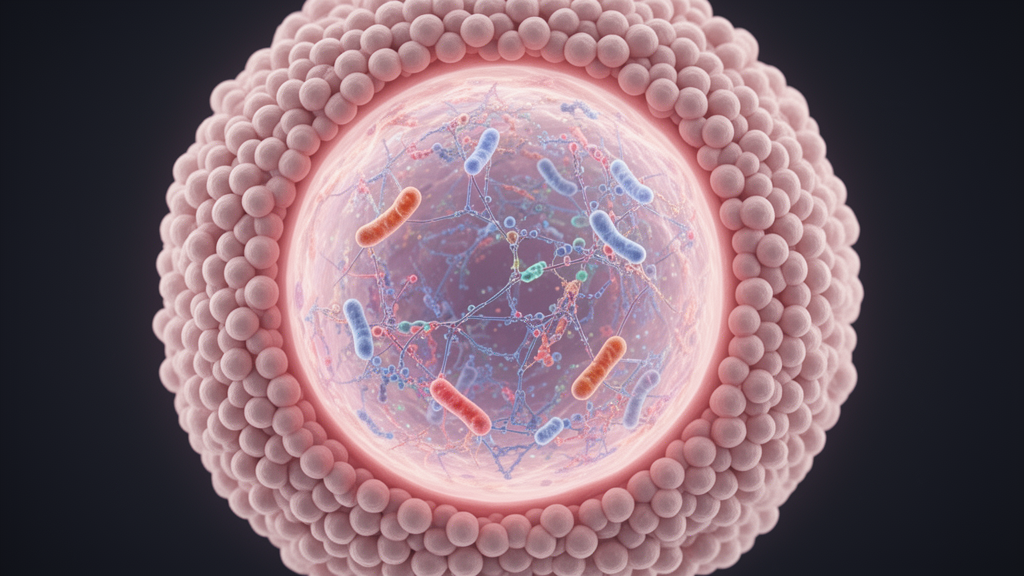
Image Credits: AI Generated
DOI: 10.3389/fcell.2026.1990847
Keywords: oocyte metabolism, developmental competence, mitochondrial dynamics, cumulus cells, meiotic maturation, adenosine triphosphate, embryonic development, reproductive aging, one-carbon metabolism, calcium homeostasis, follicular fluid, epigenetic regulation, in vitro maturation, redox balance, blastocyst formation, assisted reproduction
News Source: Drew Townsend. (November 14, 2026). Mammalian Oocyte Development Requires Complex Metabolic Support Beyond Total Cellular Energy Levels. Scienmag.