The German Research Foundation (DFG) is funding the project ‘Sex-specific Contributions to Genetic Inheritance’ by the Cologne-based geneticist Professor Dr Björn Schumacher with 1.25 million euros for a period of five years. Schumacher’s research contributes to a better understanding of the causes of hereditary gene mutations.
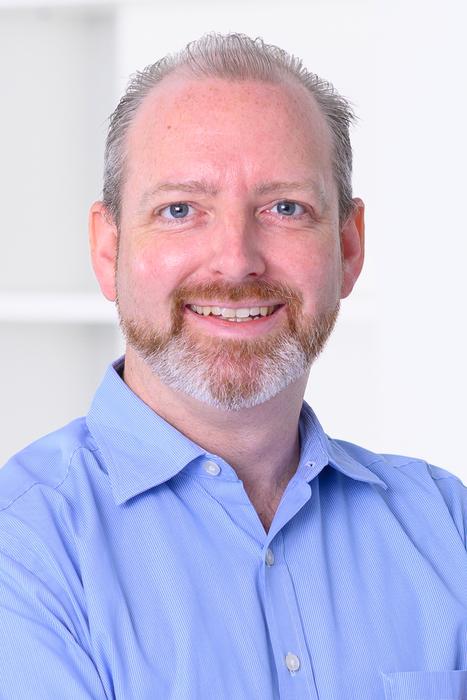
Credit: Michael Wodak, MedizinFotoKöln
The German Research Foundation (DFG) is funding the project ‘Sex-specific Contributions to Genetic Inheritance’ by the Cologne-based geneticist Professor Dr Björn Schumacher with 1.25 million euros for a period of five years. Schumacher’s research contributes to a better understanding of the causes of hereditary gene mutations.
By far the most hereditary genetic mutations in humans occur in the male germline. However, it is largely unknown why it is the sperm, but not the egg cells, that lead to most genetic changes in the offspring. With every year of life, about two new genetic changes, so-called mutations, occur. As a result, the risk of certain neurological diseases, such as autism, increases with the age of the father at conception. Within the Reinhart Koselleck Project, which is now being funded, Schumacher has set himself the goal of clarifying why it is precisely the male germ cells that are responsible for gene changes.
Schumacher’s project is based on pioneering discoveries made by his research team at the Institute for Genome Stability in Aging and Disease at the CECAD Cluster of Excellence in Research on Aging at the University of Cologne. In order to investigate the complex processes of genetic inheritance, the Cologne scientists focused on the biological model of the nematode. In this simple animal, the mechanisms of heredity are very similar to those in humans. Here, the researchers showed that particularly mature sperm cannot repair damage to the genetic material. Only after fertilisation does a repair system in the female egg cell take care of the damage, but repairs it extremely inaccurately. This results in faulty connections of previously occurred breaks in the paternally inherited information of the hereditary molecule DNA.
These so-called structural variants in the genome are thus a combination of the missing paternal and the faulty maternal repair. Interestingly, the same structural variants in the genome also originate in humans from the father, but not from the mother. The effects of such genome changes can last for generations in the nematode. In humans, the long-term effects are still poorly understood.
The research project will focus on understanding this faulty repair of damage in the paternal genome. Primarily, it will be investigated which factors influence the repair; after all, there are also completely error-free repair systems. Furthermore, the effects of paternal DNA damage on the health of the offspring will be investigated. In addition, the influence of the father’s age as well as the age of the female egg cells will be investigated with regard to hereditary gene alterations. “We expect our Koselleck project to provide completely new insights into the causes of hereditary gene alterations. This will allow us to better understand risk factors, because hereditary gene changes can have long-term health consequences in the offspring,” says Professor Björn Schumacher.
Contact:
Professor Dr Björn Schumacher
Institute for Genome Stability in Aging and Disease / CECAD – Cluster of Excellence Cellular Stress Responses in Aging-Associated Diseases
+49 221 478 84202
bjoern.schumacheruni-koeln.de
Press and Communications:
Dr Anna Euteneuer
+49 221 470 1700
[email protected]
Further information
CECAD – Cluster of Excellence Cellular Stress Responses in Aging-Associated Diseases
Website Prof. Dr. Schumacher
Reinhart Koselleck Projects