Sniffing or licking other dogs’ genitalia – the common site of Canine Transmissible Venereal Tumour – can spread this unusual cancer to the nose and mouth.
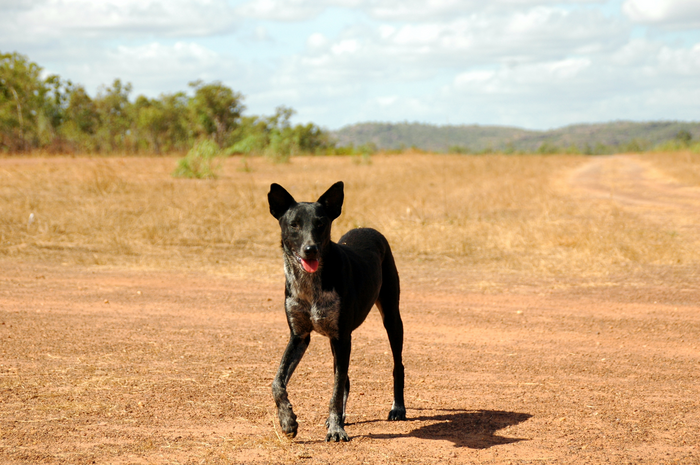
Credit: Cameron Raw
Sniffing or licking other dogs’ genitalia – the common site of Canine Transmissible Venereal Tumour – can spread this unusual cancer to the nose and mouth.
A new study has found that male dogs are four to five times more likely than female dogs to be infected with the oro-nasal form of Canine Transmissible Venereal Tumour.
Researchers think this is because of behaviour differences between the sexes: male dogs spend more time sniffing and licking female dogs’ genitalia than vice versa.
Canine Transmissible Venereal Tumour, or CTVT, is an unusual cancer – it is infectious and can spread between dogs when they come into contact. The living cancer cells physically ‘transplant’ themselves from one animal to the other.
CTVT commonly affects dogs’ genitals and is usually transmitted during mating. But sometimes the cancer can affect other areas like the nose, mouth and skin.
In the study, the researchers reviewed a database of almost 2,000 cases of CTVT from around the globe and found that only 32 CTVT tumours affected the nose or mouth. Of these, 27 cases were in male dogs.
“We found that a very significant proportion of the nose or mouth tumours of canine transmissible cancer were in male dogs,” said Dr Andrea Strakova in the University of Cambridge’s Department of Veterinary Medicine, first author of the paper. She performed this study with colleagues from the Transmissible Cancer Group, led by Professor Elizabeth Murchison.
Strakova added: “We think this is because male dogs may have a preference for sniffing or licking the female genitalia, compared to vice versa. The female genital tumours may also be more accessible for sniffing and licking, compared to the male genital tumours.”
The findings are published today in the journal Veterinary Record.
CTVT first arose several thousand years ago from the cells of one individual dog; remarkably, the cancer survived beyond the death of this original dog by spreading to new dogs. This transmissible cancer is now found in dog populations worldwide, and is the oldest and most prolific cancer lineage known in nature.
CTVT isn’t common in the UK, although case numbers have risen in the past decade. This is thought to be linked to the import of dogs from abroad. The disease occurs worldwide but is mostly linked to countries with free-roaming dog populations.
“Although canine transmissible cancer can be diagnosed and treated fairly easily, veterinarians in the UK may not be familiar with the signs of the disease because it is very rare here,” said Strakova.
She added: “We think it’s important to consider CTVT as a possible diagnosis for oro-nasal tumours in dogs. Treatment is very effective, using single agent Vincristine chemotherapy, and the vast majority of dogs recover.”
The most common symptoms of the oro-nasal form of the cancer are sneezing, snoring, difficulty breathing, nasal deformation or bloody and other discharge from the nose or mouth.
Genital cases of CTVT occur in roughly equal numbers of male and female dogs.
Transmissible cancers are also found in Tasmanian Devils, and in marine bivalves like mussels and clams. The researchers say that studying this unusual long-lived cancer could also be helpful in understanding how human cancers work.
Journal
Veterinary Record
DOI
10.1002/vetr.1794
Subject of Research
Animals
Article Title
Sex disparity in oronasal presentations of canine transmissible venereal tumour
Article Publication Date
4-Jul-2022