In a groundbreaking advancement in the treatment of severe, treatment-resistant depression, a landmark international clinical trial has demonstrated that magnetic seizure therapy (MST) holds equivalent efficacy to the long-standing gold standard electroconvulsive therapy (ECT) but with a notably improved cognitive safety profile. Spearheaded by leading researchers from the Centre for Addiction and Mental Health (CAMH) in Toronto and the University of California San Diego School of Medicine, this large-scale randomized controlled trial offers new hope for millions suffering from debilitating depressive disorders who are reluctant to pursue ECT due to its notorious cognitive side effects.
Over a six-year period from 2018 to 2024, nearly 300 participants diagnosed with major depressive disorder were enrolled across three premier academic medical centers located in Toronto, Dallas, and San Diego. The rigorous double-blind, non-inferiority design of the trial enabled an objective, head-to-head comparison between MST and right unilateral ultra-brief pulse ECT, the latter currently regarded as one of the most effective interventions for severe depression resistant to pharmacological and psychotherapeutic modalities.
The central finding of this landmark investigation was that approximately 48% of patients in both treatment arms achieved a meaningful clinical response, indicating that MST matches the therapeutic potency of ECT in alleviating core depressive symptoms. What sets MST apart, however, is its ability to markedly reduce adverse cognitive consequences. Unlike ECT, which commonly results in post-treatment confusion and deficits in short- and long-term memory—side effects that paradoxically restrict its clinical use—MST employs targeted magnetic stimulation to induce therapeutic seizures, deliberately sparing critical brain regions involved in memory processing and cognitive function.
Dr. Daniel Blumberger, Senior Scientist at CAMH and co-lead of the study, emphasized the clinical significance of these findings by highlighting the balancing act between efficacy and safety in depression treatments. He elaborated that despite ECT’s undeniable efficacy, its cognitive side effects have been a persistent obstacle preventing many eligible patients from opting for this potentially life-saving intervention. MST offers a paradigm shift, potentially transforming the therapeutic landscape by providing equivalent antidepressant effects without the cognitive costs traditionally associated with seizure-inducing therapies.
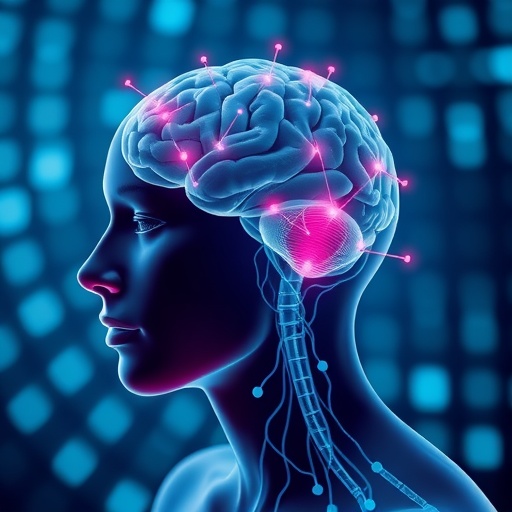
The technical mechanism underlying MST centers on its utilization of rapidly alternating magnetic fields generated by specialized coils placed on the patient’s scalp. These fields induce controlled seizures that engage neural circuits implicated in mood regulation but do so with spatial precision that limits stimulation of hippocampal and other temporal structures essential for memory encoding and retrieval. This selective targeting distinguishes MST from the more diffuse electrical currents used in ECT, which indiscriminately activate a broader cerebral territory, contributing to cognitive impairment.
The trial’s robust design included comprehensive neuropsychological assessments administered pre- and post-treatment to quantitatively measure changes across multiple cognitive domains, including memory, attention, and executive function. Participants receiving MST exhibited significantly better preservation of memory performance, corroborating the theoretical advantages conferred by the focused magnetic induction approach. These cognitive outcomes could alleviate one of the major concerns deterring widespread use of seizure therapy in psychiatry, potentially broadening access to effective treatments for a population often marginalized by refractory symptoms.
Major depressive disorder remains a leading cause of disability worldwide, with up to one-third of patients failing to respond to conventional antidepressant medications and psychotherapy. For those individuals, ECT has remained a critical intervention, yet uptake is limited due to anxieties about cognitive side effects, social stigma, and the invasiveness of the procedure. MST’s improved safety profile, combined with its comparable efficacy, may address the unmet need for safer, tolerable neuromodulation strategies capable of delivering rapid and sustained antidepressant effects.
While the study’s results are promising, the authors caution that regulatory approval processes, professional training programs, and infrastructure development are essential next steps before MST can be integrated into mainstream psychiatric practice. Ongoing research is necessary to optimize stimulation parameters, understand long-term outcomes, and investigate MST’s applicability to other neuropsychiatric conditions with treatment-resistant profiles. Nonetheless, this trial establishes a foundational evidence base supporting MST as a viable and potentially preferred alternative to ECT.
Dr. Zafiris Daskalakis, Professor and Chair of Psychiatry at UC San Diego and co-principal investigator, stressed the transformative potential of MST if implemented broadly. He noted that this innovation could revolutionize brain stimulation therapies, shifting clinical paradigms toward modalities that emphasize cognitive preservation alongside symptom remission, ultimately enhancing patient experience and adherence.
Importantly, the study was funded by the United States National Institute of Mental Health, reflecting the high priority placed on developing safer and more effective psychiatric treatments. Additional equipment support was generously provided in kind by MagVenture, a company specializing in neurostimulation technologies, highlighting the collaborative effort between academic institutions and industry in advancing mental health care.
As the global medical community grapples with the complexity of severe depression and the limitations of current treatment options, the emergence of MST represents a beacon of hope, promising to expand the arsenal of effective, patient-centred interventions. With further validation and dissemination, MST could redefine standards of care, delivering life-changing relief without sacrificing cognitive integrity.
This landmark research not only delivers critical scientific insight but also embodies a compassionate approach to treating a profoundly disabling disorder. As mental health professionals and patients alike seek therapies that reconcile efficacy with safety, MST stands at the forefront, heralding a new era in the management of severe depression.
Subject of Research: People
Article Title: Confirmatory efficacy and safety trial of magnetic seizure therapy versus right unilateral ultra-brief electroconvulsive therapy in depression (CREST–MST): a randomised, double-blind, non-inferiority trial in Canada and the USA
News Publication Date: 15-Apr-2026
Web References:
http://dx.doi.org/10.1016/S2215-0366(26)00060-X
Keywords: Psychiatric disorders, Magnetic Seizure Therapy, Electroconvulsive Therapy, Major Depressive Disorder, Cognitive Safety, Neurostimulation, Randomized Controlled Trial, Treatment-Resistant Depression
Tags: brain stimulation cognitive effectsclinical trial on brain stimulation therapycognitive safety of depression treatmentsefficacy of MST versus ECTelectroconvulsive therapy alternativesinnovative depression treatment researchmagnetic seizure therapy for depressionmental health clinical trials 2018-2024non-inferiority trial for depressionrandomized controlled trial in depressionsevere depression treatment advancementstreatment-resistant depression therapies