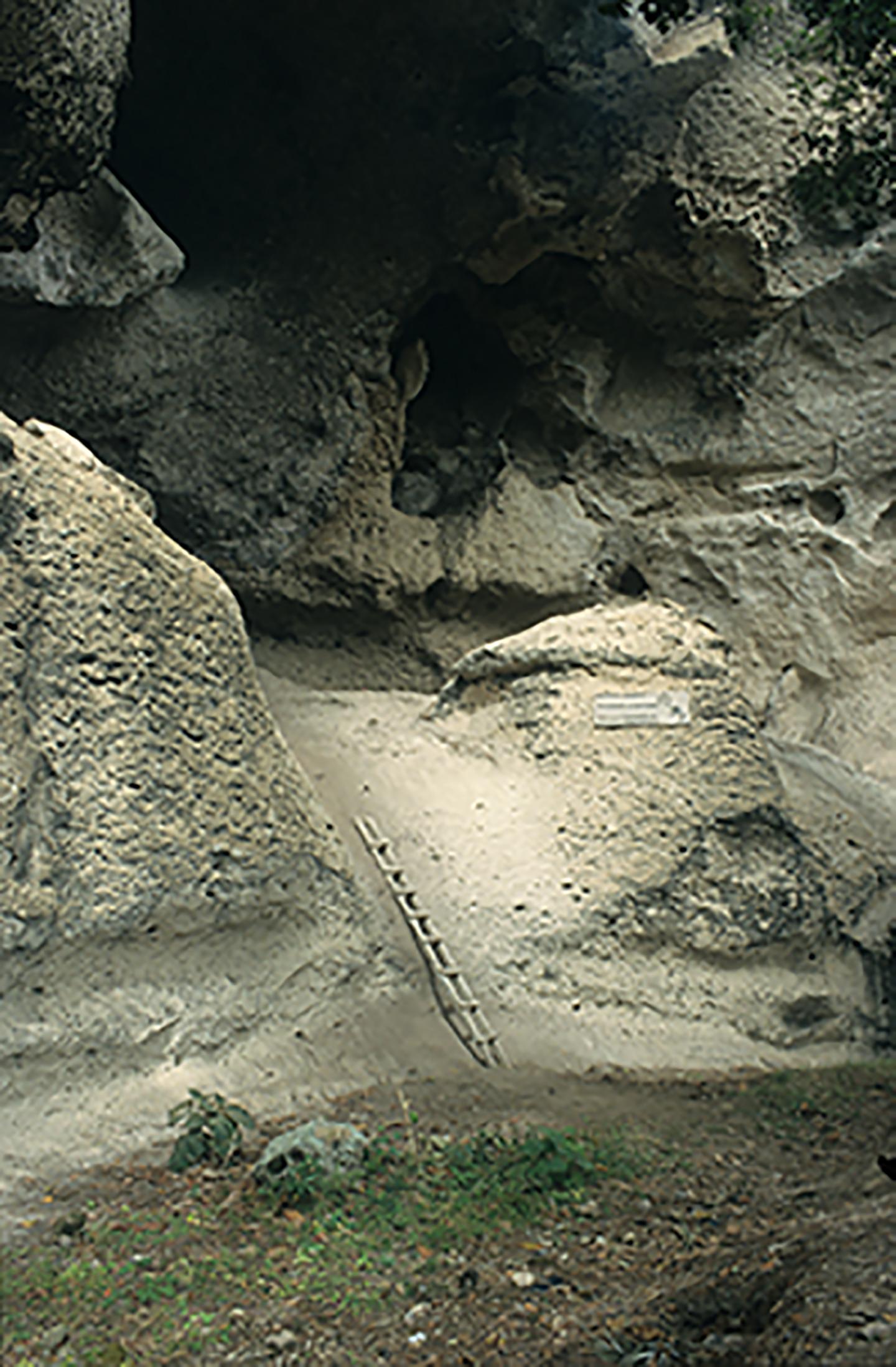
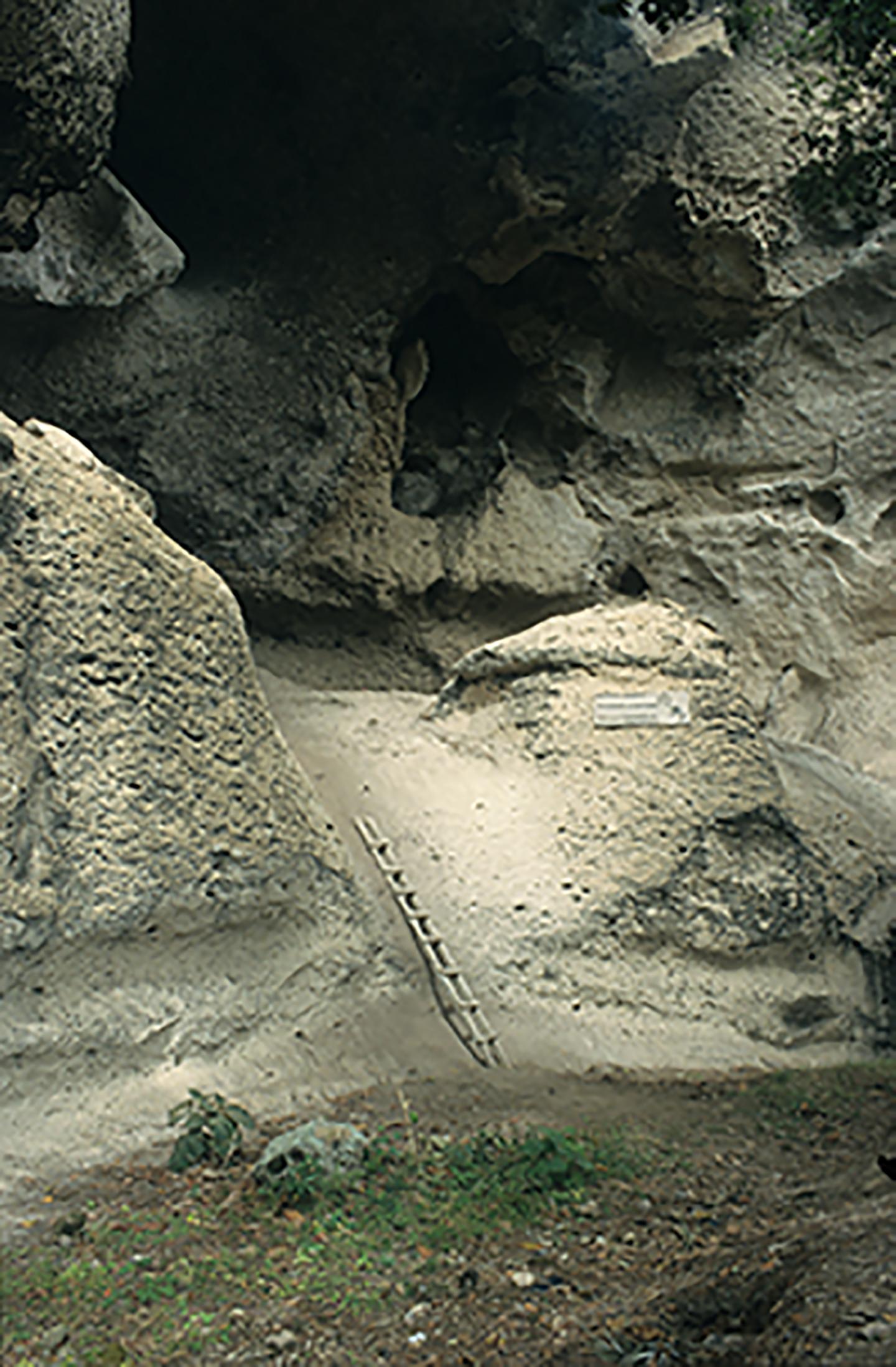
Credit: Ken Hirth, Penn State
Mid-summer corn on the cob is everywhere, but where did it all come from and how did it get to be the big, sweet, yellow ears we eat today? Some of the answers come from carbon dating ancient maize and other organic material from the El Gigante rock shelter in Honduras, according to a team of anthropologists who show that 4,300 years ago maize was sufficiently domesticated to serve as a staple crop in the Honduran highlands.
"Staple crops provide the basis for the development of many complex societies around the world that started developing after about 5,000 years ago," said Douglas J. Kennett, head and professor of anthropology, Penn State. "They are associated with a complete commitment to agriculture."
Maize, or corn in North America, is an important food and fuel crop. The evolutionary history of such a staple is important and archaeological sites with well-preserved maize are incredibly rare, according to Kennett.
The abundance of artifacts and the exceptionally good preservation in the rock shelter that sits on the western escarpment of the Estanzuela River in the highlands of western Honduras make it an ideal site to explore domestication of maize and its transition into a staple crop in the New World. High-precision accelerator mass spectrometry — radiocarbon dating — allowed a precise chronology to be determined for the organic remains found in the rock shelter.
"When you walk across the surface of the rock shelter, the floor is covered with corn cobs and lithics," said Ken Hirth, professor of anthropology, Penn State. "We have about 10,000 pieces of maize plants and 1,000 cobs from the site."
Most researchers agree that maize evolved from the teosinte plant somewhere in the Balsas area of the southwestern region of Mexico and appeared around 9,000 years ago. But the original maize cobs had few rows and kernels.
"The maize in El Gigante is interesting because of how large it gets very quickly," said Hirth. "Something is going on in the margins of the area. These cobs are bigger than those known from other areas of Mexico for the same time period."
While a type of teosinte exists in the area of El Gigante, it is not one that hybridizes with maize.
"We hypothesize that the domestication history of maize in Honduras is distinct from Mexico because Honduras is well outside the range of the wild plant that maize was domesticated from," said Kennett. "There is known introgression (hybridization and backcrossing) between teosinte and maize and this could have slowed the domestication process in Mexico."
According to Kennett, based on the small cobs from Mexico, researchers thought that the transition to more complex societies in Mesoamerica 4,000 years ago occurred before maize was a fully domesticated staple crop.
Data from El Gigante now suggests that maize in some parts of Mesoamerica was productive enough to be a staple 4,300 years ago, the researchers report in today's (Aug 7) issue of Proceedings of the National Academy of Sciences.
The researchers radiocarbon dated 88 samples of botanical material from El Gigante, creating a statistical chronology over the past 11,000 years. They directly dated 37 cobs that showed the earliest cobs with 10 to 14 rows, a higher number than typically found in Mexico at this time. Dated cobs from 2,360 to 980 years ago were similar, but had larger cobs and kernels and more rows.
Logan Kistler, a researcher at the Smithsonian Institution and a coauthor on this paper, is currently working with the team on an ancient DNA study to determine if the earliest El Gigante maize was fully domesticated. Recent studies on cobs from the Tehuacan Valley dating to approximately 5,300 years ago — 1,000 years older than the El Gigante cobs — indicate that those plants were only partially domesticated.
The researchers also are now looking at the diversification of maize at El Gigante in later time periods.
###
Working on the project from Penn State are David L Webster, professor emeritus of anthropology; Brendon J. Culleton, research associate in anthropology; and Thomas K. Harper, research assistant. Also on the project are Heather B. Thakar, curator of anthropological research collections, Texas A&M University; Amber VanDerwarker, professor of anthropology, University of California, Santa Barbara; and Timothy E. Scheffler, lecturer, University of Hawaii, Hilo. The National Science Foundation supported this work.
Media Contact
A'ndrea Elyse Messer
[email protected]
814-865-9481
@penn_state
http://live.psu.edu