• HOME
  • NEWS
  • EXPLORE
    • CAREER
      • Companies
      • Jobs
    • EVENTS
    • iGEM
      • News
      • Team
    • PHOTOS
    • VIDEO
    • WIKI
  • BLOG
  • COMMUNITY
    • FACEBOOK
    • INSTAGRAM
    • TWITTER
Tuesday, September 1, 2026
BIOENGINEER.ORG
No Result
View All Result
  • Login
  • HOME
  • NEWS
  • EXPLORE
    • CAREER
      • Companies
      • Jobs
        • Lecturer
        • PhD Studentship
        • Postdoc
        • Research Assistant
    • EVENTS
    • iGEM
      • News
      • Team
    • PHOTOS
    • VIDEO
    • WIKI
  • BLOG
  • COMMUNITY
    • FACEBOOK
    • INSTAGRAM
    • TWITTER
  • HOME
  • NEWS
  • EXPLORE
    • CAREER
      • Companies
      • Jobs
        • Lecturer
        • PhD Studentship
        • Postdoc
        • Research Assistant
    • EVENTS
    • iGEM
      • News
      • Team
    • PHOTOS
    • VIDEO
    • WIKI
  • BLOG
  • COMMUNITY
    • FACEBOOK
    • INSTAGRAM
    • TWITTER
No Result
View All Result
Bioengineer.org
No Result
View All Result
Home NEWS Science News

Mainz University to collaborate with US research center Fermilab near Chicago

Bioengineer by Bioengineer
January 23, 2017
in Science News
Reading Time: 2 mins read
0
Share on FacebookShare on TwitterShare on LinkedinShare on RedditShare on Telegram
IMAGE

Credit: photo/©: Fermilab

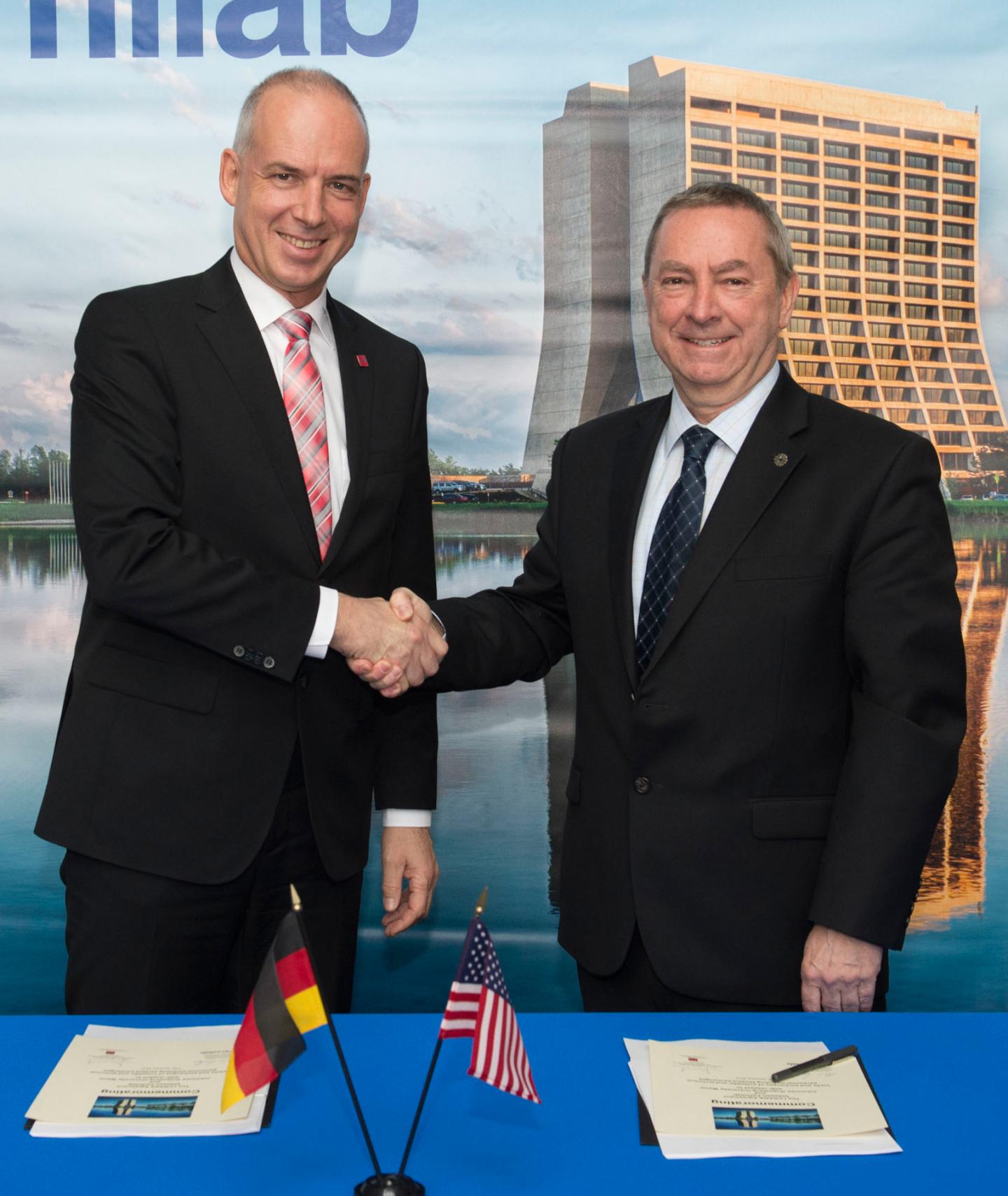
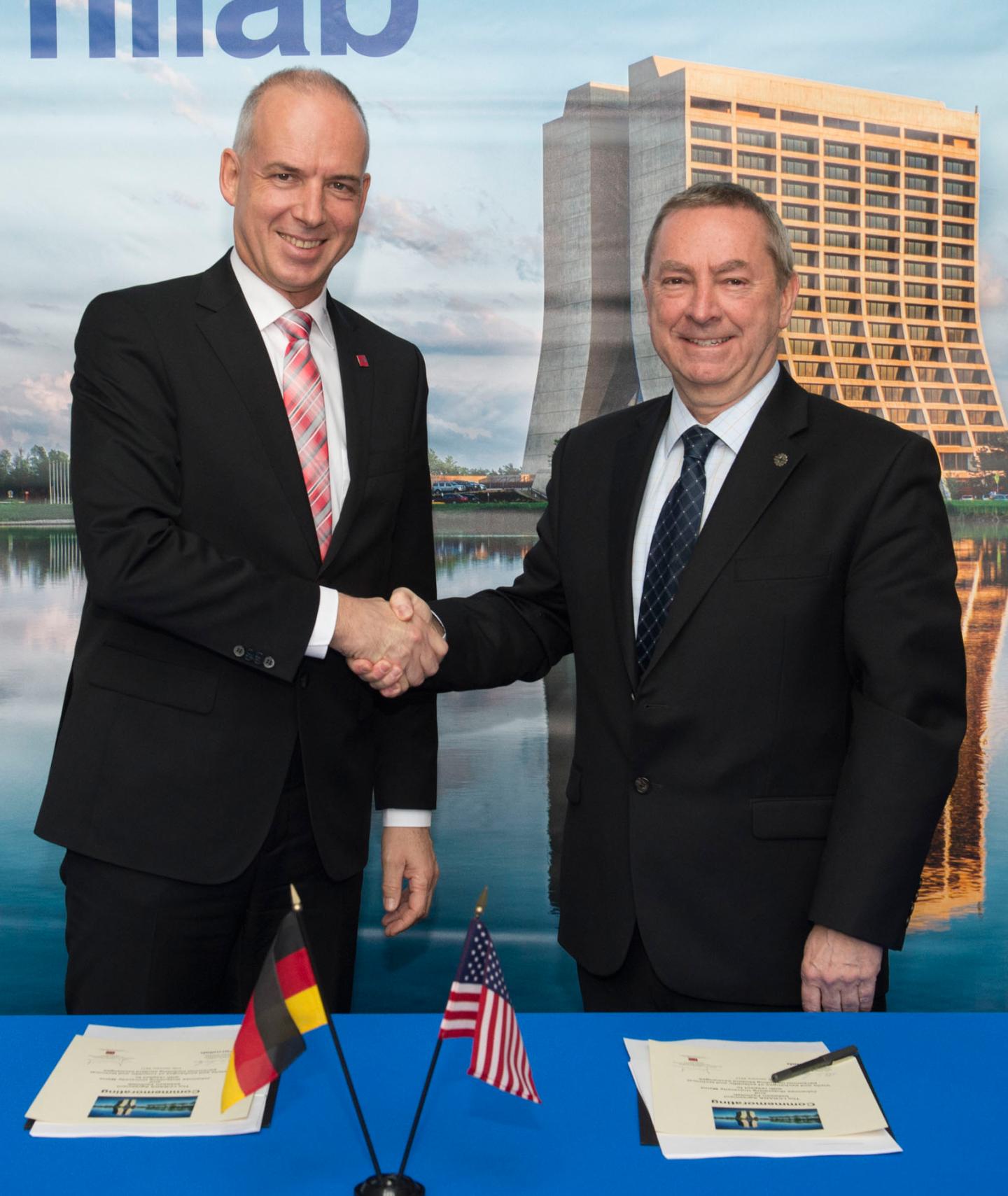
Johannes Gutenberg University Mainz (JGU) is expanding the range of its international research collaboration projects. During a visit to the world-famous Fermi National Accelerator Laboratory (Fermilab), the USA's national research laboratory for particle and high-energy physics, JGU President Professor Georg Krausch and the Director of Fermilab, Professor Nigel Lockyer, signed an agreement on closer collaboration. "Our research in the fields of particle and hadron physics at Johannes Gutenberg University Mainz is held in high regard throughout the world. The establishment of our PRISMA Cluster of Excellence underlines this. With Fermilab we are now acquiring one of the world's leading high-energy physics institutions as our partner," emphasized Krausch.

Together with Professor Matthias Neubert, one of the directors of the PRISMA Cluster of Excellence at Mainz University, Krausch was involved in discussions in Chicago last week with the aim to further substantiate and specify the collaboration between Mainz University and Fermilab. "The Fermi National Accelerator Laboratory is the world's leading institution in the field of accelerator-based neutrino physics, which will also play an important role in our work at PRISMA," added Neubert. This collaboration will strengthen JGU's position in the upcoming German Excellence Strategy competition, in which it will have to assert itself against other German research universities.

The JGU Cluster of Excellence "Precision Physics, Fundamental Interactions and Structure of Matter", or PRISMA for short, studies fundamental aspects of the nature of the elementary building blocks of matter and their relevance to the physics of the universe. "PRISMA brings together leading research groups whose international scientific prestige has already long been substantiated by numerous publications, awards, and excellent placings in national and international rankings," stressed Krausch. Thus, the current Funding Atlas of the German Research Foundation lists the Institutes of Physics and Mathematics at Mainz University among those that attract most third-party funding.

The Fermi National Accelerator Laboratory is the U.S. research center for particle physics and is managed by the Fermi Research Alliance LLC for the U.S. Department of Energy. It is located in Batavia, some 50 kilometers west of Chicago. It was given its current name in 1974 in honor of the Nobel Prize winning physicist Enrico Fermi. The Fermilab currently has about 2,200 employees and is the leading institution in the field of proton-antiproton collisions with the help of its two detectors, the CDF and the DØ Experiment.

###

Media Contact

Matthias Neubert
[email protected]
49-613-139-23681
@uni_mainz_eng

Startseite der JGU

############

Story Source: Materials provided by Scienmag
Share12Tweet8Share2ShareShareShare2

Related Posts

β-Sitosterol from Ipomoea carnea Jacq. As a promising anti-inflammatory agent: Evidence from in silico modeling and in vitro validation

β-Sitosterol from Ipomoea carnea Jacq. As a promising anti-inflammatory agent: Evidence from in silico modeling and in vitro validation

August 31, 2026
Design, fabrication and characterization of a wearable Fiber Bragg grating sensor for cardiorespiratory monitoring using finger plethysmography

Design, fabrication and characterization of a wearable Fiber Bragg grating sensor for cardiorespiratory monitoring using finger plethysmography

August 31, 2026

KAIST opens the era of industrial-scale microbial foods, proposing growth strategies for the next-generation protein market

August 31, 2026

Virologist awarded $2 million NIH grant to investigate how virus-infected cells live and die

August 31, 2026
Please login to join discussion

POPULAR NEWS

  • β-Sitosterol from Ipomoea carnea Jacq. As a promising anti-inflammatory agent: Evidence from in silico modeling and in vitro validation

    29 shares
    Share 12 Tweet 7
  • Design, fabrication and characterization of a wearable Fiber Bragg grating sensor for cardiorespiratory monitoring using finger plethysmography

    29 shares
    Share 12 Tweet 7
  • KAIST opens the era of industrial-scale microbial foods, proposing growth strategies for the next-generation protein market

    29 shares
    Share 12 Tweet 7
  • Virologist awarded $2 million NIH grant to investigate how virus-infected cells live and die

    29 shares
    Share 12 Tweet 7

About

We bring you the latest biotechnology news from best research centers and universities around the world. Check our website.

Follow us

Recent News

β-Sitosterol from Ipomoea carnea Jacq. As a promising anti-inflammatory agent: Evidence from in silico modeling and in vitro validation

Design, fabrication and characterization of a wearable Fiber Bragg grating sensor for cardiorespiratory monitoring using finger plethysmography

KAIST opens the era of industrial-scale microbial foods, proposing growth strategies for the next-generation protein market

Subscribe to Blog via Email

Enter your email address to subscribe to this blog and receive notifications of new posts by email.

Join 85 other subscribers
  • Contact Us

Bioengineer.org © Copyright 2023 All Rights Reserved.

Welcome Back!

Login to your account below

Forgotten Password?

Retrieve your password

Please enter your username or email address to reset your password.

Log In
No Result
View All Result
  • Homepages
    • Home Page 1
    • Home Page 2
  • News
  • National
  • Business
  • Health
  • Lifestyle
  • Science

Bioengineer.org © Copyright 2023 All Rights Reserved.