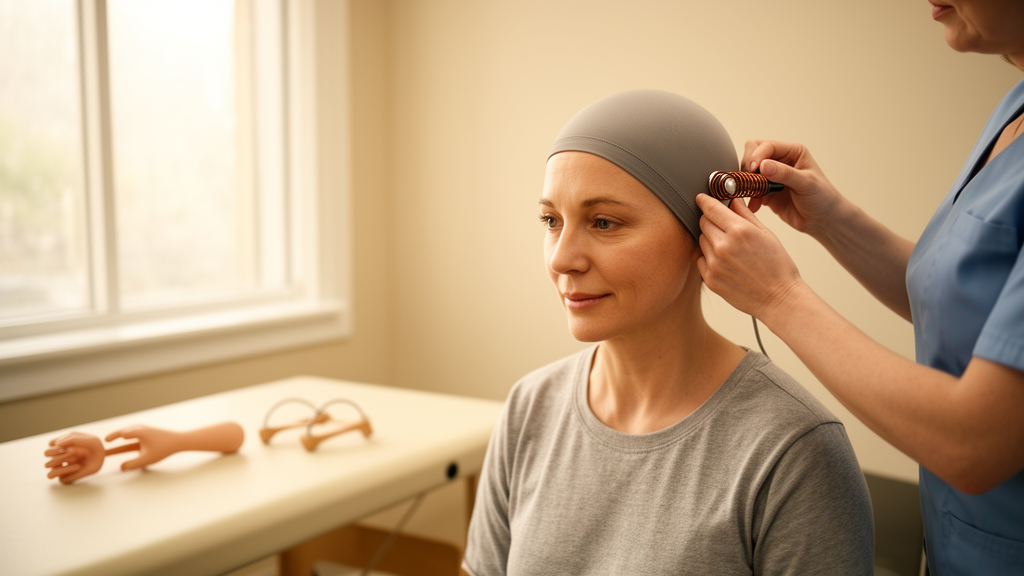
Combining different forms of magnetic stimulation may offer the best chance of improving arm function and daily living skills after a stroke, according to a systematic review and network meta-analysis published in Frontiers in Neurology. The analysis pooled 48 randomized controlled trials comparing repetitive peripheral magnetic stimulation, repetitive transcranial magnetic stimulation, combined magnetic stimulation, and conventional rehabilitation in stroke patients, but the authors themselves caution that the certainty of the underlying evidence is low. The research team, led by Shuijin Yang of Hunan Institute of Engineering with colleagues from several Chinese universities, searched six databases including PubMed, Embase, Web of Science, and Chinese-language databases Wanfang, VIP, and CNKI, covering records from inception to January 2026.
Their goal was to move beyond the usual pairwise comparisons and rank the different stimulation modalities against each other using a frequentist network meta-analysis, a statistical approach that allows indirect comparisons between interventions even when they have rarely been tested head-to-head in the same trial. For upper limb motor function, all three active magnetic stimulation approaches outperformed conventional rehabilitation alone. Repetitive transcranial magnetic stimulation, which delivers magnetic pulses to the brain, showed a standardized mean difference of 0.96 compared with usual care.
Repetitive peripheral magnetic stimulation, which targets nerves and muscles outside the central nervous system, showed a smaller but still meaningful effect of 0.65. Combined magnetic stimulation, applying both approaches together, produced the largest estimate at 1.01. When the researchers calculated ranking probabilities using the surface under the cumulative ranking curve, known as SUCRA, combined magnetic stimulation ranked highest for motor recovery, followed by repetitive transcranial magnetic stimulation.
Yet a crucial caveat emerged: when the active stimulation modalities were compared directly with one another, none of the pairwise differences reached statistical significance. In other words, the data cannot yet say with confidence that one form of magnetic stimulation beats another for restoring arm movement. The picture for activities of daily living was somewhat more decisive.
All three modalities significantly improved daily functioning compared with conventional rehabilitation, with standardized mean differences of 0.60 for peripheral stimulation, 0.76 for transcranial stimulation, and 1.27 for combined stimulation. Unlike the motor function results, combined magnetic stimulation was statistically superior to both peripheral and transcranial stimulation alone for daily living outcomes, although the authors note that this advantage rests on low-certainty evidence and heterogeneous trials. The authors took several steps to test the robustness of their findings.
A sensitivity analysis that excluded studies reporting only the Barthel Index, a widely used but coarse measure of daily functioning, produced broadly consistent results. They also found no clear evidence of publication bias or small-study effects, the distortions that arise when small positive trials are published more readily than large negative ones. Risk of bias was assessed with the Cochrane RoB 2 tool, and the certainty of evidence was graded using the GRADE framework, which came back with a low rating across the board.
That low certainty rating matters. The authors point to substantial heterogeneity among the included studies, meaning the trials varied in their populations, stimulation protocols, comparison conditions, and outcome measures. Combined with the non-significant differences in some direct comparisons, they conclude that the findings should be interpreted cautiously and confirmed by high-quality head-to-head trials that directly compare the modalities within the same study design.
For now, the review offers a qualified endorsement rather than a prescription. Magnetic stimulation interventions may improve upper limb motor function and activities of daily living in stroke patients, the authors conclude, with combined stimulation and transcranial stimulation showing the highest ranking probabilities for motor recovery and combined stimulation leading for daily living improvement. But until direct comparisons in large, well-designed trials settle the question of which modality works best, the ranking tables generated by this network meta-analysis should be read as a map of where the evidence points, not a definitive guide to clinical practice.
Subject of Research: Comparative effects of magnetic stimulation modalities on upper limb motor function and activities of daily living in stroke patients
Article Title: Comparative effects of different magnetic stimulation modalities on upper limb motor function and activities of daily living in patients with stroke: a systematic review and network meta-analysis
Article References: Yang, S., Rao, Y., Wei, C., Jia, S., & Liu, Q. (2026). Comparative effects of different magnetic stimulation modalities on upper limb motor function and activities of daily living in patients with stroke: a systematic review and network meta-analysis. Frontiers in Neurology, 17, 1842774. https://doi.org/10.3389/fneur.2026.1842774
Image Credits: AI Generated
DOI: 10.3389/fneur.2026.1842774
Keywords: stroke, magnetic stimulation, rTMS, rPMS, network meta-analysis, upper limb motor function, activities of daily living, neurorehabilitation, systematic review, GRADE, SUCRA, randomized controlled trials
News Source: Cassandra Pierce. (October 27, 2026). Magnetic Stimulation May Aid Stroke Recovery, but Evidence Remains Weak, Review Finds. Scienmag.