• HOME
  • NEWS
  • EXPLORE
    • CAREER
      • Companies
      • Jobs
    • EVENTS
    • iGEM
      • News
      • Team
    • PHOTOS
    • VIDEO
    • WIKI
  • BLOG
  • COMMUNITY
    • FACEBOOK
    • INSTAGRAM
    • TWITTER
Wednesday, January 14, 2026
BIOENGINEER.ORG
No Result
View All Result
  • Login
  • HOME
  • NEWS
  • EXPLORE
    • CAREER
      • Companies
      • Jobs
        • Lecturer
        • PhD Studentship
        • Postdoc
        • Research Assistant
    • EVENTS
    • iGEM
      • News
      • Team
    • PHOTOS
    • VIDEO
    • WIKI
  • BLOG
  • COMMUNITY
    • FACEBOOK
    • INSTAGRAM
    • TWITTER
  • HOME
  • NEWS
  • EXPLORE
    • CAREER
      • Companies
      • Jobs
        • Lecturer
        • PhD Studentship
        • Postdoc
        • Research Assistant
    • EVENTS
    • iGEM
      • News
      • Team
    • PHOTOS
    • VIDEO
    • WIKI
  • BLOG
  • COMMUNITY
    • FACEBOOK
    • INSTAGRAM
    • TWITTER
No Result
View All Result
Bioengineer.org
No Result
View All Result
Home NEWS Science News

Magnetic stem cells for gene engineering

Bioengineer by Bioengineer
December 28, 2016
in Science News
Reading Time: 2 mins read
0
Share on FacebookShare on TwitterShare on LinkedinShare on RedditShare on Telegram
IMAGE

Credit: Tomsk Polytechnic University

Scientists from the Tomsk Polytechnic University's Laboratory of Novel Dosage are developing a technology to control mesenchymal stem cells of patients. The technology will allow treating cancer more effective. To fight cancer cells the scientists suggest using the patient's own magnet controlled cells. Native body cells won't be rejected by its immune system and can deliver medication directly into the center of the disease.

The development of magnetic cells is jointly carried out by Tomsk Polytechnic University (TPU) and colleagues from Pavlov State Medical University of St. Petersburg and Queen Mary University of London.

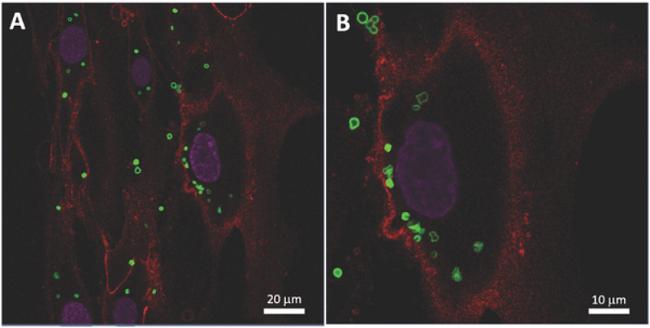
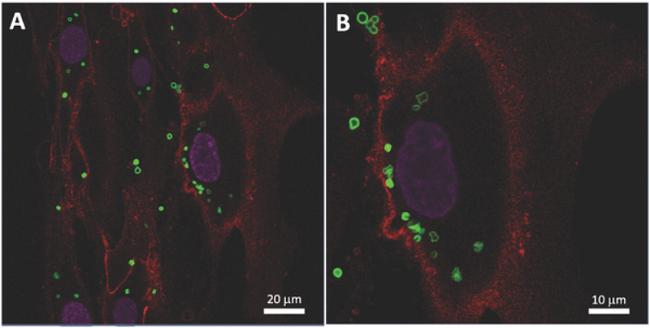
The novel technology implies that mesenchymal stem cells (MSCs) of the patient's body with the size of about 10 microns are internationalized with magnetic controlled microcapsules with drug inside. External trigging (magnet) targets cells to tumor; make microcontainers open and release encapsulated compound. Thus, drug is precisely delivered affecting cancer cells and without causing harm to health.

"Mesenchymal stem cells are inherently able to migrate toward tumors. They also can differentiate under control into mesodermal cell types of bone, fat, cartilage, muscle or connective tissue in vivo and in vitro. Therefore, MSCs are very attractive for researchers and practical physicians to apply them in substitute therapy, gene or cell engineering," says one of the development's co-authors Alexander Timin, JRF at the Novel Dosage Laboratory, RASA Center at TPU.

For the first time, the scientists have demonstrated the efficiency of internationalization of magnetic microcapsules by MSCs to functionalize cells and to design magnetic controlled cells and tissue engineering systems.

"It is interesting to note MSCs exhibit a high capability to internationalize (capture) microcapsules without significant toxicity compared to other cell lines described in the literature. As a result of magnetic capsules internalization by MSCs we create a new cell engineering platform which is responsive to external magnetic field to control cell migration. This way magnetization of MSCs enables magnetic sorting of cells and form a cell spheroid out of tens of thousands of MSCs. Also, the obtained results can be further used to create a next generation cell-modified platform for efficient targeted delivery ex vivo," the authors note.

The scientists have published their results in Advanced Healthcare Materials (IF 5.75).

###

Media Contact

Kristina Nabokova
[email protected]
7-382-270-5685
@TPUnews_en

http://www.tpu.ru/en

############

Story Source: Materials provided by Scienmag

Share12Tweet8Share2ShareShareShare2

Related Posts

6-Phosphogluconate Dehydrogenase Drives Tumor Immune Suppression

January 14, 2026

Nonlinear X-Ray Four-Photon Interaction Unveiled

January 14, 2026

Multi-Omics Reveal Personalized Prognosis in Thyroid Cancer

January 14, 2026

SOHLH2-RAD54L Axis Drives Radioresistance in Lung Cancer

January 14, 2026
Please login to join discussion

POPULAR NEWS

  • Enhancing Spiritual Care Education in Nursing Programs

    155 shares
    Share 62 Tweet 39
  • PTSD, Depression, Anxiety in Childhood Cancer Survivors, Parents

    147 shares
    Share 59 Tweet 37
  • Robotic Ureteral Reconstruction: A Novel Approach

    74 shares
    Share 30 Tweet 19
  • Study Reveals Lipid Accumulation in ME/CFS Cells

    53 shares
    Share 21 Tweet 13

About

We bring you the latest biotechnology news from best research centers and universities around the world. Check our website.

Follow us

Recent News

6-Phosphogluconate Dehydrogenase Drives Tumor Immune Suppression

Nonlinear X-Ray Four-Photon Interaction Unveiled

Multi-Omics Reveal Personalized Prognosis in Thyroid Cancer

Subscribe to Blog via Email

Enter your email address to subscribe to this blog and receive notifications of new posts by email.

Join 71 other subscribers
  • Contact Us

Bioengineer.org © Copyright 2023 All Rights Reserved.

Welcome Back!

Login to your account below

Forgotten Password?

Retrieve your password

Please enter your username or email address to reset your password.

Log In
No Result
View All Result
  • Homepages
    • Home Page 1
    • Home Page 2
  • News
  • National
  • Business
  • Health
  • Lifestyle
  • Science

Bioengineer.org © Copyright 2023 All Rights Reserved.